Category Archives: New South Wales

Harden

Built in the 1970’s by council, Southern meats purchased and ran with US consortium. US sheepmeat import tariffs caused short closures but lack of supply of animals due to extended drought caused final closure in 2006.

Other Names

  • None known.

Current Operation

  • Closed 20065

Location   

  • Harden is located in south west NSW, 30km south of Young


Hema Maps – Australia Truckies atlas.

Owner

  • General Manager – Glen Crebs (American)1
  • Southern Meats – Manager Neville Newton2

Other abattoirs in Australia

Go to this link to view Location of Australian Abattoirs

abattoirs_edited-1   

Operation

  • Sole purpose was to process lambs for the American market1
    • Primarily for the North American market7
  • Boning room is purpose built for further processing of customer orders.7
  • Skins collected are processed at Goulburn to drum salt stage7
  • Employs 150 people2 
  • Brands – Fine Brand, Country Meadow, Southern Cross.7

History

1970’s

  • Plant was built by the local council3

1980

  • facility sold to private business3

1987

  • November. Harden facility is listed as a Domestic meat processing site10.
    • Operated as Harden Slaughterhouse10

1995

  • Glen Crebs came to site when smaller abattoir existed, joint venture of operation was created.1

1998

  • opened as joint venture with Superior Farms USA.1
  • facility was refurbished in the late 1990’s3
  • Converted to an export-only meatworks supplying high quality lamb to overseas markets3

1999

  • USA considering placing tarriff on Australian and New Zealand lamb in response to calls from the struggling Americal lamb industry1
    • USA trade is worth more than $100M each year1
  • 10,000 lambs slaughtered at Harden each week,1
    • all cut to suit USA market demand1
      • racks, not chops1
      • sold as ‘Country Meadow Austral American Brand’1
  • June. If increased tarriffs are implemented by USA it would be worst-case scenerio for Harden1
  • Note of a recent event that occured in the region; the loss of jobs at Harden abattoir affecting lamb producers following the US lamb tariff decision4

2001

  • Southern Meats Pty Ltd – figures for year ending December 20026, Harden and Goulburn abattoir (NSW)
    • Ranked 10th in Top 25 Australian beef and Sheepmeat processors for 20016
    • Throughput 65,000 ETCW (estimated tonnes carcase weight)6
    • Turnover $225M6

2002

  • Southern Meats Pty Ltd – figures for year ending December 20026, Harden and Goulburn abattoir (NSW) combined.
    • Ranked 12th in Top 25 Australian beef and Sheepmeat processors for 20026
    • Throughput 49,000 ETCW (estimated tonnes carcase weight)6
    • Kill share 1.8%6
    • Turnover $206M6
    • Total staff 7006

2003

  • Plant forced to shut down for 3 months as stock numbers dwindled.3
    • Closed due to supply shortage during the drought.9
  • Southern Meats Pty Ltd – figures for year ending December 20037, Harden and Goulburn abattoir (NSW) combined.
    • Ranked 14th in Top 25 Australian beef and Sheepmeat processors for 20027
    • Throughput 46,675 ETCW (estimated tonnes carcase weight)7
    • Turnover $180M7

 2004

  • Now owned by Southern Meats Goulburn2
    • with an American consortium3
    • Authors note – some articles show Southern meats owned the plant prior to 2004, I’m not sure if 2004 is just when the American consortium joined.
  • June. Plant staff had been stood down2
    • 120 full time staff.2
  • Last 18 months meatworks in Woy Woy, Mudgee abattoir (NSW), Orange, Forbes abattoir (NSW) have all closed, loss of close to 500 jobs.3
  • July. closed, possibly for the next 2 years.2
    • Situation hasn’t been good for 2-3 last years2
    • expected to stay closed at least for 12 months and possibly longer3
      • effects of the worst drought on record continue to be felt in the region3
      • Until the drought breaks there is a lot of uncertainty all through the bush. The company really had no option but to close down” Harden Mayor, Chris Manchester3
  • Major problem facing industry was lack of growth in Australian sheep flock2
    • skyrocketing cost of lambs in recent years2
    • Breaking even on selling lambs at $100 but paying $150.2
    • Lamb prices in general were higher than what the US can pay2
  • Southern Meats Pty Ltd – figures for year ending December 20047, Harden and Goulburn abattoir (NSW) combined.
    • Ranked 10th in Top 25 Australian beef and Sheepmeat processors for 20047
    • Throughput 55,000 ETCW (estimated tonnes carcase weight)7
    • Kill share 2.6%7
    • Turnover $185M7
    • Total staff 4807
    • Productio split 95% export, 5% domestic7
    • Species split 75% sheep, 25% lamb7

2005

  • August. Abattoir wil re-open as lamb numbers increase across the region.9

2006

  • September. Operated for early part of 2006 before being shut permanently  and broken up.8
  • Abattoir closed5
    • 130 jobs lost5
  • Boning and packing facilities continued to be leased to others who processed stock11

2008

  • Local producers start Argyle Meat business11.
    • Lachlan and Andrina Graham11
      • Integrated supply chain meat business that leased the boning and packing facilities11.

2014

  • July. Argyle Meats who had been leasing the boning and packing facilities at this time move their operation to the former dairy factory at Nowra11
    • Nowra facility was more high-tech11

Sources

  1. ‘Unkindest cut for small town abattoir’ Sydney Morning Herald 14.06.1999
  2. ‘Harden abattoir closes; Goulburns future uncertain’ Goulburn Post 11.07.2004
  3. ‘Abattoir cuts 150 jobs’ AMIEU Archives. 05.07.2004
  4. Regional radio inquiry submission – Federation of Australian radio broadcasters limited. November 2000.
  5. ‘Positive outlook for Harden in 2014’ Harden Murrumburrah Express 13.12.2013
  6. Feedback’s Top 25 beef and sheepmeat processors for 2002.
  7. Feedback’s Top 25 red meat processors for 2004
  8. Feedback’s Top 25 red meat processors for 2006.
  9. ‘Harden abattoir reopens boosting local economy’ NSW ABC country hour. 17.06.2005
  10. List. Nov 1987.
  11. ‘Manildra Group’s meaty move’ http://www.farmonline.com.au

Forbes #656. NSW

Located southwest NSW, built in the 1950’s, owned and operated by Japanese 1988 to 2003. Plant required significant capital upgrades which the owners were not prepared to do and it closed in 2003. Talk of reopening in 2013.

Other Names

  • Lachley meats

Current Operation

  • Unknown

Location   

  • Forbes is located approximately 600km east of Sydney in central NSW, Abattoir located in the Lachlan valley.4

Forbes

Forbes #2

Hema Maps – Australia Truckies atlas.

Owner

  • Lachley Meats ( when closed 2003)1
    • Owned from 1988-20034
    • Japanese owned – The Hannan Corporation2
  • Tasman Group4
    • Currently operates other abattoirs.4

Operation   

  • export beef works2
  • Specialised in grainfed beef for Japanese and Korean Markets5
  • 170ha site, that is 8km from the CWLX livestock selling centre14.

picture 2013._edited-1Source – ‘Abattoir industry in disastous state’ ABC Rural. 16.02.2010.
Forbes abattoir also known as Lachley meats.

History of Forbes #656.

1950’s

  • Built

1987

  • Liberalisation of Japanese beef markets meant reduced import quotas and reduced import tariffs over the next 3 years. (Pg 82)9

1988

  • Plant in operation at this point1.
  • Lachley meats take over2
    • Trading company Mitsubishi were important investors in Australian beef cattle lot feeding and were involved in ‘paddock to plate’ supply chain control. Mitsubishi invested in Lachley meats and Mid Coast Meats – Macksville NSW.(Pg 124)7
    • Japanese firms invested in Australia feedlots and processing facilities especially in QLD, in order to supply the liberalised Japanese market, to ensure product quality and safety standards and to create a more secure supply chain for their parents in Japan (pg 123)7
    • Cattle feedlots in Australia had increased in the 1960’s solely to supply the Japanese markets, when the 1974 (Oil Crisis) occured massive losses occured to Australian feedlotters and producers with little impact on the Japanese buyers as they had little equity in the investments. When trade was rebuilt Japanese importers had to invest in the feedlots to share some of the risk (Pg 81)9

1997

  • At this point Forbes abattoir is Aus-meat registered as an Export Beef, sheep facility11
    • Operator – Lachley meats (Forbes) P/L11

2003

  • August. Abattoir closes.1
  • 170 permanent employees, plus another 70 part-time1
    • company committed to meet all workers entitlements1
  • Another article cites 300 jobs were lost due to the Forbes abattoir closure
  • Forbes abattoir at one stage had employed up to 450 people14
    • 4.5% of the then Forbes population14
  • Unlike Cities of Geelong and Illawarra when Ford factory and Bluescope steel closed, Forbes didn’t receive anywhere near the same level of government support14.
    • Both cities had received about $25M together14.
  • Lachley closed operations rather than invest in capital in a plant that had a bad trading history since 19881
  • Japanese owned pulled the plug on further financial support.2
    • citing high operating costs of an aged plant2
    • shortage of labour2
    • capital requirements needed to comply with by-products results since acquisition in 19882
  • Hannon Corporation was the 2nd largest importer of beef into Japan3
    • Owned a plant in Japan that could process up to 150,000 head a year3
  • Increased tariff on beef imports by Japan earlier had claimed it’s first Australian victim3
    • Major factors are the economic situation in Japan3
    • Situation in Australia and markets is exasperated by the drought3
  • All creditors and liabilities will be paid out in full2
  • Abattoir had closed and re-opened 3 times in the last 20 years.2
  • Local council willing to help to facilitate sale of plant as abattoir or conversion to some other type of factory6
    • Money was available for industrial developement6
    • Special abattoir displacement retraining fund to help retrain people through TAFE6
    • Assist in reducing costs of worker’s compensation, public liability and insurances overall, “..because abattoirs pay right at the top of all those services and that is working against abatttoirs in general” Member for Lachlan Ian Armstrong.6
  • Closure of the abattoir would impact by taking a major premium buyer for cattle out of the market throughout the region.6
  • December. Abattoir sold to Tasman Group services.4
  • Tasman Group also operate Brooklyn (Vic) and Altona (Vic), Yarrawonga (NSW) Longford (Tas) and King Island (Tas)4
    • Also feedlot Yambinya – Wakool4

2010

    • Six red meat abattoirs in Central NSW have closed since 200313
    • Outlook for the sector looks bleak13
      • “It’s disastrous. There are too many processing abattoirs out there and not enough animals to slaughter” Neville Newton, Goulburn abattoir operator13
  • There are currently 29 red meat abattoirs in NSW, down 30% 10 years ago13

2011

  • May. Equipment from the Killarney #22Q. QLD abattoir is used to refurbish Forbes10
    • Equipment is kept in storage and not actually installed but is included in sale deal offered September 201614
  • Sale of facility is thought to have occurred about this time – Australian owner14.

2013

  • Abattoir to be re-opened, had be closed last decade.8
  • Will be over 12 months before improvements are carried out and plant in operation.8

2014

  • NSW Government is questioned if it will offer potential buyers of the Forbes abattoir financial assistance12.
    • Governments reply – Mr Ian Armstrong, Minister of Regional Development, Minister for the Illawarra and Minister for Small business answers that the NSW government would be willing to work with any potential buyer of Forbes abattoir12
    • Grafton #157 NSW had received financial assistance in the past12

2016

  • September. Forbes abattoir attracted strong overseas investment enquiry – principally Chinese10
    • With a view to re-opening as a beef processing plant10
    • Half of the 10 or so interested parties in the purchase were overseas interests10
      • Looking to vertically integrate10
  • Some investors looking to demolish the plant entirely and build a brand new facility14
    • One Korean interest is looking for an Australian shareholder partner14
  • Other facilities in Australia listed for sale at this time

Source ‘Three meat processing plants hit the market…’ Beef Central 14.09.2016

Forbes abattoir

  • Three abattoirs are on at the market in Australia at this time14.
  • Equipment removed from the Killarney abattoir in 2011 kept in storage is included in the sale deal offered at this time14
  • Current owner of Forbes abattoir is thought to have owned the site for 4-5 years14.
  • Stockyards, ponds and office infrastructure are intact at this point in time14
  • October 6. Forbes abattoir site is auctioned14

Source Ian Simpson Property sale advert.

2018


Sources of Forbes #656

  1. ‘Dubbo stands while Forbes falls’ Daily Liberal. 21.08.2003
  2. ‘Meat jobs go at Forbes’ The Land. 28.08.2003
  3. ‘Agriculture’ The World trade review. 16-30 September 2003
  4. ‘Abattoirs revived’ Stock and Land 24.12.2003
  5. ‘Meatworks jobs saved’ The Land 25.12.2003
  6. ‘Council offers aid as abattoir closes’ ABC News 22.08.2003
  7. ‘Japanese investment in the World economy: extract’ Roger Farrell.
  8. ‘Forbes council confirms towns abattoir be re-opened after a decade in mothballs.’ ABC Rural. 30.08.2013
  9. World on a plate. Stephen Martyn 2014
  10. ‘Chinese still showing interest in processing assets’ Beef Central 04.10.2016
  11. Aus meat registration list July 1997
  12. http://www.parliament.nsw.gov.au. Questions 18.09.2003
  13. ‘Abattoir industry in disastrous state’ ABC Rural 16.02.2010
  14. ‘Three meat processing plants hit the market – What’s behind it? Beef Central 14.09.2016
  15. https://www.ruralview.com.au/Real-Estate/1-lachley-street-forbes-nsw/Property-Details-buy-rural-10479908.html. viewed 04.03.2018

Goulburn #217. NSW

Located 200km southwest of Sydney and north of Canberra. Has faced major shortage of animal supply issues in the past due to drought and decreased national sheep herd. Recently increased costs of water affected operations.

Other Names

  • Southern Meats.

Current Operation

  • Currently in operation.
  • Ausmeat Accreditation number #02178


Location   

  • Goulburn is located 200km South west of Sydney and 90km north of Canberra
  • Abbatoir is located 99-241 Mazamet road, Goulburn NSW.

Goulburn

Goulburn #2

Hema Maps – Australia Truckies atlas.

Owner

  • Southern Meats Goulburn1
    • Also own Harden abattoir (NSW) – closed Harden in 2006.
    • Joined with Western Australian Meat Marketing co-operative Limited (WAMMCO)10

Operation   

  • Export abattoir for sheep and sheep offal.8
  • Specialist plant of sheep and lamb production5
  • Draws livestock from Victoria and NSW5
  • Pupose built boning room for further processing of customers orders5
  • Skins processed to drum salt stage5
  • Rendering facility produces bleachable and bleached tallow in addition to bloodmeal and meatmeal5
  • Production is predominently export-driven including the Middle east and US market6
    • SE Asia and Japan5
    • simple 6-way packs to more detailed specifications for orders6
  • Capacity to process 8,000 sheep and lambs a day10
  • Livestock kept in covered yards on arrival at plant10

History

1957

  • Goulburn was a strategically important abattoir at this time27.
    • Operated by local government to boost local employment and establish regional livestock selling centres27.
    • Others at the time were located27

1963

  • Operated as an export facility with chilling, freezing an freezing storage capacity by the Goulburn City Council25

1991

  • Neville Newton purchases the Goulburn abattoir28

1997

  • July. Is Aus-meat registered at this time26.
    • Operated by Southern Meats Pty Ltd26

2001

  • Southern Meats Pty Ltd – figures for year ending December 20024,Harden abattoir (NSW) and Goulburn combined.
    • Ranked 10th in Top 25 Australian beef and Sheepmeat processors for 20014
    • Throughput 65,000 ETCW (estimated tonnes carcase weight)4
    • Turnover $225M4

2002

  • Southern Meats Pty Ltd – figures for year ending December 20024, Harden abattoir (NSW) and Goulburn combined.
    • Ranked 12th in Top 25 Australian beef and Sheepmeat processors for 20024
    • Throughput 49,000 ETCW (estimated tonnes carcase weight)4
    • Kill share 1.8%4
    • Turnover $206M4
    • Total staff 7004

2003

  • Southern Meats Pty Ltd – figures for year ending December 20035, Harden abattoir (NSW) and Goulburn combined.
    • Ranked 14th in Top 25 Australian beef and Sheepmeat processors for 20025
    • Throughput 46,675 ETCW (estimated tonnes carcase weight)5
    • Turnover $180M5

2004

  • Major problem facing the industry was the lack of growth in the Australian sheep flock, combined with skyrocketing cost of lamb in recent years.1
  • July. Major problem was lack of rain1
    • need water to use to run the plant1
  • Plant is currently operating 4 to 5 days a week.1
  • Plant was closed for a number of months in 2003 due to drought and low availability of stock numbers1
  • livestock supply improved in 2004
    • average carcase weights slightly higher
    • 2nd shift work put into operation
  • Southern Meats Pty Ltd – figures for year ending December 20045, Harden abattoir (NSW) and Goulburn combined.
    • Ranked 10th in Top 25 Australian beef and Sheepmeat processors for 20045
    • Throughput 55,000 ETCW (estimated tonnes carcase weight)5
    • Kill share 2.6%5
    • Turnover $185M5
    • Total staff 4805
    • Production split 95% export, 5% domestic5
    • Species split 75% sheep, 25% lamb5
  • Harden abattoir (NSW) closed 2004 due to stock shortages.

2005

  • Southern Meats Pty Ltd – figures for year ending December 20066, Goulburn only
    • Ranked 10th in Top 25 Australian beef and Sheepmeat processors for 20056
    • Throughput 55,000 ETCW (estimated tonnes carcase weight)6
    • Turnover $185M6

2006

  • Southern Meats Pty Ltd – figures for year ending December 20066, Goulburn only
    • Ranked 14th in Top 25 Australian beef and Sheepmeat processors for 20066
    • Throughput 51,000 ETCW (estimated tonnes carcase weight)6
    • Kill share 1.8%6
    • Total staff 4806
    • Production split 95% export, 5% domestic6
    • Species split 75% sheep, 25% lamb6
    • Brands Fine Brand, Country Meadow, Southern Cross6

2007

  • Southern Meats Pty Ltd – figures for year ending December 20067, Goulburn only
    • Ranked 25th in Top 25 Australian beef and Sheepmeat processors for 20077
    • Throughput 28,000 ETCW (estimated tonnes carcase weight)7
    • Kill share 0.97%7
    • Total staff 4807

2009

  • Forced to let workers go who worked afternoon shift
  • Going through an extremely long dry period
  • February. Southern Meats will shut down it’s Goulburn abattoir operations if a new saleyard is approved for building 250m from its own front gate11
    • Saleyard is proposed by Kattle Gear Australia11
      • $9M complex in Mazamet road11
        • Cater to 20,000 sheep and 2,500 cattle11
  • Southern Meats Owner and General Manager – Mr Neville Newton11

2010

  • February. Goulburn. Currently employs 250 people3
    • Used to have more than 4003
  • Central West NSW used to have 11 abattoirs now it just has 44
  • Livestock numbers plummet due to long period of drought4
  • “It’s disastrous. There are far too many processing abattoirs out there and not enough animals to slaughter” Neville Newton. Goulburn owner / Operator4
  • Currently 29 licensed red meat abattoirs in NSW4
    • down by 30% from a decade ago4

2011

  • March. Southern meats had forced full production shutdown for 16 weeks – March to June.9
    • Abattoir closed March 21 for six weeks due to livestock shortages12
      • Low sheep numbers14
        • Sever drought that has caused this and another lengthy closure this year15
      • High Australian dollar on the export markets14
    • May 2 re-start is subject to stock availability12
    • 180 employees were laid off.
  • April. Local town employers are encouraged to employ the meat workers on a seasonal basis  to prevent the loss of their expertise and skills from the area12
    • Some workers are using long service leave and annual leave to survive the downturn12
    • Important to retain as many of the people locally to minimise the impact on the local economy12
    • Workers age range from 16 to 66 with 40% female12
      • some had gone to Canberra in the building trade and others had began work at the Tahmoor poultry plant12
  • Industry and Investment NSW and Southern Meats have developed a scheme to train abattoir workers in other fields13
    • Aim is to keep the workers in Goulburn during the plant’s shut down periods13
  • May 28. Plant announces it will not restart until July 414.
    • Second time the re-opening has been delayed14
    • AMIEU claim the abattoir is about to be sold14.
      • AMIEU organiser Mark Perkins14
      • Current employment agreement covers short-term closures and stand-downs but not the sale of the facility14
      • Union were not informed of extension of closure until 27/05/201114
    • Management of the plant decline to comment on the facilities future14
  • June. Abattoir is sold to the Western Australian Meat Marketing Co-operative (WAMMCO) for an undisclosed sum15
    • WAMMCO have another plant in Katanning15
    • Sale includes business, land and buildings15
      • Sale had been in negotiation for 3 months
      • WAMMCO will take on all former workers15
      • had been aware Goulburn was experiencing difficulties15
      • Plant to reopen July 115
  • Competition had been very difficult with 2 major lamb processors pushing up livestock prices15
  • The abattoirs premier export product was a strong attraction to the buyer15
  • WAMMCO wanted to branch into eastern states15.
    • 1.3M head of sheep had left WA in 9 months to eastern states15.
    • Risk management strategy15.
  • AMIEU is confident most workers will return to the abattoir when it re-opens July 416.
    • all entitlements of employees who would return would be paid16
    • Union have a good relationship with WAMMCO in the west16
  • July 5. Plant reopens17
    • Approximately half of the workforce have returned17
      • Just over 100 people returned17
    • Reopen under Southern Meats name17
      • Chief Executive Coll MacRury17
    • Plant would restart at 60-70% capacity to build to full production17
    • Southern Meats want to double capacity and employ 400 people17
    • Livestock would be sourced from saleyards and direct from the paddock17
      • Direct from the paddock was more efficient and used in the west17
    • Plant would continue will supply to halal markets17
      • Animals were stunned with an electric stunner pre slaughter17
    • Previously plant had focused on mutton export17
      • WAMMCO would pursue more lamb products17
        • 20% going to the domestic market18
        • May take 18 months to build domestic opportunities18
        • Australian dollar was so strong against most countries’ currency18
    • Most stock would be secured from producers within 2-3 hours of the facility18
    • WAMMCO Western Australia is run at 90% direct from producers supply18
    • Plan to get Goulburn supplied 75-80% direct18
      • then adopt some principles of the NSW co-operative18
        • performance based payments18
        • work with producers to lift genetic pool18
        • produce the type of lamb market wants18
    • Immediate aim is to get the plant to profitability18
      • Will need to see numbers improve18
        • Better margins back to the business18
        • Wants plant back to capacity on one shift18
          • Processing 4,200 – 4,500 sheep and lambs per day18
      • Will take a couple of years18
      • Prices paid in the last 10-12 months are not sustainable18
        • market can’t support that type of buying18

2012

  • August. owner expressed concerns about its viability and job security when its annual water charges skyrocketed by up to $70,0002
    • Council introduced a new policy – water is calculated on amount used.2
    • Council agreed to reduce charges and do a watching brief of water use.2
      • aware of need to assit meat industry, export and internally in tough times.2
  • Plant is already facing significant cost increases due to carbon tax and exchange rates.2
  • Abattoir is unable to pass costs on the extra costs19.
    • people just don’t get employed to offset costs19

2013

  • March. Abattoir has thrown down gauntlet in regards to Goulburn’s water pricing20
    • Council suggested a 25% discount on water charges to the business20
      • Southern Meats say this will add $150,000 annually or 69% to their bill20
  • In the current business environment this is not sustainable for Southern Meats and if this is adopted it would have a severe impact on our ability to operate successfully in Goulburn” Southern Meats CEO Coll MacRury20
  • Abattoir would be unable to provide further employment if the water charges are implemented20
  • Council has also risen residential water charges by 33%20
    • ‘Full cost recovery’ for council’s water business unit20
    • in line with state government directive20
    • Price of water was cheap in the first place20
    • Prices had not risen for a long time20
  • Council have allowed 42% reduction to the abattoir – $125,000 annually20
    • Phased in over 5 years20
      • Abattoir say the charges are still not acceptable20
    • Abattoir uses 210 Megalitres annually (2011/2012)20
      • 10% of entire Goulburn water use20
      • currently pays 97c/kilolitre = $205,000 annual water bill20
        • If it paid the same as other businesses it would pay $570,000 pa20
        • Initial offer $365,000 reduction in fee = $36 cross subsidy by every Goulburn property20
        • Latest offer abattoir would pay $1.57/kl cross subsidy of $43 per property20
  • Abattoirs are facing high costs20
    • Livestock costs are high20
    • high Australian dollar20
    • higher business and labour costs relative to other countries20.
      • Any competitive advantage was critical20
    • Says other competitors are paying less for their water20
  • Other businesses lost in the region included Oral B, Supertex, The Goulburn Wool Scour and Kermac20
  • Southern Meats employs 270 people20
    • Slaughters 3,600 sheep and lambs daily20

2014

  • August. Agreement is made with Japanese city businessman signs a deal worth $340,00021
    • Goulburn sister city to Japanese city Shibetsu21
    • Mr Imai – CEO of Shizou Farm Corporation21
      • Own
        • several restaurants21
        • motel21
        • runs 600 Suffolk sheep on his farm21
        • grows 143 acres of sugar beet21
      • One of the largest operations in Japan21
        • 43 greenhouses21
        • a meat processing works to slaughter own stock and imported21 animals21
        • catering firm contracts to Nippon Airways21
        • Transport business21
    • Goulburn abattoir agreement will see 17 tonnes of lamb exported by air and ship21
      • Initially the contract had been with a Melbourne site21
    • Goulburn exports 800 tonnes of high quality lamb to Japan annually21
      • Overall exports 500 – 600 tonne every week21
  • Russia has imposed sanctions against Australian products including beef and pork21
    • Unsure if lamb will be affected at this date2

2015

  • June. work will soon begin on a state-of-the-art renewable energy project22
    • Goulburn abattoir will be able to harness power of own methane22
    • Australian first22
    • Biogas will be used to generate electricity that offsets grid supplied electricity22
      • Biogas is currently used as a fuel at a number of processing works22
    • Quantum Power, Gold coast based bioenergy company will construct the equipment22
      • generate up to 1MW or renewable energy22
        • sufficient to offset power of 400 homes22
        • Offset 40% of grid supplied electricity to the abattoir22
        • take 6-9 months to construct, beginning in 3 months22
          • Once built it will convert waste stream to biogas comprising of 60% methane22
  • November. Unique Australian technology is taking the injuries out of bandsaw work in abattoirs23
    • Goulburn abattoir is one of several installing ‘bladestop’ technology23
      • operator becomes part of electronic circuit connected to the saw23
        • If person touches it, stops within 15 milliseconds23
        • Operator wears a belt that has an electronic circuit breaker23
    • 70 units sold in Australia in the last 18 months23
      • Technology has been around for 7 years23
        • Latest model available for the last 2 years23
    • Research has been going for 11 years through MLA23
      • Goulburn was involved in the research projects23
    • gives employees a greater sense of confidence to use the machines23
    • 4 major incidents at Goulburn in the last 5 years involving bandsaws has resulted in 827 hours of lost time and $100,000 workers compensation claims23
    • 2012/2013 Safe Work Australia statistics showed that there were 95 accepted workers compensation claims and $400,000 paid in compensation due to powered saws in the Australian Meat Industry23
  • Southern Meats is currently processing 3,000 – 5,000 lambs per day23
    • Employs 320 staff depending on the season23
    • Majority of meat is exported to European union and Muslim countries23
    • Domestically processed lamb is for Cosco Australia23

2016.

  • September. At this point in time the facility is managed by Craig Newton. Son of Neville Newton who had owned the facility from 1991 – 201128

2017

  • April. JBS Australia announce they will temporarily close two of its southern lamb processing plant due to current livestock supply and price conditions24.
  • Other facilities that have also stopped production or reduced throughput recently are24
  • Some plants are currently operating on loss-making skeleton 3 day weekly kills24
  • Recent spate of abattoir closures raises questions in regards to over capacity of the processing sector with oversupply of stock due to drought24
  • Has been high levels of foreign investment interest in investments directed into processing24


Sources  – Goulburn #217 NSW

  1. ‘Harden abattoir closes; Goulburn’s future uncertain’ Goulburn Post 11.07.2004
  2. ‘Financial reprieve for abattoir’s bills’ ABC News 23.08.12
  3. ‘Abattoir industry in disastorous state’ ABC rural 16.02.2010
  4. Feedback. Top 25 red meat processors 2002
  5. Feedback. Top 25 red meat processors 2004
  6. Feedback’s Top 25 red meat processors 2006
  7. Feedback’s Top red meat processors 2007
  8. Ausmeat Accreditation listing as at 20.05.2014
  9. NSW EPA Annual Return. June 2011 – May 2012
  10. http://www.southernmeats.com.au. accessed 21.05.14
  11. ‘The knives are out: Meat works will close if yards built’ Goulburn Post 03.09.2009
  12. ‘Bid to keep ab workers here’ Goulburn Post 05.04.2011
  13. ‘One door shuts…’ Goulburn Post 12.04.2011
  14. ‘Abattoir sheepish’ Goulburn Post 28.05.2011
  15. ‘Abattoir sells up’ Goulburn Post 06.06.2011
  16. ‘Meat works sale buoys union’ Goulburn Post 07.06.2011
  17. ‘New Beginning’ Goulburn Post 05.07.2011
  18. ‘Southern Meats eyes domestic lamb share’ www.farmonline.com.au 08.07.2011
  19. ‘Abattoir appeals for reprieve from soaring water bills’ ABC News. 20.08.2012
  20. ‘Increase will chop into abattoir’s edge’ Goulburn Post 22.03.2013
  21. ‘Goulburn lamb cuts mustard’ Goulburn Post 11.08.2014
  22. ‘Goulburn abattoirs harnesses methane’ Goulburn Post 12.06.2015
  23. ‘Bandsaw safety technology cuts meat processing injuries’ Sheep Central 04.11.2015
  24. ‘Indefinite closures for JBS lamb plants, as supply challenge reaches critical point’ Beef Central 20.04.2017
  25. ‘World on a plate’ Stephen Martyn. 2011
  26. Aus-Meat Accreditation List. July 1997
  27. ‘A giant in the life of Gunnedah – 100 years since O’Keefe bon’ Naomi Valley 23.10.2012
  28. ‘Neville Newton, a man of great substance’ Goulburn Post 20.09.2016
  29. ‘Goulburn, Southern meats winds back lamb and mutton production’ Sheep Central 17.02.2017

Oberon

Located 200km east of Sydney, Privately owned facility that was shut for a period due to a business deal. Re-opened in 2014 targeting Asian market preferences in Sydney.

Other Names

  • Unknown

Current Operation

  • Is currently operating in 2014.

Location   

  • Oberon is approximately 200km east of Sydney, on the western side of the Great dividing range.

Oberon

Oberon #2Hema Maps – Australia Truckies atlas.

Owner

  • Privately owned.2
    • Manager Andrew McLeod.2

Operation   


History

2010

2014

  • February. Abattoir re-started2
  • Had been closed for last 2 1/2 years due to sour business deal2
  • Will fill demand for Asian style processing of smaller stock2
    • processing goats, lambs, deer and beef2
    • Chinese prefer a skin-on burnt2
      • Processed through a hot tub, hair is beaten off and skin stays on, then hair is burnt off and gives a crisp golden colour2
      • large market demand in Sydney2
  • Currently employing 16 people2
    • intentions to employ up to 402


Sources

  1. Abattoir industry in a disastrous state. ABC rural. 16.02.2010
  2. ‘Oberon abattoir back in operation’ ABC rural. 24.02.14

Collarenebri (Proposed) Goat

A proposal put forward to convert a disused abattoir previously used for ostriches and emu to goat, in 2008.

Other Names

Current Operation

  • Proposed1

Location   

  • Collarenebri is located in far north west NSW on the Barwon river. Aprroximately 600 km north west of Newcastle. The abattoir is located on Mungindi road1.

collarenebri 1

collarenebri 2

Hema Maps – Australia Truckies atlas.

Owner

Operation   

History

  • Previously had been a emu and ostrich abattoir that had failed1

2008

  • February. Dellmain, a company plans to develop goat abattoir in Collarenebri1
  • Development application was publicly exhibited1
    • process 750 goats a day for 250 days of the year (approximately 8 months of the year)1
    • Create 40 direct jobs, maybe 100 more indirect1
    • If approved abattoir could open in April or May 2008.1
  • Main markets are ethnic communities in United States.1


Sources

  1. ‘Goat meatworks promises Collarenebri jobs boost’ ABC News. 07.02.2008.

Cowra

Cowra abattoir is located about 250km west of Sydney, it is currently operating but not export registered. It was export registered in 1997 as a pig processing facility only.

Other Names

Current Operation

  • Is currently operating at time of writing 27.12.2013.

Location   

  • Cowra is located approximately 250km west of Sydney

Australia. Cowra

CowraSource – Hema Maps – Australia Truckies atlas.

Owner

  • David Mulligan – Up to late 20063
    • sole director
  • Chris Cummins ( 2007)

Operation   

History

1928

  • Discussion in town to establish abattoir

1966

  • Public meeting was held to discuss abattoir establishment. 250 people attended.
    • Decision to form company
    • 50% capital raised locally rest from Sydney company

1970

  • Abattoir commenced operation

2006

  • April. Workchoices legislation came into effect March 27th – Abattoir wanted to shed 29 workers, on the promise of taking back 20 under the federal award1
    • 16 beef and 13 pig slaughtermen told to finish up May 51
      • Managers Letter to workers1
        “We deeply regret this situation: however, given the current economic conditions we must take this action to ensure the ongoing viability of the abattoir” Ray Petterson Cowra abattoir manager.1
      • Abattoir wanted to amalgamate it’s pig and cow processing teams – reason gave for sackings.8
    • One slaughterman quoted his wages prior were $880 per week Federal award would be $580.1
    • had been prior enterprise agreements in place – it was being removed 12 months ahead of schedule.1
    • 22 workers offered jobs – would be paid less than before dispute but more than initially offered by abattoir, remaining workers offered redundancies.8
  • July. Federal Government workplace watchdog found – “Employers can sack workers and rehire them on lower pay and conditions in order to secure their company’s financial viability” Nicholas Wilson – Office of Workplace services director2
  • Abattoir backed down and took back the workers on the same original pay3
  • August Business was shut down and administrator appointed3
    • 200 workers told there was no money to pay their entitlements3
      • workers owed $2.8M – annual leave, long service leave4
    • Collapse of sale negotiations worth $8M3
  • September – Investigation into transfer of $2M moved between companies uncovered by administrator4
    • David Mulligan transferred $1.7M to another of his companies PD Mulligan Holdings4
    • last transaction nearly $1M transferred only weeks before closure4
    • Company had entered into uncommerical transaction aware that PD Mulligan my not have been able to repay4
    • Company may have also traded while insolvent4
    • Creditor – National Australia bank – owed $1M4
      • Liquidator – Frasers Insolvency said PD Mulligan a guarantor of the NAB loan, had discharged the abattoirs debt to NAB and now held the mortgage over the abattoir7
      • Instead of NAB being 1st mortgagee, now PD Mulligan was,7
      • Bank was charging 18% interest, PD Mulligan was charging 8%7
      • The bank charge was enforcable but before employee entitlements7
        • AMIEU advising members to vote against proposal of Frasers to take over administration of PD Mulliagan as there would be a conflict of interest – firm acting as liquidator of abattoir and administrator of priority creditor7
  • December – Liquidators announced they entered into agreement for facility to be sold $2M and reopen early 20073
  • Local businessmen behind purchase – Stock buyer Chris Cummins and local businessman George Kollas.
  • Possibly able to offer 120 jobs if re-open in February 20075
  • Plan to slaughter sheep, lambs, cattle and pigs at the plant and supply meat locally and to Sydney, Canberra, Southern Highlands, South Coast and Newcastle markets5
  • Other buyers had been considered but primarily interested in selling off abattoirs assets5

2012

  • June. upgraded facilities to improve animal welfare6
  • Installed surveillance cameras – $15,0006
  • Installed a head restraint to assist when stunning cattle with bolt stunner.  cost $150,0006
  • Pigs are gassed using carbon monoxide6
  • Operator of the facility at this time – Chris Cummins6
  • Chris Cummins wants animal welfare rules in Australia to go further to make it harder for the meat works with low standards (to operate)6
  • Cowra abattoir supplies 300 restaurants and butchers making it the largest domestic meat wholesaler in the state.6
  • July – Carbon tax starts – will make kill fees 5-6% greater9
    • Independent pricing and regulatory Tribunal (IPART) says electricity prices could rise by 18%, hald of rise attributable to the carbon tax.9

    Chris Cummins comments 25.12.13._edited-1Source NSW Business Chamber Comments by Chris Cummins

2015

  • February. National Sheep health monitoring project is begun
    • Provide information on diseases and conditions detected on the slaughter floor of abattoirs
    • Provide sheep producers with feedback
      • Provide information on conditions such as grass seeds, pleurisy, arthritis and sheep measles
      • Conditions requiring trimming at the abattoir include sarcocystis, rib fractures, cheesy gland and vaccine lesions

Sources Cowra. #3173

  1. ‘A lot of beef about for abattoir workers’ SMH 04.04.2006
  2. ‘Watchdog clears Cowra abattoir over sackings’ The Age 08.07.2006
  3. ‘Cowra abattoir set to re-open’ http://www.news.com.
  4. ‘Cowra abattoir owner faces investigation’ ABC Online 11.09.2006
  5. ‘Locals to save Cowra abattoir’ The Land 28.12.2006
  6. ‘inside the kill room at the Cowra meat works’ http://www.abc.net.au. 11.06.2012.
  7. ‘Abattoir boss in dash for cash’ The Telegraph 04.10.2006
  8. ‘Jobs on lower pay for Cowra workers’ The Advertiser 15.06.2006
  9. ‘Chris Cummins on Cowra abattoir on the carbon tax debarcle’ Meat trade News daily. 07.07.2012
  10. ‘Politics in Place- Social power relations in an Australian country town’ Ian Gray. Pg 38
  11. http://www.theland.com.au/story/3381290/thinking-outside-the-slaughter-box/?cs=4963#!. 10.11.2014. See Cootamundra
  12. http://www.farmonline.com.au/story/3380028/abattoir-surveillance-lifts-sheep-health-profits/. 24.02.2015
  13. http://www.farmonline.com.au/story/3376282/bush-towns-welcome-syrian-refugees/. 24.09.2015
  14. http://www.theland.com.au/story/4924111/passing-of-meat-industry-identity/. 15.11.2016
  15. http://www.theland.com.au/story/4924111/passing-of-meat-industry-identity/. 15.09.2017

Guyra

Other Names

Current Operation

Location   

  • Guyra is located 35km North of Armidale in NSW. Armidale is approximately 460 km North of Sydney

Australia. Guyra

GuyraHema Maps – Australia Truckies atlas.

Owner

  • DR Johnston Group Pty Limitied1
    • Other articles say DA Johnston Pty Limited4
  • Australian Meat Holdings4

Operation   

History

1960

  • NSW government closed all government owned small slaughterhouse facilities that didn’t meet hygiene and inspections standards.3

1965

  • NSW Government built Guyra abattoir as a central facility for the areas meat processing needs3
    • Operated as New England Abattoir Council4
    • Finance was entirely from loan funds $1.83M3
    • abattoir didn’t trade in meat on its own behalf but service kill – cattle, sheep, pigs3

1971

  • Estimated cost of processing one head of cattle is equivalent to 8.3 sheep or lambs or 6.9 pigs.3

1977 – 1981

  • Meat and Live-stock Corporation estimate that between 1977-19813
    • Cattle capacity utlisation declined from 84% to 60% nationally3
    • Declined cattle capacity utilisation in NSW alone 92% to 58%3
    • Sheep capacity declined from 83% to 66% nationally3
    • Declined sheep capacity utilisation in NSW alone 86% to 77%3
    • Between 1977 – mid 1981 22 abattoirs ceased operations.3

1981

  • Following several months unprofitable operations the abattoir was ‘mothballed’3
    • mothballed is term used to keep maintenance and requirements on repairs on facility up to date but not actually processing any animals.
  • Ceased trading in February due to drought4
  • 150 people lost jobs caused Guyra unemployment to go from 0% to 13.3% by July4

1983

  • Guyra unemployment by March 27.4% – highest unemployment figure for a NSW country town4

1985

  • State government waived about $6M of the debt accumulated (Total debt was nearly $7M at the time of sale) – on condition that licence to slaughter was surrendered.3
  • Abattoir was sold to new owners for $0.8M3
  • Purchased by AMH, abattoir was export registered at the time (Pg 126)
  • Private ownership – abattoir reopened – again as a service facility3
  • March – Abattoir re-opened DA Johnston Pty Limited4

1988

  • Previous 3 years – plant had substantial investment of capital (Pg 126)
  • AMH approached their banker – Hong Kong Banking Corporation for a partner (Pg 126)
  • AMH entered into 50/50 partnership with DR Johnston to operate the abattoir (Pg 126)
    • DR Johnston were a trading house that ran grain, stockfeed, protein meals & fishmeal, aswel as 5 different meat trading businesses

1991

  • Note – Article cites that Guyra came to AMH in 1991 from ConAgra (Pg 130)

1993

  • abattoir closed for its annual Christmas close-down1

1994

  • workers meant to resume work in January but unavailability of stock led to period extension 1 week.1
  • February. 25th – further shortage of stock and a close-down for six weeks until re-opening 14th April 19941
    • Employees remained on the books but didn’t receive pay.1
    • Some workers seeked employment elsewhere while abattoir closed1
  • June. 9th 220 people stood down1
    • accepted that period of this closure – 17 weeks between June 94 and October 94 was a seasonal closure in respect of the meat industry arising out of a shortage of stock1
  • October. 10th. plant reopened but on a reduced scale slaughtering beef1
    • Half of dismissed employees offered re-employment1
      • 27 didn’t accept1
  • AMH frustrated by what it saw as unproductive and inefficent industrial practices, began a process to change the working arrangements in its plants (Pg 128)
    • Restricted production to minium tally and temporily closed some plants – Guyra was the 1st (Pg 128)
    • AMH said to have budgeted $30M to ‘break’ the unions, by 1996 the estimated cost was $70M (Pg 126)

1995

  • Guyra abattoir taken to Industrial relations commission of NSW by AMIEU1
    • dispute over severence pay and entitlements to people who didn’t take up employment when plant reopened. October 19941
  • House prices in Guyra dropped $15,000 day of abattoir closure, some brick homes were being sold for under $30,0009

1996

  • Guyra as considered a marginal operation, it was closed.(Pg 126)
    • Killed only 21,427 for the year. Never worked again after this (Pg 130)
  • Australian Meat holdings now owned Guyra4
    • AMH controlled by big US rural commodities trader – ConAgra, a major exporter from North America10
    • AMH accounts for 16.5% of Australia’s beef kill.10
    • currently owns another 8 facilities but will be consolidating to 5 and closing Beaudesert (QLD), Guyra and Portland (Vic)4
      • others owned Dinmore, Townsville, Rockhampton and Aberdeen10
          • Author note – not sure of 8th.
      • Intended that 300 jobs would be replaced at Dinmore when expansion completed there10
    • AMH intend to invest in larger more efficent plant – Aberdeen abattoir (NSW)
      • Aberdeen closed in 1999 – reasons cited as stock shortages5
        • AMH closed Aberdeen to send all cattle to Dinmore abattoir (QLD) – Even with added cost of cartage costs of processing were still $14 per head/cattle cheaper processed in QLD than NSW6
  • Guyra – Early in 1996 enterprise agreement was reached – first of its kind in Australia4
    • strenuously opposed by AMIEU and employees from other abattoirs4
    • Guyra employees entered agreement to protect jobs and allow abattoir to be viable4
  • AMH had fought intense battles with meat industry unions to introduce workplace agreements warning that AMH “..had long warned the Australian meat processing industry needed to significantly increase it’s international competitiveness”  Kieth Lawson AMH CEO.10
  • Up to half the states (NSW) 56 abattoirs could close with the loss of up to 5,000 jobs in country NSW due to industry rationalisation.2
    • outdated and inefficent abattoirs could follow Guyra2
    • Industry observers say beef export abattoirs – Wingham, Mudgee, Gunnedah and possibly Inverell are most at risk2
    • Administrators had been appointed at Blayney abattoir (NSW)2
      • Blayney closed 1998 – stock shortages cited but observers say economic factors7
    • Newer and efficent plants expected to survive – Young, Gundagai, Calcairn, Cootamundra and Harden2
    • Others that had recent capital investment should survive – Goulburn, Dubbo2
      • these had provided benchmark for state beef processing of efficency gains necessary2
      • Niche market suppliers would likely survive – Casino abattoir (QLD). Lismore2
    • Industries fundamental problem – lack of plant investment due to price wars2
    • USA had taken Australian market share Japan, Korea and Taiwan2
      • Cattle prices had slumped in the last six months (First half of 1996)
    • Live export was sending 500,000 cattle to Indonesia and Philippines2
    • Gunnedah abattoir was receiving stamp duty concessions that no other plants were getting.2

2001

  • Guyra abattoir site being developed for rabbit farming enterprise8

Sources

  1. DR Johnston Group Pty Ltd (Guyra abattoir) and W Archer & 219 Ors (1995) NSWIRComm 172 (31st August 1995)
  2. ‘5000 jobs at risk: abattoirs facing closure SMH 21.05.1996. www.abattoirs.com.au
  3. ‘Short run costs and throughput variability of a NSW abattoir’ Piggott, Small 1987
  4. ‘Guyra abattoir closure’ Mr Raymond Chappell 15.05.96 http://www.parliment.nsw.gov
  5. http://www.parliament.nsw.gov.au/prod/parlment/hansart.nsf/V3Key/LA20020314031
  6. ‘State rules shut abattoir’ The Land 06.07.00
  7. ‘600 sacked workers given just a weeks pay’ Sydney morning herald. 10.03.1998. http://www.abattoirs.com.au
  8. ‘Guyra man killed in forklift accident on abattoir site’ Northern daily. 07.06.2011.
  9. ‘Guyra’s comeback faces further hurdles’ Landline 12.10.2003
  10. ‘US Beef exporters force three abattoirs to close’ SMH 15.05.1996

Deniliquin. #2123. NSW

Deniliquin was an export abattoir accredited to process beef, sheep, goat and offal.

Deniliquin temporarily closed in 2007 due to drought with plans to re-open. It was re-opened in 2014 after it changed hands and was refurbished with the assistance of government funding. It closed again in 2017.

Last registered Aus meat export October 2017. Site was visited in March 2020, it was derelict and undergoing demolition.

Current Operation

  • Currently undergoing upgrades to reopen.6
  • Aus-Meat Registration as at 02/10/2017 #2123

Location   

  • Deniliquin is located South west of NSW about 75km from the NSW/Victoria border and city of Echuca in Victoria.
  • 285km north of Melbourne, 723km south west of Sydney3
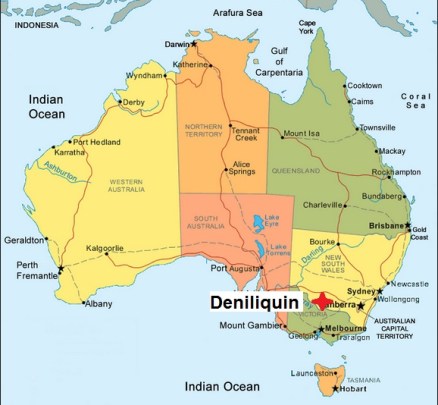
Australia. Deniliquin 16.06.13

Deniliquin

Hema Maps – Australia Handy Map. 9th edition

Owner

  • Klastin (2007) – Managing director – Tony Karuse1
  • Famicorp – Owned by Farouk Fami, inherited from the Estate of Nordon Becker3
  • Global Crown9
  • Tasman Group – Managing director Joe Catalfamo

Outside building _edited-1Source – Steers Auctioneers – Meat Processing Plant Deniliqiun, 28.08.2007

Operation 

  •  Halal and HACCP accredited5
  • Small stock abattoir – sheep, small calves,lamb and goats.3
  • Uses an inverted chain system3
  • Processing capacity 3500 sheep/lambs per day5
  • 8 hanging carcase chillers – 5 carton blast freezers5
  • Export registered – Japan, Egypt, Korea, Taiwan, Indonesia, Russia, South Africa, Mexico5
  • modern Ammonia refrigeration plant5

Inside #2 _edited-1Source – Steers Auctioneers – Meat processing plant – Deniliquin 28.08.2007

Inside #2 _edited-1Source – Steers Auctioneers. Meat Processing plant. 28.08.2007

Yards #1_edited-1Source – Steers Auctioneers – Meat processing plant. Deniliquin 28.08.2007

History

Deni_edited-1Source History of Frozen Meat. Undated.
Historical picture of the Deniliquin freezing works – known then as the Riverina Freezing works

  • Authors note. The original freezing works I guess would have been situated near a main water source, in Deniliquin that would have been the Edward river a tributary of the Murray River. I don’t think the original Freezing works owned by the Riverina Freezing Company would have been where the current meat works is.

1990

  • Halal certified3

2002

  • Closed – reasons cited due to drought and limited numbers of livestock2
    • Employed 120 people on kill days, mainly casuals.2

2003

  • Meat processors hard pressed meeting their requirements because of major shortage of lambs bought on by the drought9
  • Prices as high as $158 a head, five years ago was $80 a head at Deniliquin9
  • Meat processors forced to pay high prices for good quality lambs to keep thier abattoirs operating and to retain market share9

2006

  • Begun to employ overseas workers to fill vacant meatworker positions1
    • 6 workers through a Vietnamese employment agency1
    • Advertising in Australia failed to fill postions1
    • If had not got Vietnamese workers the plant would not be operating1
  • Abattoir is closed at some period during this year18


2007

  • Klanstin with drew from the facility – closure5
    • Was only meant to be a temporary closure
    • Operated with Halal accreditation from 1990 to closure in 2007 due to drought
  • Issues with market and meat industy had forced temporary closure4
  • Closure due to issues of sourcing quality stock13

2011

    • Deniliquin has faced a gradual but sustained and significant reduction in population over the past 15 years.2
      • Centralisation of policies of both state and commonwealth governments2
        • RTA divisonal headquarters closed9
        • Department of education – regional headquarters9
        • Murray Health headquarters9
      • prolong drought that have prevailed in much of last decade.2
    • If MDBP implemented2
      • result in 58% reduction in the amount of water available to irrigated agricultural activities.2
      • Deniliquin is heavily reliant on irrigated agriculture for its ongoing survival.2
      • If MDBP implemented would jeopardise abattoir and rice mill re-opening due to reduction of water available.2
    • Current circumstances in Deniliquin2
      • Deniliquin abattoir currently closed2
      • Negotiations currently underway for the abattoir to be sold and re-opened given improved rainfall and forecast availability.2Deniliquin council write a submission  to the inquiry into the impact of the Murray Darling basin plan (MDBP) guide in Regional Australia.2
  • Region has suffered a decade long drought26
  • Abattoirs in operation in NSW with more than 50 full-time equivalent (FTE) staff – 477
    • Includes meat processors, poultry and pigs.
  • Meat processing facilities closed in NSW since 2000 with more than 50 FTE – 97
    • Includes meat processors, poultry and pigs
  • November. facilities advertised for sale, land, equipment, structures and fittings3
  • Attorney for the Estate under instructions to liquidate all assets3

2012

  • December. Abattoir sold to Global Crown9.
  • Chief executive of Global Crown – John Wynan
    • Facility could reopen 20139
      • Would focus solely on sheep, production runs 1,000 sheep a day9
      • Goal to increase production to 3,500 sheep a day9
      • Halal certified with full accreditations for export9
    • create up to 100 jobs9

2013

  • January. Global Crown Pty Ltd – John Wynan negotiation for sale, settlement delayed due to ‘legal issues’4
  • Proposes to open abattoir this year4
  • November. Abattoir has been purchased and is expected to reopen
  • Tasman Group purchase9
    • estimate to employ 80 people9
    • Upgrades to some facilities is required.9
    • would continue as Halal slaughterhouse – for which it was fully accredited9
    • would focus solely on sheep, production starting at 1000 head a day to process building up to 3500 head.9
  • Australian Meat Group Pty Ltd (Formerly known as Tasman Group)13
    • Tasman group previously operated abattoirs at31

2014

  • March. Joe Catalfamo is confirmed as purchaser of Deniliquin11.
    • Has also purchased Dandenong #3085. Vic11.
      • Dandenong is focused on cattle processing11.
    • Plans to create state of the art processing sites at each facility11
  • Seasonal conditions at the time have decimated livestock numbers in QLD and NSW11
  • August. Deniliquin abattoir is still not in operation10.
  • Plan for the facility to be refurbished10
    • Facility has now been out of operation for 7 years10
  • NSW government will provide support to the Australian Meat Group to re-open the plant10
  • Facility is anticipated to employ up to 130 full time jobs in the first year10
    • After 5 years expected to increase to 460 full time equivalent positions10
  • NSW government pledge to provide $1M to upgrades for the facility13
    • Upgrades will allow facility to meet best practice standards13
    • Improve efficiency and provide full range of meat cuts13
  • Total cost of upgrades wasn’t able to be confirmed13
  • Australian Meat Group Pty Ltd (Formerly known as Tasman Group) have purchased the facility13
    • Managing director Gilbert Cabreal13
  • Detailed Environment Impact Statement is yet to be completed13
  • Preparatory work has begun at the facility13
  • Pending development application for facility improvements13
    • upgrades to the kill floor, receiving yard and amenities13
  • Plans for a new boning room, rendering plant and cold storage facility13
  • November. Property investment in the Deniliquin area has increased in recent weeks due to the abattoir plans to re-open15
  • Facility will be opening Mid December or early January 201515.
  • 50 staff have already been appointed15
  • Kill trials are expected to start in November16
  • Deniliquin plant manager – David Bridge from Gundagai16
  • Deniliquin Operations manager – Bernie Cabral16
  • Opening is expected to be early February 201516.
  • Audit has been completed but some refurbishment still needs to be continued16
  • Submission has been sent for new plant, with construction hoped to begin February16
    • Current facility would be suitable for another 2-3 years20
    • Plans to a new state of the art facility in the process of approval20
  • Deniliquin is in a strong growth phase with the opening of the Rice Mills also occurring16

2015

  • November. Deniliquin abattoir is the 10th abattoir that Joe Catalfamo has remodelled29
    • Deniliquin proposal is construct a new plant on vacant land next to the existing facility29
  • Deniliquin plant is now officially US licensed30.
    • This will allow the company to further develop and expand its product range when the new facility is built next door30.
  • Currently processing 2,200 – 2,500 small stock units per day30
  • Australian Meat Group Livestock Manager – Ben Davies30
  • Location of Deniliquin abattoir is very good because it is centre of Australia’s most heavily populated sheep production area30.
    • Southern most export plant that has road train access30
  • Growing global markets  that can be harnessed for mutton, lamb, goats and bobby calves30
  • December. Deniliquin abattoir is recommissioned and is again in operation17
  • $5M were spent on refurbishments17
  • During the commissioning phase the facility will process 1,000 sheep a day17
    • Working up to 3,000 a day at full capacity17
  • 70 people are now employed17
  • Second stage of production will employ a further 250 people17
    • Accommodation and houses are yet to be available to accommodate some workers17.
  • Abattoir production will be both domestic and export17
  • Exported meat will go to;17
    • Japan, Middle East, Vietnam17
    • Plans to secure a US export licence soon17

Source ‘Renovated Riverina abattoir re-opens driving property boom’ ABC Rural 14.01.2015

2017

  • February. Meat processors are finding conditions very difficult with livestock prices increasing for both beef and lamb99
    • Prices to consumers expected for meat to increase by at least $1 per kg19
  • Lambs at some saleyards are selling for 750c per kg99
  • Also a shortage of lamb supplies19
  • Numbers for kills is expected to be less by 1M head across Australia19
  • March 17. Deniliquin abattoir operations are temporarily halted20
    • due to unsustainable lamb market20
    • Complete shutdown is hoped to only last 2-3 weeks20
    • Return to operation depending on market conditions20
      • Australian dollar was currently very high21
  • Currently 180 workers were employed at the site20
  • Have been operating the facility for 2-3 days a week due to stock prices20
  • Focus on markets is currently into South America20
    • Current stock values were at $6 /kg carcase weight20
      • To be competitive the abattoir needs the value to be $5/kg or less20
  • Company had decided not to pursue further infrastructure developments at the site20.
  • April. Other abattoir closures are occurring around Australia due to stock availability and prices24
  • Some facilities that have significantly reduced operations24
  • Over-capacity in the lamb processing industry relative to supply pool is exasperated by the expansion of formerly only domestic plants now being export accredited and having export market access24
    • Export markets are unwilling or unable to pay more for Australian meat24.
  • Reports equipment from the Deniliquin facility is being removed25
  • Operations and Managing directors aren’t responding to calls95.
  • Employees under 457 visa’s have been sent home25
  • Lamb prices have actually risen higher to $6.60 /kg25
    • Indications are that the lamb prices will stay relatively strong25
  • Prices hit 700c /kg proving to be a breaking point for some abattoir operations
    • Total setback of 6 closures (not including Esperance) in eastern Australia will result in 50,000 less lambs processed in Victoria and NSW27
  • September. “With a high currency, low numbers, and high cost of production and processing in Australia, we are a little bit like the Murray Goulburn of the beef industry” – Australia’s red meat processing sector is in crisis. MLA CEO Richard Norton26

2020

  • March. Author visited this site, property and buildings were derelict and obviously not used for some time.
    • scrap metal workers actively removing equipment and items
    • All stock yards and infrastructure around the facility was removed.

Sources  – Deniliquin #2488

  1. ‘Deniliquin abattoir defends hiring overseas workers’ ABC News. 11.09.2006
  2. Deniliquin shire council submission to senate inquiry, Murray Darling basin plan. 22.01.2011.
  3. ‘Deniliquin abattoirs – For sale’ http://www.famicorp.com.au 04.11.2012
  4. ‘Deniliquin abattoir sale stalls’ http://www.mmg.com.au 08.11.2013
  5. ‘Meat Processing plant – Deniliquin NSW’ Steers Auctioneers 28.08.2007
  6. ‘Deniliquin abattoir to reopen’ The Pastoral times. 05.11.13
  7. Mr Buckingham questioning Minister of roads and ports. http://www.parliament.nsw 31.05.11
  8. ‘Lamb prices soar as suppliers struggle to meet demand’ Sydney morning herald. 14.09.2003
  9. ‘Sale deal close on abattoirs’ The Border mail. 19.12.2012
  10. rel_stoner_20140820_deniliquin-abattoir
  11. ‘Abattoir plans for Deni’ The Land 20.03.2014.
  12. ‘New life for old export abattoir’ Liberal Party of Australia 21.08.2014
  13. ‘Cash for abs’ http://www.mmg.com.au. 22.08.2014
  14. ‘Deniliquins abattoir to reopen with investment from NSW Government’ The Weekly Times 26.08.2014
  15. ‘Meat money flows’ http://www.mmg.com.au. 25.11.2014
  16. ‘Abs trial’ http://www.mmg.com.au 25.11.2014
  17. ‘Renovated Riverina abattoir re-opens driving property boom’ ABC Rural 14.01.2015
  18. https://www.ipart.nsw.gov.au/files/6feefd0b-6076-4cce-b3e6-8b0d06615116/Council_Improvement_Proposal.pdf
  19. ‘Record lamb prices killing off country abattoirs’ ABC News 24.02.2017
  20. ‘Abs work halted’ Shepparton News 17.03.2017
  21. ‘Meat Commitment – Administrator to meet with abattoir executives’ Shepparton News 21.03.2017
  22. ‘Sawmill could fill lost jobs’ Shepparton News 24.03.2017
  23. ‘Statement of temporary closure of Deniliquin abattoir’ Edward River council 17.03.2017.
  24. ‘Indefinite closures for JBS lamb plants, as supply challenge reaches critical point’ Beef Central 20.04.2017
  25. ‘Fears for abattoir’s future’ Deniliquin Pastoral Times 11.04.2017
  26. Deniliquin council submission to inquiry into the impact of the Murray Darling basin plan. 22.01.2011
  27. ‘Door shuts on sixth abattoir’ QLD country life. 11.05.2017
  28. ‘Red meat crisis the new MG says MLA boss’ The Weekly times. 27.09.2017 27.09.2017
  29. ‘Catalfamo’s abattoir industry return’ The Stock and Land 11.11.2015
  30. ‘Deniliquin: sheep, lambs, goats, calves’ Stock and Land 11.11.2015
  31. ‘What’s iin store: pointy end of the year’ Stock and Land 09.11.2013

Coonamble

Coonamble is located Northern NSW and closed in 2001 citing GST and crippling government charges. It is currently undergoing renovations for reopening in 2014.

Other Names

Current Operation

  • Is currently undergoing renovation to reopen in 2014

Location   

  • Coonamble is about 230km direclty south of the NSW/QLD border, Large cities closest Tamworth 292km by road or Sydney 700km in a straight line South east.

Australia Coonamble

Coonamble

Hema Maps – Australia Truckies atlas.

Owner

  • Castlereagh – Bill Scott1
    • Other directors John and Len Scott2
  • 2012 – Nasser Beydoun

Operation  

  •  Operated butcher shops in Coonamble.3
  • Employed 52 workers.

History

1974

  • Scott Brothers took over operation of abattoir3

2000

  • May. Impending GST set to force sale or shutdown of abattoir2
    • Under GST – Meat processors required to pay GST on all stock purchases and claim tax back as refund2.
    • Problem is purchases need to be settled in 7 days and refunds not received for 2 months.2
    • Coonamble would require $200,000 in additional interest chargesto cover GST in first month of reporting period, then another $400,000 while waiting for refund2
    • represent a liability of $50 per head for owning a beast 24 hours.
  • Martin Ferguson (Labor) claims GST  was responsible for Coonamble closure1
  • Bill Scott – owner – “Cause of closure lies squarely at the feet of the Carr Labor government”, he called “never ending regime of charges and regulations”1
    • Government implemented pay roll tax, workers compensation changes and state departmental fees and charges – Bill scott identified as buisiness killers1
  • July. Abattoir closed.
    • Citing GST as catalyst and crippling state government costs3
    • Works to be mothballed but maintained to export standards for immediate start up.3
  • Operational costs in NSW higher than QLD.3
  • Coonamble had been larges buyer of yearling cattle in NSW3
  • On closure had 40 on last week payroll, and bought 1/3 of yarding at Coonamble sale3

2001

  • Offically closed.4

2008

  • Coonamble Shire Council commission a study which found the facility was a viable option.4
    • Used results of study to attract an investor4

2012

  • June. Business sold to a Sydney Company4
    • when reopened will employ 30 people4
    • Produce Halal certified beef and lamb4
    • buy livestock from North west NSW and southern QLD4
  • refurbishment of abattoir currently 80% complete with opening expected in September4
  • July new owners, Nasser Beydoun, owner, manages sodt drink and dip business, first foray into meat5
    • Will start with 30 employees, number likely to grow5
    • working with council to ensure meet licensing requirements5
    • producer halal certified beef, lamb and goat meat5
    • Require new boilers, cookers, doing up slaughter room, power is upgraded and have started work on fridges and cool room8
  • Opening of an abattoir after being mothballed so long (11 years) is almost without precedent7
  • Halal meat – growing metroplitan market8
  • Expect to be opened January or February 20148
  • New owners are buying houses for staff in town of Coonamble8
  • Government’s upgrading program a loop line will be provided with new siding and loading area at Coonamble railway – is a good outcome for the abattoir operations9
  • Oct. Shire talk of developments to date of abattoir’10
    • 1 meat inspector position has been filled with another advertised10
    • Owners notified council – sheep and cattle to be processed in one line10
    • 17 points yet to be addressed prior to reinstatement of licence10
      • Previous operations residents on the opposite side of the river had complained of odour10
    • Consideration given to selling local sheep yards as they weren’t being used10
      • sheep yards were part of saleyard enterprise10
      • Sheep yards to remain11
  • Nov Coonabarabran abattoir (NSW) (located 112km SE of Coonamble) closed6.
    • Closed due to inability to recover from $190,000 fine for effluent spill & Owner had been diagnosed with leukaemia and unable to work6

2013

  • Mar. Meeting held with owners, still compliance and investment funding issues12

Sources

  1. ‘Ferguson wrong again on abattoir closure’ John Anderson Dpt Prime Minister Media release. 05.07.2000
  2. ‘Coonamble abattoir early GST victim’ Stock Journal 31.05.2000
  3. ‘State rules shut abattoir’ The Land 06.07.2000
  4. ‘Plans to reopen Coonamble abattoir’ ABC news 11.07.12
  5. ‘Prosperous future of Coonamble abattoir’ ABC news 12.07.12
  6. ‘Closed Coonabarabran abattoir up for sale’ The Northern Daily Leader 13.11.12
  7. ‘Coonamble plant to re-open’ Beef Central 08.11.13
  8. ‘Coonamble abattoir reopening to create local jobs’ ABC news. 29.07.13
  9. Coonamble shire council meeing minutes 11.07.12
  10. Coonamble shire council meeting minutes 10.10.12
  11. Coonamble shire council Ordinary meeting 12.12.12
  12. Coonamble Shire council. Business paper 15.05.13

Camperdown

Camperdown abattoir was located close to Sydney and closed in 1991 following violent industrial confrontations over pay and conditions.

Other Names

Current Operation

  • Closed 19911

Location   

  • 8km SE Sydney CBD

Camperdown

Hema Maps – Australia Truckies atlas.

Owner

  • Famicopr – Farouk Fami1

Operation

History

1991

  • May. Fired 130 workers2
  • Oct. Mounted police charged meatworkers picketing abattoir 26th October 19912
    • Body Hire firm – ‘Troubleshooters Available’ assis abattoir to find contract labour2
    • Camperdown 1st abattoir to be staffed by contract labour2
  • Violent protests between unions against police and contractors over pay conditions and pay.1
  • Mangement decided to employ contract workers, never reached an agreement with unions, abattoir closed.1
  • Bitter and violent industrial confrontation forced plant’s closure1
  • Troubles arise from attempts by some exporters to cut  meatworkers wages and conditions” Bill Malcolm – Senior lecturer in Agricultural economics at Melbourne University
  • Several closures in Victoria abattoirs as a result of shortage of livestock
  • QLD meat industry seen as having advantage over Vic-
    • QLD – increasingly lot fed animals receving higher export prices, ability to export quicker to Japan2
    • Vic – grass fed animals,
      • Extracting difference in profit margins from meatworkers2

2007

  • Poperty is carved into 6 lots and beng advertised for total price of $800,000 (dated 10.12.2007)1
    • old abattoir site nearly 10ha for sale for $230,0001
    • Is an abandoned site, in shocking repair, has asbestos1
    • Shire council asked management to clean up site1

Sources

  1. ‘Derelict abattoir for sale’ The Standard. 10.12.2007
  2. ‘Mounted Police attack abattoir pcikets’ Green left weekly. 30.10.1991