Warragul

Other Names

  • Radford’s1
  • R Radford and Sons abattoir3

Current Operation

  • Currently operating at 16.11.2013

Location   

  • Warragul is approximately 120km south east of Melbourne.

Australia. Warragul

Warragul 001Hema Maps – Australia Handy map – 9th edition

Owner

  • Radford’s1
    • Family-owned meat processing business3
    • Managing director – Robert Radford1

Operation  

  •  At 2011 processing 120,000 sheep and lambs and 80,000 cattle per year2
  • Operate 5 days a week, 52 weeks a year3
    • 1,400 cattle and 2,500 lambs a week3
    • Currently processing sheep and cattle but looking to process goats in the future5
    • Currently domestic processing 18-21kg carcases boutique markets5
    • Process lamb for different domestic cultural and religious festivals5
      • lambs need to be very lean 116-18kg5
      • Italian community like 18-20kg5
      • Vietnamese and Chinese want very lean 20-22kg, no fat5
      • Warragul own a retail shop in Kyneton, this has added to tourist trade5
    • Export markets
      • Middle east require a very lean carcase under 18kg5
        • cook meat slowly and too much fat congeals at top of pots5
      • Lamb and mutton exported both whole and 6-way cuts, fresh and frozen air freight5
    • 15% production is certified organic5
      • 40-50% growth in organic meat processing in lst 3-5 years5
  • Animals sourced all over Victoria, In SA Mt Gambier and Naracoorte, In NSW as far as Gunnedah, at times also Tasmania.3

Warragul stock sourceSource Hema maps – Australia Handy map 9th edition

Figure 1 – showing area from which Warragul abattoir source animals across South east Australia

  • Animal Welfare practices3
    • animals are stunned with electric stunner, cattle knocked unconcious prior to slaughter3
    • Stunning is audited and people are specifically trained for the stunning role3
    • Primesafe -Victorian meat authority conduct regular audits at least 3-4 times a year3
    • Audits are unannounced inspections3
      • Focus on animal welfare is critical to the success of an abattoirs relationship to its suppliers and customers” Robert Radford, Manager5
      • There are sound business reasons to conduct rules of treatment and slaughter of animals.3
        • business can be closed instantly for breaches3
        • Plant invested heavily to allow animals to rest prior to slaughter3
        • Stock yards are covered in sawdust to soften footing. – then is reused as fertlizer3
        • stressed animals create poor quality meat cutting so better welfare is a better animal carcase produced3
          • stockyards are undercover and allow 750 cattle to be held.3
          • Animals allowed up to 48 hours rest before slaughter5
    • Prediction of meat quality use3
      • PH level as indication3
      • hanging method of carcase is tender stretching and not hung from achilles3
    • Resources used3
      • water was a major problem in the drought – using 100,000 litres per day,3
        • not connected to mains water and had no access to ground water3
        • developed a recycling of own effluent waste3
        • developed with help of governmentm cost $1.1M3
    • Products
      • skins – are all sold as tenders to various markets and graded to their quality3
        • skins often to China – car seat covers, shoe lining, clothing5
      • Offal and other byproducts are value added, producing tallow and meat meal5
    • Business
      • need to constantly look at Research and development to consider productivity, running costs and new technology to increase through-put3
      • Looking to enter Halal export markets5
      • Domestic Halal is common, enables offal byproducts to be sold for human consumption5
      • Only some victoria abattoirs allowed to do Kosher processing5
    • Slaughter process
      • Last 20 years focus is meat processing and wholesalers5
      • After each kill – meat buyers mark up (rate) bodies at 5am each morning, looking at quality and matching to orders4
        • Average 120 bodies – 60 will get top money, 30 OK, 15 barely cover costs and 15 probably lose money due to bruising or cutting dark4
        • You’ll get your money on 50% of the beef bodies, the next 20-30% you’ll make a bit on, and the rest you’ll go backwards by about $40 to $50 a body” Danny Hood – Meat Wholesaler4
        • Being a perishable item, aim is to have the kill sold and placed within 7 days4
        • Price spread across beef bodies of 100c/kg carcass weight4
        • Domestic to wholesaler mark up is approximately 50-70c/kg4
        • 200kg carcase from abattoir has markup about $140 by wholesaler to cover transport, processing fees and delivery charges.4
    • Employees
      • Warragul employees average 10 years of continuous service6
      • In 60 years of trading not lost a single day to industrial disputes6
      • All employees require Certificate 2 status in food processing6

History

1944

  • Father began business as one-man slaughterhouse
    • on-man slaughterhouses were in most towns, Warragul had 6.


1946

  • Radfords – Warragul established6

2007

  • Involved in delegation of 200 Victorian food manufacturers to develop worlds first  global halal brand, invited by the Brunei government.1
  • Note from Managing director R Radford and Son – 28/02/2014 – Radfords were a participant in the delegation to Brunei, any publications stating or implying that R Radford and Son process meat for halal markets are incorrect. R Radford and Son do not and have never processed meat for halal markets and have not sought accreditation.1

2011

  • Won awards2
    1. NAB agribusiness leader of the year2
      • In past decade Warragul have doubled processing to 80,000 cattle and 120,000 sheep and lambs a year.2
    2. Environment and Energy management2
      • Reduced consumption of electricity by 4.17%2
      • Reduced gas consumption by 30.5%2
      • Reduced fuel use by 19.2%2
      • Reduced water use by 44.5%2

    2012

  • Up to 2012 had invested $8.3M in new plant. equipment and supporting infrastructure

Sources

  1. ‘Victorians work on first global halal brand’ The Age 24.09.2007
  2. ‘Abattoir leads way’ Pakenham Gazette star community 07.12.2011
  3. ‘A cut above’ ABC Landline 21.10.13.
  4. ‘Story behind beef retail prices’ Weekly Times 10.10.2013
  5. ‘Abattoirs cater to emerging markets’ Stock Journal 26.09.2013
  6. http://www.radfordmeats.com
  7. Inquiry into the impact of food safety regulation on farms and other business 18.10.12.
  8. Personnal Communication. R Radford. 28.02.2014

Brooklyn

Other Names

Current Operation

  • Operational as at 13.11.2013
  • Establishment #06882
  • Export accredited abattoir processing Beef, Sheep, Goat and Offal.2

Location   

  • Brooklyn is located 14km from Melbourne’s CBD1

Hema Maps – Australia Truckies atlas.

Owner

Operation   

  • Establishment #6881
  • Beef – grass and grain fed1
  • lamb, hogget, mutton & veal1
  • Employees – 6881
  • Processes 5,200 daily1
  • Largest multis species processing facility in southern hemisphere1

History

2001

  • June. Fire had gutted the plant3

2002

  • March. SBA foods sell to Tasman Group Services, new trading name Belandra Pty Ltd.3
    • Brooklyn export abattoir operated in conjunction with Westgate coolstores
    • $25M deal included purchase with Longord abattoir (Tas) and King Island abattoir (Tas) mothballed Altona meatworks in Melbourne west and 8,000 head Yambinya feedlot at Wakool near Deniliquin NSW.3
  • Brooklyn facility still in reasonable condition, efforts to re-open had failed but SBA has spent $10M on the beef slaughter chain, chiller and boning facilities in the past 4 years.3

2005

  • June. Trade halted on export of meat to Malaysia over doubts concerning halal status of Australian meat6

2006

  • January. Market access to Malaysia suspended7
    • Malaysians concerned that pneumatic stunning and use of the thoracic stick (Used to speed up bleeding of carcase) were being used to speed killing process.7
  • April. Brooklyn receives Halal approval from Malaysian Islamic Development department.6
    • AQIS allow milder level of eclectrical stunning and thoracic stick at least 2 minutes after slaughter7
    • Grantham abattoir (QLD) and Wodonga abattoir (Vic) also gained approval7
    • Kilcoy abattoir (QLD), Longford abattoir (Tas) failed the accreditation tests.7

2008

2010

  • December. JBS Swift locked out cold storage workers under the Labor workplace relations regulations.4
    • Workers had rejected a proposed new enterprise agreement4
    • JBS offered wage adjustment 2% a year over 2 years4
    • Shifts increase from 8 hrs to between 9.5-12.6hrs affecting workers overtime and weekend penalty rates4
    • Union claim its a real wage cut given rate of inflation
    • Mostly immigrant workers striking granted a one-of payment of $250 and not normal wage on strike time, payable when picket disbanded.4
    • Union shut down picket on December 22 to revive on January 44
  • Work had continued at the plant with workers flown in from QLD and others sourced from a labour hire agency4

2012

  • JBS Australia split into two operating entities to make Northern and Southern regions in relation to abattoirs and feedlots within those areas8.
    • South – Victoria, South Australia and Tasmania8
    • North – NSW and QLD.8

2013

  • February. Received carbon abatement grant $212,512 towards equipment replacement worth $425,0005
    • replace boiler network with a higher efficency boiler and heat exchanger.5
    • Expect to reduce carbon emissions by 35%, saving $60,000 in energy costs per year5

2014


  • July. JBS Australia across all facilities in operation kills daily8
    • 8,500 cattle,8
    • 24,000 smalls – which includes lambs8
    • Employs more than 8,000 people8


Sources

  1. ‘Our Plants – Brooklyn’ http://www.jbsswift.com.au Accessed 13.11.2013
  2. Aus meat List 28.02.2014
  3. ‘SBA foods sells to Tasman groups services’ Stock and Land. 19.03.2002
  4. ‘Australia: Union shuts down picket of locked out meatworkers’ http://www.wsws.org 28.12.10
  5. ‘Teys, T & R in latest round of carbon abatement grants’ Beef Central 18.02.13
  6. Headlines for week ending 21.04.06 http://www.profarmer.com.au.
  7. ‘Abattoirs supply Malaysia again’ Farm Weekly, 19.04.2006
  8. ‘The next Swift shift’ The Weekly Times. 30.07.2014

Deniliquin. #2123. NSW

Deniliquin was an export abattoir accredited to process beef, sheep, goat and offal.

Deniliquin temporarily closed in 2007 due to drought with plans to re-open. It was re-opened in 2014 after it changed hands and was refurbished with the assistance of government funding. It closed again in 2017.

Last registered Aus meat export October 2017. Site was visited in March 2020, it was derelict and undergoing demolition.

Current Operation

  • Currently undergoing upgrades to reopen.6
  • Aus-Meat Registration as at 02/10/2017 #2123

Location   

  • Deniliquin is located South west of NSW about 75km from the NSW/Victoria border and city of Echuca in Victoria.
  • 285km north of Melbourne, 723km south west of Sydney3
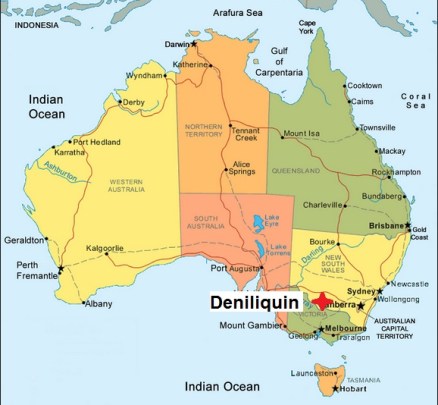
Australia. Deniliquin 16.06.13

Deniliquin

Hema Maps – Australia Handy Map. 9th edition

Owner

  • Klastin (2007) – Managing director – Tony Karuse1
  • Famicorp – Owned by Farouk Fami, inherited from the Estate of Nordon Becker3
  • Global Crown9
  • Tasman Group – Managing director Joe Catalfamo

Outside building _edited-1Source – Steers Auctioneers – Meat Processing Plant Deniliqiun, 28.08.2007

Operation 

  •  Halal and HACCP accredited5
  • Small stock abattoir – sheep, small calves,lamb and goats.3
  • Uses an inverted chain system3
  • Processing capacity 3500 sheep/lambs per day5
  • 8 hanging carcase chillers – 5 carton blast freezers5
  • Export registered – Japan, Egypt, Korea, Taiwan, Indonesia, Russia, South Africa, Mexico5
  • modern Ammonia refrigeration plant5

Inside #2 _edited-1Source – Steers Auctioneers – Meat processing plant – Deniliquin 28.08.2007

Inside #2 _edited-1Source – Steers Auctioneers. Meat Processing plant. 28.08.2007

Yards #1_edited-1Source – Steers Auctioneers – Meat processing plant. Deniliquin 28.08.2007

History

Deni_edited-1Source History of Frozen Meat. Undated.
Historical picture of the Deniliquin freezing works – known then as the Riverina Freezing works

  • Authors note. The original freezing works I guess would have been situated near a main water source, in Deniliquin that would have been the Edward river a tributary of the Murray River. I don’t think the original Freezing works owned by the Riverina Freezing Company would have been where the current meat works is.

1990

  • Halal certified3

2002

  • Closed – reasons cited due to drought and limited numbers of livestock2
    • Employed 120 people on kill days, mainly casuals.2

2003

  • Meat processors hard pressed meeting their requirements because of major shortage of lambs bought on by the drought9
  • Prices as high as $158 a head, five years ago was $80 a head at Deniliquin9
  • Meat processors forced to pay high prices for good quality lambs to keep thier abattoirs operating and to retain market share9

2006

  • Begun to employ overseas workers to fill vacant meatworker positions1
    • 6 workers through a Vietnamese employment agency1
    • Advertising in Australia failed to fill postions1
    • If had not got Vietnamese workers the plant would not be operating1
  • Abattoir is closed at some period during this year18


2007

  • Klanstin with drew from the facility – closure5
    • Was only meant to be a temporary closure
    • Operated with Halal accreditation from 1990 to closure in 2007 due to drought
  • Issues with market and meat industy had forced temporary closure4
  • Closure due to issues of sourcing quality stock13

2011

    • Deniliquin has faced a gradual but sustained and significant reduction in population over the past 15 years.2
      • Centralisation of policies of both state and commonwealth governments2
        • RTA divisonal headquarters closed9
        • Department of education – regional headquarters9
        • Murray Health headquarters9
      • prolong drought that have prevailed in much of last decade.2
    • If MDBP implemented2
      • result in 58% reduction in the amount of water available to irrigated agricultural activities.2
      • Deniliquin is heavily reliant on irrigated agriculture for its ongoing survival.2
      • If MDBP implemented would jeopardise abattoir and rice mill re-opening due to reduction of water available.2
    • Current circumstances in Deniliquin2
      • Deniliquin abattoir currently closed2
      • Negotiations currently underway for the abattoir to be sold and re-opened given improved rainfall and forecast availability.2Deniliquin council write a submission  to the inquiry into the impact of the Murray Darling basin plan (MDBP) guide in Regional Australia.2
  • Region has suffered a decade long drought26
  • Abattoirs in operation in NSW with more than 50 full-time equivalent (FTE) staff – 477
    • Includes meat processors, poultry and pigs.
  • Meat processing facilities closed in NSW since 2000 with more than 50 FTE – 97
    • Includes meat processors, poultry and pigs
  • November. facilities advertised for sale, land, equipment, structures and fittings3
  • Attorney for the Estate under instructions to liquidate all assets3

2012

  • December. Abattoir sold to Global Crown9.
  • Chief executive of Global Crown – John Wynan
    • Facility could reopen 20139
      • Would focus solely on sheep, production runs 1,000 sheep a day9
      • Goal to increase production to 3,500 sheep a day9
      • Halal certified with full accreditations for export9
    • create up to 100 jobs9

2013

  • January. Global Crown Pty Ltd – John Wynan negotiation for sale, settlement delayed due to ‘legal issues’4
  • Proposes to open abattoir this year4
  • November. Abattoir has been purchased and is expected to reopen
  • Tasman Group purchase9
    • estimate to employ 80 people9
    • Upgrades to some facilities is required.9
    • would continue as Halal slaughterhouse – for which it was fully accredited9
    • would focus solely on sheep, production starting at 1000 head a day to process building up to 3500 head.9
  • Australian Meat Group Pty Ltd (Formerly known as Tasman Group)13
    • Tasman group previously operated abattoirs at31

2014

  • March. Joe Catalfamo is confirmed as purchaser of Deniliquin11.
    • Has also purchased Dandenong #3085. Vic11.
      • Dandenong is focused on cattle processing11.
    • Plans to create state of the art processing sites at each facility11
  • Seasonal conditions at the time have decimated livestock numbers in QLD and NSW11
  • August. Deniliquin abattoir is still not in operation10.
  • Plan for the facility to be refurbished10
    • Facility has now been out of operation for 7 years10
  • NSW government will provide support to the Australian Meat Group to re-open the plant10
  • Facility is anticipated to employ up to 130 full time jobs in the first year10
    • After 5 years expected to increase to 460 full time equivalent positions10
  • NSW government pledge to provide $1M to upgrades for the facility13
    • Upgrades will allow facility to meet best practice standards13
    • Improve efficiency and provide full range of meat cuts13
  • Total cost of upgrades wasn’t able to be confirmed13
  • Australian Meat Group Pty Ltd (Formerly known as Tasman Group) have purchased the facility13
    • Managing director Gilbert Cabreal13
  • Detailed Environment Impact Statement is yet to be completed13
  • Preparatory work has begun at the facility13
  • Pending development application for facility improvements13
    • upgrades to the kill floor, receiving yard and amenities13
  • Plans for a new boning room, rendering plant and cold storage facility13
  • November. Property investment in the Deniliquin area has increased in recent weeks due to the abattoir plans to re-open15
  • Facility will be opening Mid December or early January 201515.
  • 50 staff have already been appointed15
  • Kill trials are expected to start in November16
  • Deniliquin plant manager – David Bridge from Gundagai16
  • Deniliquin Operations manager – Bernie Cabral16
  • Opening is expected to be early February 201516.
  • Audit has been completed but some refurbishment still needs to be continued16
  • Submission has been sent for new plant, with construction hoped to begin February16
    • Current facility would be suitable for another 2-3 years20
    • Plans to a new state of the art facility in the process of approval20
  • Deniliquin is in a strong growth phase with the opening of the Rice Mills also occurring16

2015

  • November. Deniliquin abattoir is the 10th abattoir that Joe Catalfamo has remodelled29
    • Deniliquin proposal is construct a new plant on vacant land next to the existing facility29
  • Deniliquin plant is now officially US licensed30.
    • This will allow the company to further develop and expand its product range when the new facility is built next door30.
  • Currently processing 2,200 – 2,500 small stock units per day30
  • Australian Meat Group Livestock Manager – Ben Davies30
  • Location of Deniliquin abattoir is very good because it is centre of Australia’s most heavily populated sheep production area30.
    • Southern most export plant that has road train access30
  • Growing global markets  that can be harnessed for mutton, lamb, goats and bobby calves30
  • December. Deniliquin abattoir is recommissioned and is again in operation17
  • $5M were spent on refurbishments17
  • During the commissioning phase the facility will process 1,000 sheep a day17
    • Working up to 3,000 a day at full capacity17
  • 70 people are now employed17
  • Second stage of production will employ a further 250 people17
    • Accommodation and houses are yet to be available to accommodate some workers17.
  • Abattoir production will be both domestic and export17
  • Exported meat will go to;17
    • Japan, Middle East, Vietnam17
    • Plans to secure a US export licence soon17

Source ‘Renovated Riverina abattoir re-opens driving property boom’ ABC Rural 14.01.2015

2017

  • February. Meat processors are finding conditions very difficult with livestock prices increasing for both beef and lamb99
    • Prices to consumers expected for meat to increase by at least $1 per kg19
  • Lambs at some saleyards are selling for 750c per kg99
  • Also a shortage of lamb supplies19
  • Numbers for kills is expected to be less by 1M head across Australia19
  • March 17. Deniliquin abattoir operations are temporarily halted20
    • due to unsustainable lamb market20
    • Complete shutdown is hoped to only last 2-3 weeks20
    • Return to operation depending on market conditions20
      • Australian dollar was currently very high21
  • Currently 180 workers were employed at the site20
  • Have been operating the facility for 2-3 days a week due to stock prices20
  • Focus on markets is currently into South America20
    • Current stock values were at $6 /kg carcase weight20
      • To be competitive the abattoir needs the value to be $5/kg or less20
  • Company had decided not to pursue further infrastructure developments at the site20.
  • April. Other abattoir closures are occurring around Australia due to stock availability and prices24
  • Some facilities that have significantly reduced operations24
  • Over-capacity in the lamb processing industry relative to supply pool is exasperated by the expansion of formerly only domestic plants now being export accredited and having export market access24
    • Export markets are unwilling or unable to pay more for Australian meat24.
  • Reports equipment from the Deniliquin facility is being removed25
  • Operations and Managing directors aren’t responding to calls95.
  • Employees under 457 visa’s have been sent home25
  • Lamb prices have actually risen higher to $6.60 /kg25
    • Indications are that the lamb prices will stay relatively strong25
  • Prices hit 700c /kg proving to be a breaking point for some abattoir operations
    • Total setback of 6 closures (not including Esperance) in eastern Australia will result in 50,000 less lambs processed in Victoria and NSW27
  • September. “With a high currency, low numbers, and high cost of production and processing in Australia, we are a little bit like the Murray Goulburn of the beef industry” – Australia’s red meat processing sector is in crisis. MLA CEO Richard Norton26

2020

  • March. Author visited this site, property and buildings were derelict and obviously not used for some time.
    • scrap metal workers actively removing equipment and items
    • All stock yards and infrastructure around the facility was removed.

Sources  – Deniliquin #2488

  1. ‘Deniliquin abattoir defends hiring overseas workers’ ABC News. 11.09.2006
  2. Deniliquin shire council submission to senate inquiry, Murray Darling basin plan. 22.01.2011.
  3. ‘Deniliquin abattoirs – For sale’ http://www.famicorp.com.au 04.11.2012
  4. ‘Deniliquin abattoir sale stalls’ http://www.mmg.com.au 08.11.2013
  5. ‘Meat Processing plant – Deniliquin NSW’ Steers Auctioneers 28.08.2007
  6. ‘Deniliquin abattoir to reopen’ The Pastoral times. 05.11.13
  7. Mr Buckingham questioning Minister of roads and ports. http://www.parliament.nsw 31.05.11
  8. ‘Lamb prices soar as suppliers struggle to meet demand’ Sydney morning herald. 14.09.2003
  9. ‘Sale deal close on abattoirs’ The Border mail. 19.12.2012
  10. rel_stoner_20140820_deniliquin-abattoir
  11. ‘Abattoir plans for Deni’ The Land 20.03.2014.
  12. ‘New life for old export abattoir’ Liberal Party of Australia 21.08.2014
  13. ‘Cash for abs’ http://www.mmg.com.au. 22.08.2014
  14. ‘Deniliquins abattoir to reopen with investment from NSW Government’ The Weekly Times 26.08.2014
  15. ‘Meat money flows’ http://www.mmg.com.au. 25.11.2014
  16. ‘Abs trial’ http://www.mmg.com.au 25.11.2014
  17. ‘Renovated Riverina abattoir re-opens driving property boom’ ABC Rural 14.01.2015
  18. https://www.ipart.nsw.gov.au/files/6feefd0b-6076-4cce-b3e6-8b0d06615116/Council_Improvement_Proposal.pdf
  19. ‘Record lamb prices killing off country abattoirs’ ABC News 24.02.2017
  20. ‘Abs work halted’ Shepparton News 17.03.2017
  21. ‘Meat Commitment – Administrator to meet with abattoir executives’ Shepparton News 21.03.2017
  22. ‘Sawmill could fill lost jobs’ Shepparton News 24.03.2017
  23. ‘Statement of temporary closure of Deniliquin abattoir’ Edward River council 17.03.2017.
  24. ‘Indefinite closures for JBS lamb plants, as supply challenge reaches critical point’ Beef Central 20.04.2017
  25. ‘Fears for abattoir’s future’ Deniliquin Pastoral Times 11.04.2017
  26. Deniliquin council submission to inquiry into the impact of the Murray Darling basin plan. 22.01.2011
  27. ‘Door shuts on sixth abattoir’ QLD country life. 11.05.2017
  28. ‘Red meat crisis the new MG says MLA boss’ The Weekly times. 27.09.2017 27.09.2017
  29. ‘Catalfamo’s abattoir industry return’ The Stock and Land 11.11.2015
  30. ‘Deniliquin: sheep, lambs, goats, calves’ Stock and Land 11.11.2015
  31. ‘What’s iin store: pointy end of the year’ Stock and Land 09.11.2013

Coonamble

Coonamble is located Northern NSW and closed in 2001 citing GST and crippling government charges. It is currently undergoing renovations for reopening in 2014.

Other Names

Current Operation

  • Is currently undergoing renovation to reopen in 2014

Location   

  • Coonamble is about 230km direclty south of the NSW/QLD border, Large cities closest Tamworth 292km by road or Sydney 700km in a straight line South east.

Australia Coonamble

Coonamble

Hema Maps – Australia Truckies atlas.

Owner

  • Castlereagh – Bill Scott1
    • Other directors John and Len Scott2
  • 2012 – Nasser Beydoun

Operation  

  •  Operated butcher shops in Coonamble.3
  • Employed 52 workers.

History

1974

  • Scott Brothers took over operation of abattoir3

2000

  • May. Impending GST set to force sale or shutdown of abattoir2
    • Under GST – Meat processors required to pay GST on all stock purchases and claim tax back as refund2.
    • Problem is purchases need to be settled in 7 days and refunds not received for 2 months.2
    • Coonamble would require $200,000 in additional interest chargesto cover GST in first month of reporting period, then another $400,000 while waiting for refund2
    • represent a liability of $50 per head for owning a beast 24 hours.
  • Martin Ferguson (Labor) claims GST  was responsible for Coonamble closure1
  • Bill Scott – owner – “Cause of closure lies squarely at the feet of the Carr Labor government”, he called “never ending regime of charges and regulations”1
    • Government implemented pay roll tax, workers compensation changes and state departmental fees and charges – Bill scott identified as buisiness killers1
  • July. Abattoir closed.
    • Citing GST as catalyst and crippling state government costs3
    • Works to be mothballed but maintained to export standards for immediate start up.3
  • Operational costs in NSW higher than QLD.3
  • Coonamble had been larges buyer of yearling cattle in NSW3
  • On closure had 40 on last week payroll, and bought 1/3 of yarding at Coonamble sale3

2001

  • Offically closed.4

2008

  • Coonamble Shire Council commission a study which found the facility was a viable option.4
    • Used results of study to attract an investor4

2012

  • June. Business sold to a Sydney Company4
    • when reopened will employ 30 people4
    • Produce Halal certified beef and lamb4
    • buy livestock from North west NSW and southern QLD4
  • refurbishment of abattoir currently 80% complete with opening expected in September4
  • July new owners, Nasser Beydoun, owner, manages sodt drink and dip business, first foray into meat5
    • Will start with 30 employees, number likely to grow5
    • working with council to ensure meet licensing requirements5
    • producer halal certified beef, lamb and goat meat5
    • Require new boilers, cookers, doing up slaughter room, power is upgraded and have started work on fridges and cool room8
  • Opening of an abattoir after being mothballed so long (11 years) is almost without precedent7
  • Halal meat – growing metroplitan market8
  • Expect to be opened January or February 20148
  • New owners are buying houses for staff in town of Coonamble8
  • Government’s upgrading program a loop line will be provided with new siding and loading area at Coonamble railway – is a good outcome for the abattoir operations9
  • Oct. Shire talk of developments to date of abattoir’10
    • 1 meat inspector position has been filled with another advertised10
    • Owners notified council – sheep and cattle to be processed in one line10
    • 17 points yet to be addressed prior to reinstatement of licence10
      • Previous operations residents on the opposite side of the river had complained of odour10
    • Consideration given to selling local sheep yards as they weren’t being used10
      • sheep yards were part of saleyard enterprise10
      • Sheep yards to remain11
  • Nov Coonabarabran abattoir (NSW) (located 112km SE of Coonamble) closed6.
    • Closed due to inability to recover from $190,000 fine for effluent spill & Owner had been diagnosed with leukaemia and unable to work6

2013

  • Mar. Meeting held with owners, still compliance and investment funding issues12

Sources

  1. ‘Ferguson wrong again on abattoir closure’ John Anderson Dpt Prime Minister Media release. 05.07.2000
  2. ‘Coonamble abattoir early GST victim’ Stock Journal 31.05.2000
  3. ‘State rules shut abattoir’ The Land 06.07.2000
  4. ‘Plans to reopen Coonamble abattoir’ ABC news 11.07.12
  5. ‘Prosperous future of Coonamble abattoir’ ABC news 12.07.12
  6. ‘Closed Coonabarabran abattoir up for sale’ The Northern Daily Leader 13.11.12
  7. ‘Coonamble plant to re-open’ Beef Central 08.11.13
  8. ‘Coonamble abattoir reopening to create local jobs’ ABC news. 29.07.13
  9. Coonamble shire council meeing minutes 11.07.12
  10. Coonamble shire council meeting minutes 10.10.12
  11. Coonamble shire council Ordinary meeting 12.12.12
  12. Coonamble Shire council. Business paper 15.05.13

Camperdown

Camperdown abattoir was located close to Sydney and closed in 1991 following violent industrial confrontations over pay and conditions.

Other Names

Current Operation

  • Closed 19911

Location   

  • 8km SE Sydney CBD

Camperdown

Hema Maps – Australia Truckies atlas.

Owner

  • Famicopr – Farouk Fami1

Operation

History

1991

  • May. Fired 130 workers2
  • Oct. Mounted police charged meatworkers picketing abattoir 26th October 19912
    • Body Hire firm – ‘Troubleshooters Available’ assis abattoir to find contract labour2
    • Camperdown 1st abattoir to be staffed by contract labour2
  • Violent protests between unions against police and contractors over pay conditions and pay.1
  • Mangement decided to employ contract workers, never reached an agreement with unions, abattoir closed.1
  • Bitter and violent industrial confrontation forced plant’s closure1
  • Troubles arise from attempts by some exporters to cut  meatworkers wages and conditions” Bill Malcolm – Senior lecturer in Agricultural economics at Melbourne University
  • Several closures in Victoria abattoirs as a result of shortage of livestock
  • QLD meat industry seen as having advantage over Vic-
    • QLD – increasingly lot fed animals receving higher export prices, ability to export quicker to Japan2
    • Vic – grass fed animals,
      • Extracting difference in profit margins from meatworkers2

2007

  • Poperty is carved into 6 lots and beng advertised for total price of $800,000 (dated 10.12.2007)1
    • old abattoir site nearly 10ha for sale for $230,0001
    • Is an abandoned site, in shocking repair, has asbestos1
    • Shire council asked management to clean up site1

Sources

  1. ‘Derelict abattoir for sale’ The Standard. 10.12.2007
  2. ‘Mounted Police attack abattoir pcikets’ Green left weekly. 30.10.1991

Blayney

Other Names

  • ANZCO abattoir

Current Operation

  • closed 19982

Location   

Australia. Blayney

Blayney

Hema Maps – Australia Truckies atlas.

Owner

  • McPhee Meats2
  • 1996 – ANZCO1
  • Manager – Neville Newton, now managing Goulburn4

Other abattoirs in Australia

Go to this link to view Location of Australian Abattoirs

abattoirs_edited-1   

Operation  of Blayney #155

  • Sheep processing facility6

History

1900

  • Freezing works3

1957

  • abattoir opened, had been a freezing works prior. Latter tannery and pet food plant3

1976 – Not sure if this is correct because in 88 frieght company say they worked for Blayney’s last 43 years.

1963

  • February. At this time is an export facility operated by Blayney (Abattoir) County council6
    • Has chilling, freezing and freezing storage facilities6

1976

  • Tenders for contract to build beef facilities1
    • 2 story building, 1,800 sq m, able to process 100 head cattle per hour1
    • Electrical, Mechancial, Ventalation, Visera tables1
    • To commence construction November 19761

1987

  • Nov. Is registered at this time as an export facility
    • Operating under the name – Blayney Abattoir

1996

  • ANZCO bought insolvent abattoir from MPhee Meats – left unsecured creditors owed $6M2

1997

  • July. Is registered at this time as an export facility8
    • Operating under the name ANZCO foods Pty Ltd8

1998

  • April. Operations scaled back in recent weeks, Some 1,600 staff had previously been employed, now there was barely 1005
  • May. Closed – reason cited by ANZCO- stock shortage2
    • Industry sources say ANZCO left with large stocks or unsol meat as a result of Asian currency crisis2
    • NSW Meat Industry Authority (MIA)”there is definitely no shortage of stock or supply”2
    • “This year cattle killed in abattoirs have averaged 43,000 head a week an increase on average of 10,000 head over last the last year(dated 10.03.1998) Richard Tpnner, MIA2
    • AMIEU – suspect economic factors rather than stock shortages were behind closure2
    • sacked workers given one weeks notice – 580 people2
    • AMIEU accused ANZCO avoiding termination payments and redundancies – could be millions of dollars. – by citing seasonal factors allows ANZCO 8 month lee period before being deemed at closed for purpose of redundancy liability2
    • Blayney refus to indicate how long plant closed for.2
  • Refrigerated transport business who carried livestock and refrigerated meat for abattoir last 43 years also closed and selling 14 prime movers and trailers – abattoir was seasonal and not suited to transport company2
  • other recent closures Grafton, Gunnedah and Canberra2

2010

  • March. Aus meat listing of March 2010 doesn’t show Blayney #155 abattoir as a registered facility9.

2014

  • September. Proposal is put to council to build a new goat abattoir in the region20
    • Proposed $38M10
      • Facility would be attached to existing Blayney Sealink Cold store complex10
      • Plans have been submitted to council11
        • Expectations to commence building middle 201511

2016

  • June. Approval has not yet been received for development to go ahead11
    • Environmental concerns with 25 objections received11


Sources

  1. ‘New beef facilities – calling for tenders’ The Age 08.09.1976
  2. ‘600 sacked workers given just a weeks pay’ Sydney morning herald. 10.03.1998. http://www.abattoirs.com.au
  3. http://en.wikipedia.org/wiki/Blayney,_New_South_Wales
  4. ‘Abattoir industry in a disastrous state’ ABC Rural 16.02.10
  5. Parliamentary Hansard. Speaker Mr RW Turner. 30.04.1998
  6. World on a plate – A history of meat processing in Australia. Stephen Martyn. 2014
  7. http://www.abc.net.au/news/2014-09-12/2438-million-goat-abattoir-proposal-for-blayney-sparks-efforts/5739222
  8. Aus Meat July 1997 Listing
  9. Aus Meat Mar 2010 Listing
  10. ‘Investing $38M at Blayney’ The Land 18/09/2014
  11. ‘Developers expect $38M Blayney …….’ Central Western Daily 07/06/2016

NSW Meat Industry Milestones

General Quotes and Information

  • Neville Newton – 50 years working in abattoirs, managing Blayney, now Goulburn1.

“There are far too many processing abattoirs out there and not enough animals to slaughter”1

“Industry plight has been caused by record low numbers of livestock”1

“We’ve had a drought for a long period of time”1

“In fact, the only time I’ve ever seen it a bit like this was in the late 70’s and early 80’s with beef, there were large herd numbers and there was a very big cow and heifer kill and then all of a sudden they just ran out of numbers, At that time there were a lot of corrections in who owned bee processing plants in Australia”1

  • Central west NSW used to have 11 abattoirs, now it has 4. Cowra, Dubbo, Goulburn & Oberon. Currently 29 licensed red meat abattoirs in NSW, down 30% decade ago. (Dated 16.02.2010)1
  • Atleast 6 red meat abattoirs in Central NSW shut since 2003 (Dated 16.02.2010)1


Timeline Information

1987

  • Aus-Meat registered abattoirs in NSW – Not necessarily all abattoirs as it wasn’t mandatory to register with Aus-meat.
    • 16 – Export acrredited abattoirs2
    • 8 Domestic abattoirs2
    • 16 Boning facilities.2

1995

  • Federal and State governments agree on mandatory code for processing red meat in export and domestic abattoirs and meat processing plants.
  • Federal had been pushing for compulsory code of conduct for meat inspectors in all states.
    • Under existing arrangements a national code of conduct of inspection was in force but was applied voluntarily by the states
  • “Australia has the most rigorous hygiene standards in the world, but there was a pressing need to continually update the codes of conduct in the industry” Senator Collins.
  • Community and Public sector union alleged that cartons of meat with pesticide levels 12 times above allowable limit were sold on domestic markets. Also said it had details of meat subsitution rejected from export sold into domestic.
    • Union declined to substantiate allegations at special senate hearing in Canberra

1996

  • USDA reviewd Australian export abattoirs and found 14 of them unacceptable or marginally acceptable. Australian quarantine services conducted its own review and found all but 1 up to USDA standards5
    • Unacceptable abattoirs in NSW named6
      • NSW – Southern Country Foods – Wagga Wagga6
      • Rockdale Beef – Yanco6
    • Marginal abattoirs in NSW named6
      • Wingham abattoir – Wingham6
      • RG Gilbertson – Grafton6
      • Cargill Australia – Wagga Wagga6
  • We have too many abattoirs to be economic, as a consequence corners get cut. We are the biggest exporter of beef to the world so it is vital we drive a massive rationalisation of the industry or we will be cut out” – John Carter, 10 years head of NSW Meat Industry Authority.6
  • AQIS did suspend 2 abattoirs after its own inspection found deficencies not picked up by USDA5
  • Australia’s beef export trade worth $1B5
  • Method of operation that is in question not the meat being produced is contaminated or off8
  • Europe blacklist in 6 meat exporters – citing animal welfare breaches and technical faults7
    • Europe $85M market7
    • Europe told AQIS – killing procedures in some inhumane, Stun guns were inadequate in 1 abattoir7
    • 6 of the 11 abattoirs inspected banned from exporting to Europe7
    • Australian Meat Council – animal welfare standards depended on which side of scientific  debate one listened to7
      • “what is a breach and isn’t is widely disputed both on rational and irrational grounds” Christopher Creal. Aust Meat Council.7
      • “Europe had enormous problems with trade in unsafe meat. There is a blackmarket trade in meat grown in some pretty nasty hormonal promotants, and vets have been murdered for trying to clean up chemical regulation”Christopher Creal. Aust Meat Council.7
  • “Far too many abattoirs operate with low-level expertise and management, They must be upgraded or they should be closed”. John Carter. Former head of NSW meat Industry Authority9

1998

  • Waterfront Industrial dispute – 1,800 process workers stood down.4
    • boycott of NFF and supermarkets and against the unloading of Australian products4
    • Abattoirs were unable to obtain empty containers for shipping requirements4

2013

  • Aus-Meat Accredited
    • 16 Export accredited abattoirs3
    • 0 Domestic abattoirs3
    • 10 Boning facilities3

Sources

  1. ‘Abattoir industry in disastrous state’ ABC Rural 16.02.10
  2. ‘Aus Meat Accreditation Listing November 1987 – private email, Ausmeat. 16.01.13
  3. ‘Aus-Meat accreditation Listing – current at 14.01.2013
  4. ‘1,800 Meat workers stood down’ Sydney Morning Herald (SMH). 20.04.1998. http://www.abattoirs.com.au
  5. ‘Threat to beef export trade’ SMH 08.02.1996.www.abattoirs.com.au
  6. ‘US names abattoirs producing bad beef’ SMH 24.01.1996.www.abattoirs.com.au
  7. ‘Europe blacklists six abattoirs’ SMH 23.01.1996. http://www.abattoirs.com.au
  8. ‘Meat Exporters have bone to pick with us’ SMH 19.01.1996. http://www.abattoirs.com.au
  9. ‘US threat puts $1B beef trade at risk’ SMH 18.01.1996. http://www.abattoirs.com.au

Casino. #239. NSW

Casino is more commonly known as the Northern Co-operative Meat Company

Casino is an Export accredited facility processing beef and offal. It is the only Co-operative owned meat business in Australia.

Other Names

  • Northern Co-operative Meat Company


Current Operation

  • Aus-meat registration #02394.
    • Aus-meat listing accessed 02/10/2017
    • Export accredited facility
  • Casino is the only producer Co-operative owned meat processing business in Australia16
  • NCMC also operate a pig processing operation at Booyong20

Source http://ncmc-co.com.au/. Accessed 28.08.2017

Location   

Australia. Casino

Casino

Hema Maps – Australia Truckies atlas.

Owner

  • Northern co-operative meat company – Only farmer co-operative owned beef abattoir in Australia1
    • Chief Executive Simon Stahl1

Operation  

  • Service kill to customers involving up to 20 operators1
  • Specialised Wagyu processing plant – six regular kill customers provide 10% weekly beef throughput – 4000 head1
  • Direct incentive program offered to co-op members – paid $450,000 in incentive payments 80,000 slaughtered head.1
  • Membership is about 1500 members, both cattle and pork, including 1350 as ‘active’1
  • Members not required to gaurantee of livestock supply and competes with other processors3
  • Operates two floors – Capacity 12,500 a week, Beef floor over 150kg, veal floor under 150kg3
  • As a Cooperative is required to publicly disclose its end-of-year results unlike most other meat processors1
  • Also own Pig processing plant – Booyong, Casino Hide traders.3

Source Beef Central 05.11.2014. Logo

Source Beef Central 08.06.2017

History

1933

  • Northern Co-Operative Meat Co is established as a farmer owner processing business16
    • Service export and domestic beef and pork markets16

1933 – 1939

  • Founders for the first 6 years processed cattle in their own right36

1975

  • Casino Hide Tanners is established16
    • One of the first tanneries in Australia dedicated to the tanning of cattle hides for export16

2000

  • South Burnett meatworks at Murgon close.27
    • Leaves Casino as the only producer owned processing co operative remaining in operation in Australia27

2010

  • 2009/2010 financial year after tax profit $1.025M3

2011

  • March. Northern Co-operative say jobs will go if the Richmond Valley Council goes ahead with planned changes to its water charges14
  • May. Questions asked in legislative council in regards to general information of abattoirs in operation in NSW at the time that employ 50 full time equivalent staff or more.12
    • Casino Northern co-Operative Meat Co Ltd is included in list.12
      • Licensee –  Fung Lea Food Pty Ltd12
  • 2010/2011 financial year after tax loss $1.03M – impacted by climate conditions on cattle availability3
    • Start of 2011 was extremely wet19
    • High Australian dollar19
      • Escalated 26c19
    • Climate conditions had placed significant pressure on business in the January to March Period19
      • Peak production period is normally January to June19
    • Meat processing industry profitability isn’t constant19
      • Fixed costs are very high19
      • Lack of stock can create significant challenges19
        • Supplies predominantly come from independent parties for service kills19
        • When trading conditions become difficult they slow their production particularly when competition or prices of livestock increases19
  • Current CEO at this time is Gary Burridge19
    • Intends to stand down in April 2012
    • Mr Burridge had worked 18 years in this one position19
      • Will move to a new position with T & R Pastoral group20.
      • Will continue to hold Chairman position with Australian Meat Industry Council.20
  • Casino Co-op is currently owned by 1650 members who are predominantly cattle and pig producers19
    • No guarantee of livestock numbers from members19
    • Facility competes with other processors for throughput19
  • NSW Adult Cattle Slaughter throughput – www.mla.com.au
    • Statistics only for the State of NSW financial years.
    • Comparing monthly slaughter for entire state of NSW.

2012

  • Jan.Northern Coopertive Meat co takes on controlling interest in Ramsey meats business3
  • Acquired Ramsey Meats business (Grafton) and now closed.1
    • Ramsey – located Grafton closed operations 14.11.10, shifting business to Casino2
    • Legal representative – Move from Grafton regretted and not the companies preferred option, it appeared inevitable certain Government departments were “single minded in their efforts to achieve the closing of the abattoir business”2
    • Ramsey meats were heavily focused on veal production and had been shifted a service kill arrangement to NCMC since its closure20
  • February. New CEO is appointed. Simon Stahl21
  • Currently operates from Nippon Meat Packers Australia head office in Sydney21
    • Manager of innovation and regulatory oversight21
    • Joined Nippon in 1992, initially working at Oakey (QLD)21
    • Spent 7 (1995 – 2012) years as managing director at Nippons Mackay (QLD) plant21
  • June. 2011 / 2012 Financial year Profit $826,00022
  • Additional plant throughput (due to Ramsey Meat acquisition) had helped trading.22
    • Veal numbers up 73% on previous year22
      • Utilisation operating at 40% capacity in 10/11 now operating at 95%22
    • Beef throughput up 3% on previous year22
      • Beef floor currently operating at 100% capacity22
        • Yearly cycle is 90%22
  • Specialised Wagyu processing  a significant part of the Casino business22
  • Direct consignment incentive to co-op members on 80,000 head was $318,00022
    • Incentive is paid to co-op members by a custom kill operator committed to processing at Casino22
    • Currently 1550 members22
  • NSW Adult Cattle Slaughter throughput – www.mla.com.au
    • Statistics only for the State of NSW financial years.
    • Comparing monthly slaughter for entire state of NSW.

  • Casino is hopeful of being re-listed to supply Russia
    • Plant with 6 others was de-listed earlier in the year.
  • May. NSW unveils regulations to ensure wellbeing and welfare of animals.13
    • Regulations require a designated Animal Welfare Officer (AWO) to oversee and be accountable for the welfare of animals processed at each abattoir facility.
    • AWO’s will undergo specific training that will make them eligible for the position only if that training is completed.
    • All domestic abattoirs in NSW will be required to also have an AWO by 01/01/2013
  • June to December – processing period hard.1

2013

  • Jan – June.  – shift in momentum of processing numbers due to drought.1
  • Hitting weekly records and working extra shift1
  • Not so much extra animals due to drought but abundance due to supply from Northern properties, larger Southeast QLD processors  didn’t have to come south to source kill supply1
  • Plants beef throughput up 7%, to end of financial year veal floor utilisation up to 85%, beef floor – currently 100%, yearly cycle 90%1
  • NSW Adult Cattle Slaughter throughput – www.mla.com.au
    • Statistics only for the State of NSW financial years.
    • Comparing monthly slaughter for entire state of NSW.


  • August. Licence agreement is obtained to allow the Casino plant to process PCAS (Pasturefed Cattle Assurance System) on behalf of it’s customers-operators23
  • NCMC record a before tax profit $3.9M for the 2013 /2013 financial year.24
    • Driven by sharp rise in throughput in Jan – June due to effects of drought24
    • Veal numbers increased due to first full year of operations since acquisition of Ramsey meats24
      • up 25% on previous year24
      • Veal floor had been operating at 40% before Ramsey Meats purchase24
        • Now operating close to 85%24
    • Beef throughput was up 7%24
      • Beef floor operating at 100%, yearly cycle average 90%24
      • Processing 4,000 head a week24
        • Wagyu kill for six regular customers makes up 10% of beef throughput24
          • Challenging processing Wagyu because of customers requirement of different cutting lines for global customers and different branding and packaging24
    • Not a 12 month period record of throughput24
      • last quarter, weekly records of throughput were being achieved24
        • Saturday shifts being worked24
          • Possibly the first time the plant has operated on Saturdays24
  • Direct Consignment incentive $450,000 for about 80,000 head24
    • Achieving a new record level in  12/1324
  • Currently approximately 1500 members, cattle and pork producers24
    • 1350 regarded as active.24
  • NCMC Chairman at this time – John Seccombe24
  • Nov. Before tax profit -$3.9M for 2012/2012, up from $839,000 for 2011/20121
  • Passed Russian regulatory audit in November 2012, restoring full access to emerging market there1
  • Offering livestock suppliers a 20c/kg carcase weight premium on vealers meeting Pasturefed Cattle assurance system (PCAS)5.
    • Veal cattle 70-150kg5
    • have identified a large international customer who is keen to adopt PCAS as part of brand story5
  • Livestock suppliers under PCAS are receiving 20c / kg carcase weight premium for vealers25
    • A large international customer is keen to adopt program as part of its brand story25
    • 20c /kg is twice amount offered for PCAS on the beef floor.25
  • Veal throughput had increased 25% since the 18 months acquisition of Ramsey meats.25
    • Veal carcase around 120kg25
    • Vealers can range from 70 – 150kg25
  • Australian processors face higher costs of production, PCAS offers a way to differentiate their brand25
  • NCMC purchase Manning Foods36

2014

  • June. End of year profit for 2013 / 2014 $25.9M. Year ending 30/06/201416
    • High rates of slaughter due to drought
  • In general profitability across Australian export processing industry if high27
    • high export demand27
    • Abundance of relatively cheap cattle caused by drought27
      • Producers are receiving poor livestock prices27
  • NSW Adult Cattle Slaughter throughput – www.mla.com.au
    • Statistics only for the State of NSW financial years.
    • Comparing monthly slaughter for entire state of NSW.

  • September. Beef and Sheepmeat processors feature predominantly among Australia’s largest 500 privately owned companies.26

Source. Beef Central. 24.09.2014

  • Red meat sector presence in the top 500 listing is important26
    • 14 businesses listed were associated with the Meat and Livestock industry26
      • 12 were either processors or non-packer exporters26
    • Reflects the broad business activity of the red meat industry across the nation26
    • Most beef businesses are located in rural areas. Significant employers in those areas26
      • Top 4 red meat entries supporting close to 9,000 regional full time staff.26
    • All the red meat companies showed increased turnover in last financial year26
      • Once in a generation business opportunity driven by abundance of slaughter stock at cheap prices due to widespread drought26
        • particularly those plants with access to international markets.26
      • Normally abattoirs high volume, low margin enterprises26
        • this year high volume, high margin26

2015

  • March. Northern Co-Op export licence isn’t locked into the service of its foreign owner
    • Duopoly squeeze on producers causes pressure on prices and price signals producers do/don’t receive.15
      • Duopoly pressure is supermarkets in the domestic market that buy 60-65% of the domestic market and foreign ownerships hold on the export markets15
      • Australian beef processing is effectively owned by its major export market15
        • United States – in the form of Teys and Cargill15
        • Brazil – JBS15
    • Minimal opportunity for independent operator / producers to gain processing space to export Tier 1 to China or other Asian destinations15
    • Efficiencies coming onstream in abattoir technology mean that a small southern works might be constructed for half the price of AACo’s operation at Livingstone, Darwin” Mr Burton Taylor, former chairman of AACo.15
    • Processor ‘gouging’ over the past 2 years of drought induced turnoff has occured15
  • June. Casino, Northern Co-Operative Meat Co posts a $23M profit before tax for 2015/2015, year ended 30/06/201515
    • Turnover of $301M, Net profit after tax of $17.9M38
    • Total assets of $134.4M 38
    • Result due to a number of factors15
      • record cattle throughput for the year15
        • Many stock turned off to slaughtered due to drought conditions15
    • Second years profit represents 2 of the best back-to-back years in the business’s 82 year history16
      • Bonus incentives to members totalling $3M16
      • Shareholders to receive dividend payments 12% of share capital value16
        • in addition to livestock supply incentive payments16
  • NSW Adult Cattle Slaughter throughput – www.mla.com.au
    • Statistics only for the State of NSW financial years.
    • Comparing monthly slaughter for entire state of NSW.

  • November. Significant capital projects to be undertaken include16
    • upgrading cold storage with the installation of plate freezing technology16
    • automated robotic system in the cold storage area16
    • upgrades to the beef floor16
      • Modification to the twin lead up races to knocking box16
        • replacement of conventional box with rotary box with the addition of accumulator chain16
    • new boilers16
    • waste management treatment facility at the tannery16
  • New capital projects planned to be commissioned in 201616
  • Outlook for 2016 was that stock prices would remain at or near historical highs16
    • Expectation that 10-15% reduction in cattle numbers being processed than previous financial year16
      • As per Meat and Livestock Australia predictions16
  • Service kill partners currently using the plant total approximately 16016
    • 20 core larger clients16
    • Others are smaller butchers or wholesale operators16
  • Facility has capability to kill 8,000 cattle per week on two separate processing floors16
    • One floor processes stock over 150kg16
    • Veal floor processed lighter stock16
  • Provides customers with world-class facility to process beef, veal or pork16
  • Accreditation as an approved processor for16
    • EU (European Union)
    • US (United States)
    • Japan
    • China
    • Korea
    • Halal
    • Organic and biodynamic markets
  • Operates and maintains a secure segregation system for carcases intended for separate markets16

Source http://ncmc-co.com.au. 23.08.2017

  • Largest component of business is Casino Service Processing (CSP) business division16
    • Operated in conjunction with Casino Hide Tanners16
      • Capacity to process more than 900,000 cattle hides per year16
        • Processes hides from green through to wet blue leather.16
  • NCMC independently operate their own marketing range of brand lines16
  • Casino will close one of it’s two beef chains for the season on 20/11/201528
    • inevitable undersupply of stock has caused the early closure28
    • Veal chain will be close 13/11/201528
      • Veal will be shifted to single chain until proposed final closure date of 16/12/201528
    • 150 casual staff will be put-off early28
    • Permanent staff will not be re-trenched or otherwise affected28
  • Had been a stock throughput decline of 30% recently28
    • Adult cattle numbers had declined 20%28
    • Veal numbers were back 70%28
      • Impossible to maintain both chains later into the season28


  • “Australian beef industry has gone from a 35 year high in beef herd size, to a 20 year low in the space of just 2 years” Simon Stahl, CEO, NCMC28


  • “Australian processors have been operating 30% above normal capacity for the last 2 years as producers responded to drought conditions by turning in their cattle for processing” Simon Stahl, CEO NCMC28


  • Subject to rain Casino plans to re-open its beef chain after a 3 week break on 11/01/201628
  • JBS Australia Townsville and Teys Australia announce early closures for the season due to cattle availability28
  • December.

Source. Beef Central 29.12.2015

2016

  • January. Infrastructure improvements are installed29
    • Upgrades will cost approximately $40M33
      • Tannery improvements costing $7M33
  • February. Meat and Livestock Australia 2016 industry projections predict a likely fall in the number of slaughtered cattle for 201634

Source Beef Central 27.01.2016

  • 2016 Beef kill Australia wide expected to be 7.6M head34
    • 18% decline from high point in 201434
    • 2017 is expected that kill numbers will be 7M head34
      • Lowest number since 199534
  • Live exporters are mounting increasing pressure against beef processors in Australia34
    • ‘Traditional’ processors areas of procurement for cattle are being entered by exporters to fill live boat orders.34
      • The separation that once existed in terms of live weight between boat (live export) and processed cattle appears to be breaking down.34
  • International markets are currently in a poor state34
    • Australian meat processors in general are making losses on almost all lines of slaughter cattle being processed.34
    • Producers previously had to wait long periods for kill space to sell stock to slaughter now those wait times have lessened34
  • Casino plant had cut back on the veal processing chain last year has resumed to processing on the chain of 50%34
  • Casino beef chain is currently operating at 70%34
  • March. Wiley undertakes major infrastructure improvements at Casino29
  • 4 Projects29
    1. New Cold chain management facility29
      • reduction in product movement and multiple handlings29
      • Implementing ASRS (Automated storage and retrieval system)29
        • 1st in a frozen environment in Australia29
        • 2nd installation in the world29
      • Capacity of 4840 cartons, throughput of 14,000 cartons per day29
        • Dematic smart sort carton system – European product33
        • Improvements in efficiency and traceability29
        • Increased storage capacity 33
        • Reduced manual handling and forklift movements33
      • Plate freezing capacity, blast chill tunnel 30
        • All product will be able to be frozen and chilled onsite33
      • loading dock cold chain compliant30
        • Ability to handle shipping containers and pantech trucks30
          • Trucks reverse into ‘igloo’ and seal encloses around the access point30
            • This will soon be a standard feature in the industry30
      •  
      • Completion is expected Mid 2016


Source Wiley 20.09.2016

  1. Design and construct knocking box and race system29
    • over 100 operators that use the facilities29
      • Require efficient facilities with a highly trained workforce29
    • Design principles based on Temple Grandin methods29

 Source Wiley 19.03.2016

  • Twin rotary knocking boxes30
    • design modification allows operator to change unit to suit the beast being slaughtered30
    • operates 30% faster than previous system33
    • Suits a larger range of animals30
    • Reduces stress on animal30
    • Longer than standard units30
  • Pivotal part of the abattoir process, setting rhythm for rest of facility29
  • Equipment was fitted offsite and installed in January29
  • Veal race was also re-directed.29

Source Wiley 20.09.2016

    1. Supply and relocated steam services29
      • Installed in January29
      • Utilises compressed air and hot water29
      • Previous existing structures were unable to support the loads and new gantries had to be made29


  1. Upgrade to waste water treatment at the Tannery29
    • Work at the Tannery will begin in June 201629
      • Costing $7M33
    • Upgrade existing chrome precipitation plant30
      • Improvements to waste stream segregation30
      • Additional hair removal with new hair savers30
    • Upgrades allow for marketing of hides to higher value markets30
  • Casino is approved for export to the USA, Japan, Korea and EU.29
    • Holding certification or organic and Halal processing29
    • Facility can process 12,500 cattle per week29
  • Improvements occurred while the plant was still in operation29
    • On- site access was limited29
    • Important not to interrupt production output being conducted29
      • Often work was conducted outside normal operating hours and at night29
  • May. Australia’s top 100 food and drink companies identifies 16 closely aligned with red meat processing, further processing or value adding sectors35
    • 2014 and 2015 delivered record processing thoughputs of livestock across Australia35

Source Beef Central 12.05.2016

  • June. ACCC (Australian Consumer and Competition Commission) hear from a local producer claiming that the region has suffered in recent years due to the changing dynamics of the local processing sector.36
    • Casino purchasing Ramsey Meats (2011) and Manning Foods (2013)36
      • Reduced the number of buyers operating on vealers in the local market from 3 to 1.36
      • Once the Co-Operative began to process it’s own cattle it impacted negatively on producer returns36
      • Traditionally Casino plant had paid a significant premium to the EYCI (Eastern Young Cattle Indicator), in the past few years this had been reversed.36
        • In 2010 Casino paid 27c/kg above EYCI36
        • In 2011 Casino paid 42c/kg above EYCI36
        • In 2012 Casino paid 30c/kg above EYCI36
        • Once Casino took over Ramsey meats in 2012 result was negative 2c/kg36
        • In 2014 Casino paid 20c /kg less than EYCI36
        • In 2015 Casino paid 31c /kg less than EYCI36
  • Casino plant had been operating at 30% capacity prior to the decision to operate as a veal processor in its own right36
  • CEO Simon Stahl refuted claims “EYCI was not a vealer based pricing indicator and was irrelevant in comparing against vealer prices”36
    • NCMC represented only 1% of young cattle traded.36
  • Operating as a service kill operator has some advantages but also weaknesses36
    • If individual operators start to lose money or they have a better option they go elsewhere36
    • Beef floor continues to operate predominantly as a service kill36
  • 2015 / 2016 financial year Casino makes a $1.57M profit before tax.37
    • Result would have been worse had it not been for the high level of throughput in the July to December 2015 period37
      • Numbers dropped significantly across Australia for all processors in January to June 2016 period37
    • NCMC had lost some of its service kill customers in the last 12 37
      • Specialised Wagyu sector was still a major part of the plants throughput37
        • 5 or 6 of Australia’s largest Wagyu  supply chains conduct service kills at Casino37
          • 20% of the plants throughput37
    • Beef chain numbers had been down 37% on the previous year
      • 2015 / 2016 was the lowest throughput for the last 15 years37
    • A significant loss in trading is expected in 2016 / 2017 due to the downturn in numbers37
  • NSW Adult Cattle Slaughter throughput – www.mla.com.au
    • Statistics only for the State of NSW financial years.
    • Comparing monthly slaughter for entire state of NSW.

  • Top 100 Australian food and beverage companies list

Source Beef Central 27.02.2016

  • September. Tannery Infrastructure improvement work has been completed30
    • Cold chain work expected to be completed October – November 2016.30
  • October.Casino for the first time has adopted service kill of manufacturing types (Cows and Bulls) to underpin rates of throughput37
  • Casino is currently killing 3 or 4 days a week on both beef and veal chain37
    • Processing 500 – 800 cattle per day37
  • Pork Processing business of NCMC is an important strategic diversification for the co-op37
  • Co-operative CEO at this time John Seccombe37
  • Casino General Manager Simon Stahl37
  • November.Top 100 list is released of Australian Business Council of Co-operatives and Mutuals (BCCC)38
    • Looks at Co-operatives and mutual enterprises in Australia38
    • Agriculture is relatively poorly represented in the list.38
    • Casino plant operated by NCMC ranked 27th on the list.38

2017

  • Facility can process 12,500 bovines per week17
  • Accreditations and Licences are available for viewing at this site NCMC

Source http://ncmc-co.com.au. accessed 23.08.2017

  • March. Chinese Premier visits Australia may yield significant trade access improvements for Australian beef and sheepmeat40
  • Trade access reform talks with China focus on key areas40
    • Removing current restrictions in chilled meat that only currently allow 12 Australian establishments to export chilled meat to China40
    • Opening up access to all Australian export eligible meat40
      • Currently access is limited by licence40
        • 15 red beef plants looking to export to China that don’t hold a licence40
        • With up to 60 beef and sheepmeat plants seeking to achieve access to China40
  • Approval is given to some beef and lamb processors in Australia to export chilled meat to China42
  • June. Casino plant is fined $15,000 from the NSW Environment Protection Agency (EPA)41
    • EPA claim Casino failed to meet the requirements of a Pollution reduction program at the abattoir and tannery41
    • NCMC rejects allegations saying the breach refers to a report submitted by NCMC41
    • IN early 2016 NCMC was required to develop a plan that demonstrated sustainable wastewater management at the premises by 30/12/201841
      • required a report to be submitted to the EPA setting out a program and measures41
      • EPA claim the report failed to address key issues41
      • Pollution reduction programs are included in the licensing environment protection licences and are legally binding41
    • NCMC have invested $10M on improvements to waste water management over the last 5 years41
  • Since 1990, more than 90 abattoirs across Australia have closed.41
    • Mostly in regional areas41
  • NCMC currently employ about 1,000 employees across 5 core business divisions41
  • 140,000 people employed in the red meat processing sector across Australia41
  • Cost pressures on manufacturing in Australia were real.41
    • if all stakeholders didn’t address the issues the red meat processing industry will move off shore.41
      • Like the steel and automotive industry have already done.41
  • NSW Adult Cattle Slaughter throughput – www.mla.com.au
    • Statistics only for the State of NSW financial years.
    • Comparing monthly slaughter for entire state of NSW.

  • July 26. China temporarily bans beef imports from six Australian meatworks due to concerns about labelling non-compliance.42
    • No suggestions of health or food safety42
    • Issues concerned multiple breaches to do with inner and outer labelling, on a small number of cartons 45
    • Chinese labelling requirements may seem pedantic but product substitution in China is very common45
      • Particularly through the grey trade routes45
    • 6 plants had been reported as suspended on the Administration of Quality supervision, Inspection and Quarantine of China website (AQSIQ)42
      • Australian beef exports worth more than $600M last year42
        • China is the 4th largest market42
        • 2015 /16 exports to China of beef and sheep meats $970M (160,000 tonnes)45
    • Australian abattoirs affected are42
      • NSW
        • Casino (Northern cooperative Meat Co)42
        • Scone (Primo – JBS)45
      • QLD
        • Canon Hill (Australian Country Choice)42
        • Kilcoy (Kilcoy Pastoral Co)42
        • Rockhampton (Beef City – JBS)45
      • SA
        • Murray Bridge (Thomas Foods International – Murray Bridge)45
    • Shipments of meat were currently on the water42
      • Shipments were allowed to enter 28/07/2017 if they had already been dispatched prior to 24/07/201744
    • Need to resolve any labelling issues and AQSIQ and restore normal trade for the 6 affected plants425
    • US beef imports begin into China4
      • Direct competition against Australian products42
      • First time for 13 years USA have exported to China42
  • Australian government officials were working with industry and Chinese authorities to resolve the Chinese ban issue urgently.43
    • Australian and China have a strong bilateral trade relationship43
    • An audit was conducted of Australian facilities affected44
    • Beef industry commentators were mindful of any opinions that may cause negative implications to the talks and meetings to resolve the issue43
  • July 28. Chinese meat import ban is lifted.
    • Inability of Australian processors to access the market caused a combined market loss of $1M per day48
  • China had imposed a surprise blanket ban on chilled beef 3 years ago45
    • 1,000 containers of product had been affected at that time45
      • New Zealand had been imposed with 2013 ban and approached negotiations over re-entry with an assertive style45
        • It was in-effective with New Zealand only regaining access to China markets in the last few weeks45
    • Much less product was in transit with this current ban45
      • If the ban wasn’t resolved quickly the chilled meat may to be frozen down to preserve it45
        • Freezing the meat would lessen its value considerably45
      • If the containers in transit hadn’t been allowed in they may have had to have been re-exported to other markets at a lower value and frozen.45
  • August. Claims made in Federal Parliament that containers of Australian beef are about to be stranded on Chinese wharves are false46

Source Beef Central 15.08.2017

  • Australian red meat processing industry’s peak industry council call on all levels of government to recognise the impact that record input costs, regulatory burden and encumbered market access is having on the industry48
    • An axis of issues impact profitability and growth48
  • Churchill abattoir at Ipswich recently closed, leaving 500 staff out of work48
  • Meat processing industry is currently operating in the midst of the worst terms of trade in its history48
    • Record high livestock prices48
    • Livestock supply constraints48
    • Increasing input costs, including energy48
    • unfavourable exchange rate48
    • Burdensome and duplicative government oversight48
    • uncertain export trading environment, including technical market access difficulties48

Sources. Casino

  1. ‘Casino records $3.9M profit, driven by drought-induced throughput’ Beef Central 06.11.13
  2. ‘South Grafton plant to close’ Beef central 24.10.11
  3. ‘Casino takes big stake in Ramsey meats’ Beef Central 06.11.13
  4. Aus-meat Accreditation listing as at 14.01.2013
  5. ‘Casino’s new PCAS veal program to offer 20c/kg premium’ Beef central 06.11.13
  6. www.ncmc-co.com.au
  7. ‘Tender for Casino abattoir upgrades’ www.ncmc-co.au
  8. NSW Parliament 26.10.1999
  9. ‘Casino Abattoir Takes Up Ramsey Operations’ www.themeatsite.com 25.10.2011
  10. ‘Strong turnaround in profit for Casino’ Beef Central 08.11.2012
  11. ‘Bobby calf comeback at Casino with new veal export market on the cards’ ABC Rural 04.02.2015
  12. http://www.parliament.nsw.gov.au. Questions on notice in parliament dated 31.05.2011
  13. ‘New regulations to ensure welfare of animals in NSW abattoirs’ Foodmagazine. 18.05.2012
  14. ‘Northern Co-Operative Meat company says jobs will go’ http://www.abc.net.au. 15.03.2011
  15. ‘Supply chokeholds ‘strangle producers’ http://www.farmonline.com.au 17.03.2015
  16. ‘$23M profit for Casino’s NCMC plant, after record throughput year’ Beef Central 02.11.2015
  17. Casino Service Processing. http://ncmc-co.com.au. Sourced 23.08.2017
  18. ‘Supply, $A behind Casino Meat Cooperative loss’ Beef Central 09.11.2011
  19. ‘Casino takes big stake in Ramsey Meats’ Beef Central 11.01.2012
  20. ‘New CEO for Casino plant’ Beef Central 15.02.2012
  21. ‘Strong turnaround in profit for Casino’ Beef Central 07.11.2012
  22. ‘Supplier opportunity emerges as PCAS momentum grows at Casino’ Beef Central 13.08.2013
  23. ‘Casino records $3.9M profit, driven by drought-induced throughput’ Beef Central 04.11.2013
  24. ‘Casino’s new PCAS veal program to offer 20c/kg premium’ Beef Central 05.11.2013
  25. ‘Processors feature prominently among Australia’s 500 largest private companies’ Beef Central 24.09.2014
  26. ‘Bitter-sweet result, as Casino lodges record $25M pre-tax profit’ Beef Central 05.11.2014
  27. ‘Casino joins list of early beef plant closures’ http://www.beefcentral.com. 13.11.2015
  28. https://www.wiley.com.au/news-events/ncmc-amn-article/
  29. https://www.wiley.com.au/blog/ncmc-upgrade-update-sept/
  30. $30M project will help transform Casino’s Northern Co-op beef plant’ Beef Central 29.12.2015
  31. ”Full steam ahead’ Wiley 18.12.2015
  32. ‘Casino processor pumps profits back into productivity’ The Land 19.01.2016
  33. ‘Weekly kill: More cracks starting to show, as plants succumb…’ Beef Central 09.02.2016
  34. ‘Red meat processors feature prominently among Australia’s top 100 food companies’ Beef Central 12.05.2016
  35. ‘ACCC forum: Changing cattle market dynamics at Casino’ Beef Central 14.06.2016
  36. ‘Dramatic year on year contrast…..’ Beef Central 24.10.2016
  37. ”Red meat sector poorly-represented in cooperative business structures’ Beef Central 21.11.2016
  38. ‘Red meat processors feature prominently in Top 100 food….’ Beef Central 27.12.2016
  39. ‘Beef exporters confident of China access breakthrough during premier’s visit’ Beef Central 20.03.2017
  40. ‘Casino beef plant rejects $15,000 EPA fine’ Beef Central 08.06.2017
  41. ‘China orders halt to red meat imports from several Australian meatworks’ ABC Rural News 26.07.2017
  42. ‘China suspends six Australian beef business’s’ http://www.farmonline.com.au 26.07.2017
  43. ‘Breakthrough in Australia’s beef with China over meat exports’ ABC News 28.07.2017
  44. ‘What yesterday’s China processing suspension mean for Australian meat exports’ Beef Central 27.07.2017
  45. ‘Nothing behind Labor’s claims of beef access blockages in China, AMIC says’ Beef Central 15.08.2017
  46. ‘MLA Projections: Tightening supply set to further increase competition….’ Beef Central 27.01.2016
  47. ‘Abattoir closures must force recognition of…….’ Beef Central 30/8/2017

Bega.#. NSW

Bega was a domestic, service kill abattoir of small animals such as rabbits and poultry.

Unknown if currently in operation

Other Names

Current Operation

  • Unsure as at 06.11.2013.

Location   

  •  Bega is located 150km South east of Canberra, NSW east coast.

Australia. template Bega

Bega 002

Hema Maps – Australia Truckies atlas.

Owner

  • Co-operative owned – Bega Valley Gourmet meats co-operative small species1

Other abattoirs in Australia

Go to this link to view Location of Australian Abattoirs

abattoirs_edited-1   

Operation of Bega. NSW

  • Small species abattoir to process rabbits and poultry1
  • Service kill abattoir for local producers of small species1
  • Encouraged backyard breeders of small species to have animals processed at Bega and improve self suffiency2
  • Provided service to homesteaders and small scale farmers across the Bega valley

History

2004

  • June. Opened1

2012

  • Sept. “Despite rising costs for meat processors, small private orders can be profitable for abattoirs” Philip Wolf – Bega Valley Gourmet meats2

2013

  • Mar. May be forced to close
  • Only 2 members left and supplies of chicken and rabbits have waned3
  • Processing less than 100 animals, at peak was processing 800, abattoir has a very uncertain future.3
  • Cost of keeping this place going has risen dramatically since we started nearly ten years ago” Chris Frank, Meat safety officer.3
  • “The commercial operation of growing poultry or rabbits has not kept pace with the costs of our operation here”.Chris Frank, Meat safety officer.3
  • Jun. co-operative is on brink of insolvency and looking to close doors at end of financial year4
  • Last small species abattoir in operation in NSW4
  • Meeting to be held in Narooma consider abattoir future4
  • If people don’t have this option they are forced to buy chickens from Coles or Woolworths, we need the abattoir to keep local fresh produce viable” John Champagne, South East Producers Association4
  • Not enough commercial breeders of small animals in the Valley to support the co-operative,4
  • Insurance and electricity prices were a heavy burden4
  • Abattoir licensed to process bones of larger animals, cattle & sheep, but can not afford the infrastructure to expand its operations4
  • Meeting – 10 people signalled an in interest in using the abattoir which means its future is secure for now5
  • Lack of members and decline in the supply of chickens and rabbits has meant the facility has been struggling to meet its running costs.5

Sources

  1. ‘Abattoir welcomed’ Bombala times 16.06.04
  2. ‘Slaughter your own meat, says Bega Abattoir’ ABC rural. 03.09.12
  3. ‘Small abattoir at Bega may close” http://www.efarming.com.au. 15.03.13
  4. ‘Fight to keep Bega abattoir afloat’ Bega District News 11.06.13
  5. ‘Bega abattoir saved from getting the chop’ ABC News 14.06.13

Bowen

Other Names

  • Bowen Freezing works
  • Merinda abattoir

Current Operation

  • Closed 19972
    • Other articles cite closure as 1996.4

Location   

  • Merinda – 6 miles from Bowen          

Australia. Bowen

Map BowenHema Maps – Australia Truckies atlas.

Owner

  • Bergl (Australia) Ltd3
  • Thomas Borthwick & Son – owned 5-6 abattoirs in Australia (1933)3
  • AMH (1986)2
  • Nippon Meats (Japanese) purchased 1989.4
  • Nippon Meat Packers6
    • Subsidiary of a Japanese Multinational
    • Nippon meat packers incorporated 19786
  • products_edited-1Source Nippon Meat Packers Australia interactive beef products

    This is a great diagram that is able to be clicked on in the Nippon website and illustrates where the various cuts of beef and offal are located in the animals bodies

  •  Nippon currently own 3 operating abattoirs in Australia ( as at 2016)

Operation          

  • Purchased stock from Western QLD & NT

History of Bowen Meatworks

1890’s

  • Recognition that the export trade of meat needs to be developed for the economic benefit of Australian producers (Pg 1041).9
    • Existing low values are due to fact that half to one third of surplus meat is exported.9
    • Should be exporting 250,000 to 300,000 carcases of beef.9
    • £1M pounds is required to construct meatworks.9
    • If not constructed £10M pounds could be added to existing capital of the banks and still their securities would be unprofitable(Pg 1042).9
  • Parliament develope “The Meat and Dairy Produce Encouragement Act”(Pg 1042).9
    • Levy imposed on both cattle and sheep.9
    • 2 funds .9
      1. Dairying herds
      2. Beef herds
    • Fund allows for establishment of meatworks at.9
      • Pinkenba
      • Bowen
      • Redbank
      • Cardwell
      • Broadsound
      • Gladstone
      • Brisbane
      • Charleville
      • Mackay
      • Biboohra (Mareeba)
      • Burketown and
      • Sellheim

1894

  • Operation was started by local cattlemen.11
    • Cattle were selling for as low as 30/ per head.11
    • Only in operation for one year.11
  • Bergl purchased
    • Had connections with Houlden Bros – Boats known as Grange Line.11
  • Works employed 200-400 men.11
  • Killed an average of 15,000 cattle per annum.11
    • the best year being 30,000 head.11

1905

  • Bergl Australia acquire the small plant, at this time known as Merinda.9
    • Prior to this had been by Bowen Meat Export and Agency Co.10

1919

  • In operation

1932

  • November. Bowen works is purchased by Borthwick’s with the intention of commencement of export operations in 1933.11
  • Borthwicks had been operating Burdekin meatworks previous 2-3 years.11
    • have not continued with the lease.11
  • Prior to Borthwicks purchase the Bowen meatworks had been idle for sometime.11
    • Bergl had installed modern machinery in the previous year.11
    • Bergl did not intend to carry on in QLD.11
  • Borthwicks had obtained prominent army contracts.11
    • In 1923 securing bulk of the war office yearly contract of 6,000 tonnes for home command.11

1933

  • Borthwick & Son purchased. Rebuilt and made extensions.3

Thomas Borthwick_edited-1Source – QLD National State Library. #137304
Thomas Borthwick & Sons Freezing works. Undated

1941

  • Oil stove used to heat bitumen to seal cork insulation in the storage section caught fire3
  • Was 800t of meat in the store at the time.3
  • 300 employees killing 376 cattle a day for export

Bown - fire_edited-1Source QLD National Library. #137256
Thomas Borthwick & Sons Freezing works

1958

  • Slaughter processing peak 58,500 head.10

1960’s  

  • Closed overnight – Lord Borthwick unable to meet demands of unions and strikes1

1963

  • Is currently registered as a meat export works (Pg 314).5
    • Proprietor – Thos. Borthwick & Sons (A/Asia) Ltd

1980’s

  • The Australian beef trading/processing environment is worsening(Pg 119).5
    • QLD Cattle herd in 1975 was 14M head.5
      • QLD Cattle herd in 1987 is 9M.5
    • There is low utilisation rates through meatworks and the need to reduce the number the meatworks is seen to improve efficency and reduce operational costs (Pg 120).5

1983

  • Federal Industries Assistance Commission produce a report that reveals the Australian meat processing industry has 38% excess capacity (Pg 126).7

1986 

  • April. Joint Venture Proposal is begun to amalgamate.7
    • FJ Walkers (Owned by Elders IXL)
      • Already own 10 abattoirs, including 4 key export works and meat packing plants in Australia (Pg 119).5
    • Metro Meat Industries
    • Smorgon Consolidated Industries
    • Tancred Bros
    • Thomas Borthwick & Sons
      • Borthwicks to add their plants of Mackay (QLD) and Bowen.7
  • Wide spread concern of potential domination of the QLD beef market by the merger entity (Pg 127).7
  • May. Trade Practices Commission (TPC) holds a investigation.7
  • June. TPC announce will not place legal impediment to the merger.7
  • July. Borthwicks  withdraw from talks(pg 120).5
    • Borthwicks had operation problems of it’s own and wanted to sell all Australian assets including hides and skin processing not just jewels of Bowen and Mackay.5
    • Portland (Vic) would be particularly difficult to sell due to union unrest.5

1987

  • Is listed in Aus-Meat Accreditation List as Establisment #723.8
    • Borthwick. T & Sons Ltd.

1988 

  • January. Teys Brothers are in discussion with Borthwick to purchase Borthwick Australian assets and a Japanese branch of the company (Pg 121).5
  • Teys had been in a joint venture with Canada Packers (Pg 121).5
    • Canada Packers withdrew from the joint venture which influenced Teys to seek financial backing from Kerry Packer in bidding for the Borthwick assets
    • Purchase price $25M Australian
  • AMH saw the ‘new entrant’, Teys as a threat to AMH’s ability to remain profitable and achieve further rationalisation in the northern region (Pg 122).5
  • AMH commented that Borthwick operations were the main price competition in QLD (Pg 122).5
    • If Borthwicks not in the market AMH would earn $10 a head more per animal.5
  • AMH offered Borthwicks $29M for Australian Assets (Pg 122)
  • TPC advised AMH not to proceed without their consultation as they would likely contravene Sec 50 Trade Practices Act and likely dominate the QLD cattle market (Pg 123).5
  • TPC placed an injunction for AMH to withdraw offer (Pg 123).5
    • AMH resisted arguing the the order would likely allow Teys to purchase without actual determination of contravention of section 50.5
    • AMH  offered undertaking that Borthwicks business’s would be maintained and conducted independently and in competition with the business of AMH.5
    • TPC accepted but possible divestiture order was of significant commercial risk to AMH.5
      • TPC announced an inquiry was to be held.5
    • Borthwicks sale to AMH was accepted 26/01/1988
  • Borthwick Hides and skins business were immediately sold.5
  • All remaining parts of Borthwicks were combined with AMH
  • February. TPC begins inquiry.5
    • TPC accepts that northern QLD is a seperate market to central and southern QLD.5
    • AMH control 5 of the 10 abattoirs in the region.5
  • Bowen abattoir could lift total regional slaughter capacity to over 76.76%.5
  • TPC ruled AMH had contravened section 50.5
    • Ruling was AMH must divest itself of Bowen & Mackay
      • Could retain control of Portland (pg 128).7
    • 3 months to do so
    • appeals and cross appeals conducted.
  • Trade Practices Commission forced sale due to AMH having dominant market share.2
  • March. TPC final judgement ruling on AMH case (Pg 123).5
    • Case is held as precedent on what constitutes the geographical limits of a product market
  • While the court case was in process AMH had been operating the plants(Pg 123).5
    • Profits from them had been above market expectations.5
    • Bowen was of marginal importance
    • Mackay was significant because of the access to lucrative Japanes market (Pg 128).7
  • AMH offered QLD plants to Anglo Irish $32M (Pg 124).5
    • initially Anglo Irish accepted but revalued plants at considerably less and withdrew from the deal
  • TPC increased pressure on AMH to sell plants (pg 124).5
    • If AMH didn’t sell them TPC would put plants up for public auction at market price
  • Nippon Meat Packers, in consortium with Mackay Sugar to purchase the Bowen and Mackay plants (Pg 123,86).5
    • reported $32M

1996

  • Closed as part of Industry rationalisation.4

1997  

  • Closed.2

1998

  • March. Petition – Abattoirs,  presented to Parliament – 1,248 signatures. requesting4
    1. Revoke export licence for the Nippon Meat abattoirs at Mackay and Merinda: and4
    2. initiate a review of foreign investment guidelines in Australia to ensure that multi-national companies investing in Australia are bound by a code of conduct which protects the interests of all stakeholders, and not just overseas stakeholders.4

Sources

  1. Facebook KBS 16.01.13
  2. ‘Northern Australian Beef Industry – Assessment of opportunities and risks’ ABARE 2012
  3. ‘Fire Damages Bowen meat works’ Courier Mail 05.07.41
  4. House of Representatives Petition. Abattoirs. 09.03.1998.
  5. ‘World on a plate – A history of meat processing in Australia’ Stephen Martyn
  6. ‘Meat Processing in Australia’ IBIS World. June 2010
  7. ‘Employers & Industrial Relations in the Australian Meat Processing Industry’ J OLeary 2008
  8. ‘Aus-Meat Accreditation list November 1987
  9. QLD beef industry 1962. pdf
  10. ‘Triumph in the Tropics’ http://www.oesr.qld.gov.au 1959
  11. ‘Purchased by Borthwicks’ www.trove.nla.au 28.11.1932