Tag Archives: australian abattoir history

Harden

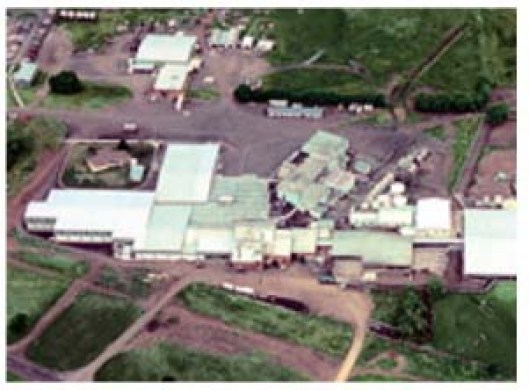
Built in the 1970’s by council, Southern meats purchased and ran with US consortium. US sheepmeat import tariffs caused short closures but lack of supply of animals due to extended drought caused final closure in 2006.

Other Names

  • None known.

Current Operation

  • Closed 20065

Location   

  • Harden is located in south west NSW, 30km south of Young


Hema Maps – Australia Truckies atlas.

Owner

  • General Manager – Glen Crebs (American)1
  • Southern Meats – Manager Neville Newton2

Other abattoirs in Australia

Go to this link to view Location of Australian Abattoirs

abattoirs_edited-1   

Operation

  • Sole purpose was to process lambs for the American market1
    • Primarily for the North American market7
  • Boning room is purpose built for further processing of customer orders.7
  • Skins collected are processed at Goulburn to drum salt stage7
  • Employs 150 people2 
  • Brands – Fine Brand, Country Meadow, Southern Cross.7

History

1970’s

  • Plant was built by the local council3

1980

  • facility sold to private business3

1987

  • November. Harden facility is listed as a Domestic meat processing site10.
    • Operated as Harden Slaughterhouse10

1995

  • Glen Crebs came to site when smaller abattoir existed, joint venture of operation was created.1

1998

  • opened as joint venture with Superior Farms USA.1
  • facility was refurbished in the late 1990’s3
  • Converted to an export-only meatworks supplying high quality lamb to overseas markets3

1999

  • USA considering placing tarriff on Australian and New Zealand lamb in response to calls from the struggling Americal lamb industry1
    • USA trade is worth more than $100M each year1
  • 10,000 lambs slaughtered at Harden each week,1
    • all cut to suit USA market demand1
      • racks, not chops1
      • sold as ‘Country Meadow Austral American Brand’1
  • June. If increased tarriffs are implemented by USA it would be worst-case scenerio for Harden1
  • Note of a recent event that occured in the region; the loss of jobs at Harden abattoir affecting lamb producers following the US lamb tariff decision4

2001

  • Southern Meats Pty Ltd – figures for year ending December 20026, Harden and Goulburn abattoir (NSW)
    • Ranked 10th in Top 25 Australian beef and Sheepmeat processors for 20016
    • Throughput 65,000 ETCW (estimated tonnes carcase weight)6
    • Turnover $225M6

2002

  • Southern Meats Pty Ltd – figures for year ending December 20026, Harden and Goulburn abattoir (NSW) combined.
    • Ranked 12th in Top 25 Australian beef and Sheepmeat processors for 20026
    • Throughput 49,000 ETCW (estimated tonnes carcase weight)6
    • Kill share 1.8%6
    • Turnover $206M6
    • Total staff 7006

2003

  • Plant forced to shut down for 3 months as stock numbers dwindled.3
    • Closed due to supply shortage during the drought.9
  • Southern Meats Pty Ltd – figures for year ending December 20037, Harden and Goulburn abattoir (NSW) combined.
    • Ranked 14th in Top 25 Australian beef and Sheepmeat processors for 20027
    • Throughput 46,675 ETCW (estimated tonnes carcase weight)7
    • Turnover $180M7

 2004

  • Now owned by Southern Meats Goulburn2
    • with an American consortium3
    • Authors note – some articles show Southern meats owned the plant prior to 2004, I’m not sure if 2004 is just when the American consortium joined.
  • June. Plant staff had been stood down2
    • 120 full time staff.2
  • Last 18 months meatworks in Woy Woy, Mudgee abattoir (NSW), Orange, Forbes abattoir (NSW) have all closed, loss of close to 500 jobs.3
  • July. closed, possibly for the next 2 years.2
    • Situation hasn’t been good for 2-3 last years2
    • expected to stay closed at least for 12 months and possibly longer3
      • effects of the worst drought on record continue to be felt in the region3
      • Until the drought breaks there is a lot of uncertainty all through the bush. The company really had no option but to close down” Harden Mayor, Chris Manchester3
  • Major problem facing industry was lack of growth in Australian sheep flock2
    • skyrocketing cost of lambs in recent years2
    • Breaking even on selling lambs at $100 but paying $150.2
    • Lamb prices in general were higher than what the US can pay2
  • Southern Meats Pty Ltd – figures for year ending December 20047, Harden and Goulburn abattoir (NSW) combined.
    • Ranked 10th in Top 25 Australian beef and Sheepmeat processors for 20047
    • Throughput 55,000 ETCW (estimated tonnes carcase weight)7
    • Kill share 2.6%7
    • Turnover $185M7
    • Total staff 4807
    • Productio split 95% export, 5% domestic7
    • Species split 75% sheep, 25% lamb7

2005

  • August. Abattoir wil re-open as lamb numbers increase across the region.9

2006

  • September. Operated for early part of 2006 before being shut permanently  and broken up.8
  • Abattoir closed5
    • 130 jobs lost5
  • Boning and packing facilities continued to be leased to others who processed stock11

2008

  • Local producers start Argyle Meat business11.
    • Lachlan and Andrina Graham11
      • Integrated supply chain meat business that leased the boning and packing facilities11.

2014

  • July. Argyle Meats who had been leasing the boning and packing facilities at this time move their operation to the former dairy factory at Nowra11
    • Nowra facility was more high-tech11

Sources

  1. ‘Unkindest cut for small town abattoir’ Sydney Morning Herald 14.06.1999
  2. ‘Harden abattoir closes; Goulburns future uncertain’ Goulburn Post 11.07.2004
  3. ‘Abattoir cuts 150 jobs’ AMIEU Archives. 05.07.2004
  4. Regional radio inquiry submission – Federation of Australian radio broadcasters limited. November 2000.
  5. ‘Positive outlook for Harden in 2014’ Harden Murrumburrah Express 13.12.2013
  6. Feedback’s Top 25 beef and sheepmeat processors for 2002.
  7. Feedback’s Top 25 red meat processors for 2004
  8. Feedback’s Top 25 red meat processors for 2006.
  9. ‘Harden abattoir reopens boosting local economy’ NSW ABC country hour. 17.06.2005
  10. List. Nov 1987.
  11. ‘Manildra Group’s meaty move’ http://www.farmonline.com.au

Goulburn #217. NSW

Located 200km southwest of Sydney and north of Canberra. Has faced major shortage of animal supply issues in the past due to drought and decreased national sheep herd. Recently increased costs of water affected operations.

Other Names

  • Southern Meats.

Current Operation

  • Currently in operation.
  • Ausmeat Accreditation number #02178


Location   

  • Goulburn is located 200km South west of Sydney and 90km north of Canberra
  • Abbatoir is located 99-241 Mazamet road, Goulburn NSW.

Goulburn

Goulburn #2

Hema Maps – Australia Truckies atlas.

Owner

  • Southern Meats Goulburn1
    • Also own Harden abattoir (NSW) – closed Harden in 2006.
    • Joined with Western Australian Meat Marketing co-operative Limited (WAMMCO)10

Operation   

  • Export abattoir for sheep and sheep offal.8
  • Specialist plant of sheep and lamb production5
  • Draws livestock from Victoria and NSW5
  • Pupose built boning room for further processing of customers orders5
  • Skins processed to drum salt stage5
  • Rendering facility produces bleachable and bleached tallow in addition to bloodmeal and meatmeal5
  • Production is predominently export-driven including the Middle east and US market6
    • SE Asia and Japan5
    • simple 6-way packs to more detailed specifications for orders6
  • Capacity to process 8,000 sheep and lambs a day10
  • Livestock kept in covered yards on arrival at plant10

History

1957

  • Goulburn was a strategically important abattoir at this time27.
    • Operated by local government to boost local employment and establish regional livestock selling centres27.
    • Others at the time were located27

1963

  • Operated as an export facility with chilling, freezing an freezing storage capacity by the Goulburn City Council25

1991

  • Neville Newton purchases the Goulburn abattoir28

1997

  • July. Is Aus-meat registered at this time26.
    • Operated by Southern Meats Pty Ltd26

2001

  • Southern Meats Pty Ltd – figures for year ending December 20024,Harden abattoir (NSW) and Goulburn combined.
    • Ranked 10th in Top 25 Australian beef and Sheepmeat processors for 20014
    • Throughput 65,000 ETCW (estimated tonnes carcase weight)4
    • Turnover $225M4

2002

  • Southern Meats Pty Ltd – figures for year ending December 20024, Harden abattoir (NSW) and Goulburn combined.
    • Ranked 12th in Top 25 Australian beef and Sheepmeat processors for 20024
    • Throughput 49,000 ETCW (estimated tonnes carcase weight)4
    • Kill share 1.8%4
    • Turnover $206M4
    • Total staff 7004

2003

  • Southern Meats Pty Ltd – figures for year ending December 20035, Harden abattoir (NSW) and Goulburn combined.
    • Ranked 14th in Top 25 Australian beef and Sheepmeat processors for 20025
    • Throughput 46,675 ETCW (estimated tonnes carcase weight)5
    • Turnover $180M5

2004

  • Major problem facing the industry was the lack of growth in the Australian sheep flock, combined with skyrocketing cost of lamb in recent years.1
  • July. Major problem was lack of rain1
    • need water to use to run the plant1
  • Plant is currently operating 4 to 5 days a week.1
  • Plant was closed for a number of months in 2003 due to drought and low availability of stock numbers1
  • livestock supply improved in 2004
    • average carcase weights slightly higher
    • 2nd shift work put into operation
  • Southern Meats Pty Ltd – figures for year ending December 20045, Harden abattoir (NSW) and Goulburn combined.
    • Ranked 10th in Top 25 Australian beef and Sheepmeat processors for 20045
    • Throughput 55,000 ETCW (estimated tonnes carcase weight)5
    • Kill share 2.6%5
    • Turnover $185M5
    • Total staff 4805
    • Production split 95% export, 5% domestic5
    • Species split 75% sheep, 25% lamb5
  • Harden abattoir (NSW) closed 2004 due to stock shortages.

2005

  • Southern Meats Pty Ltd – figures for year ending December 20066, Goulburn only
    • Ranked 10th in Top 25 Australian beef and Sheepmeat processors for 20056
    • Throughput 55,000 ETCW (estimated tonnes carcase weight)6
    • Turnover $185M6

2006

  • Southern Meats Pty Ltd – figures for year ending December 20066, Goulburn only
    • Ranked 14th in Top 25 Australian beef and Sheepmeat processors for 20066
    • Throughput 51,000 ETCW (estimated tonnes carcase weight)6
    • Kill share 1.8%6
    • Total staff 4806
    • Production split 95% export, 5% domestic6
    • Species split 75% sheep, 25% lamb6
    • Brands Fine Brand, Country Meadow, Southern Cross6

2007

  • Southern Meats Pty Ltd – figures for year ending December 20067, Goulburn only
    • Ranked 25th in Top 25 Australian beef and Sheepmeat processors for 20077
    • Throughput 28,000 ETCW (estimated tonnes carcase weight)7
    • Kill share 0.97%7
    • Total staff 4807

2009

  • Forced to let workers go who worked afternoon shift
  • Going through an extremely long dry period
  • February. Southern Meats will shut down it’s Goulburn abattoir operations if a new saleyard is approved for building 250m from its own front gate11
    • Saleyard is proposed by Kattle Gear Australia11
      • $9M complex in Mazamet road11
        • Cater to 20,000 sheep and 2,500 cattle11
  • Southern Meats Owner and General Manager – Mr Neville Newton11

2010

  • February. Goulburn. Currently employs 250 people3
    • Used to have more than 4003
  • Central West NSW used to have 11 abattoirs now it just has 44
  • Livestock numbers plummet due to long period of drought4
  • “It’s disastrous. There are far too many processing abattoirs out there and not enough animals to slaughter” Neville Newton. Goulburn owner / Operator4
  • Currently 29 licensed red meat abattoirs in NSW4
    • down by 30% from a decade ago4

2011

  • March. Southern meats had forced full production shutdown for 16 weeks – March to June.9
    • Abattoir closed March 21 for six weeks due to livestock shortages12
      • Low sheep numbers14
        • Sever drought that has caused this and another lengthy closure this year15
      • High Australian dollar on the export markets14
    • May 2 re-start is subject to stock availability12
    • 180 employees were laid off.
  • April. Local town employers are encouraged to employ the meat workers on a seasonal basis  to prevent the loss of their expertise and skills from the area12
    • Some workers are using long service leave and annual leave to survive the downturn12
    • Important to retain as many of the people locally to minimise the impact on the local economy12
    • Workers age range from 16 to 66 with 40% female12
      • some had gone to Canberra in the building trade and others had began work at the Tahmoor poultry plant12
  • Industry and Investment NSW and Southern Meats have developed a scheme to train abattoir workers in other fields13
    • Aim is to keep the workers in Goulburn during the plant’s shut down periods13
  • May 28. Plant announces it will not restart until July 414.
    • Second time the re-opening has been delayed14
    • AMIEU claim the abattoir is about to be sold14.
      • AMIEU organiser Mark Perkins14
      • Current employment agreement covers short-term closures and stand-downs but not the sale of the facility14
      • Union were not informed of extension of closure until 27/05/201114
    • Management of the plant decline to comment on the facilities future14
  • June. Abattoir is sold to the Western Australian Meat Marketing Co-operative (WAMMCO) for an undisclosed sum15
    • WAMMCO have another plant in Katanning15
    • Sale includes business, land and buildings15
      • Sale had been in negotiation for 3 months
      • WAMMCO will take on all former workers15
      • had been aware Goulburn was experiencing difficulties15
      • Plant to reopen July 115
  • Competition had been very difficult with 2 major lamb processors pushing up livestock prices15
  • The abattoirs premier export product was a strong attraction to the buyer15
  • WAMMCO wanted to branch into eastern states15.
    • 1.3M head of sheep had left WA in 9 months to eastern states15.
    • Risk management strategy15.
  • AMIEU is confident most workers will return to the abattoir when it re-opens July 416.
    • all entitlements of employees who would return would be paid16
    • Union have a good relationship with WAMMCO in the west16
  • July 5. Plant reopens17
    • Approximately half of the workforce have returned17
      • Just over 100 people returned17
    • Reopen under Southern Meats name17
      • Chief Executive Coll MacRury17
    • Plant would restart at 60-70% capacity to build to full production17
    • Southern Meats want to double capacity and employ 400 people17
    • Livestock would be sourced from saleyards and direct from the paddock17
      • Direct from the paddock was more efficient and used in the west17
    • Plant would continue will supply to halal markets17
      • Animals were stunned with an electric stunner pre slaughter17
    • Previously plant had focused on mutton export17
      • WAMMCO would pursue more lamb products17
        • 20% going to the domestic market18
        • May take 18 months to build domestic opportunities18
        • Australian dollar was so strong against most countries’ currency18
    • Most stock would be secured from producers within 2-3 hours of the facility18
    • WAMMCO Western Australia is run at 90% direct from producers supply18
    • Plan to get Goulburn supplied 75-80% direct18
      • then adopt some principles of the NSW co-operative18
        • performance based payments18
        • work with producers to lift genetic pool18
        • produce the type of lamb market wants18
    • Immediate aim is to get the plant to profitability18
      • Will need to see numbers improve18
        • Better margins back to the business18
        • Wants plant back to capacity on one shift18
          • Processing 4,200 – 4,500 sheep and lambs per day18
      • Will take a couple of years18
      • Prices paid in the last 10-12 months are not sustainable18
        • market can’t support that type of buying18

2012

  • August. owner expressed concerns about its viability and job security when its annual water charges skyrocketed by up to $70,0002
    • Council introduced a new policy – water is calculated on amount used.2
    • Council agreed to reduce charges and do a watching brief of water use.2
      • aware of need to assit meat industry, export and internally in tough times.2
  • Plant is already facing significant cost increases due to carbon tax and exchange rates.2
  • Abattoir is unable to pass costs on the extra costs19.
    • people just don’t get employed to offset costs19

2013

  • March. Abattoir has thrown down gauntlet in regards to Goulburn’s water pricing20
    • Council suggested a 25% discount on water charges to the business20
      • Southern Meats say this will add $150,000 annually or 69% to their bill20
  • In the current business environment this is not sustainable for Southern Meats and if this is adopted it would have a severe impact on our ability to operate successfully in Goulburn” Southern Meats CEO Coll MacRury20
  • Abattoir would be unable to provide further employment if the water charges are implemented20
  • Council has also risen residential water charges by 33%20
    • ‘Full cost recovery’ for council’s water business unit20
    • in line with state government directive20
    • Price of water was cheap in the first place20
    • Prices had not risen for a long time20
  • Council have allowed 42% reduction to the abattoir – $125,000 annually20
    • Phased in over 5 years20
      • Abattoir say the charges are still not acceptable20
    • Abattoir uses 210 Megalitres annually (2011/2012)20
      • 10% of entire Goulburn water use20
      • currently pays 97c/kilolitre = $205,000 annual water bill20
        • If it paid the same as other businesses it would pay $570,000 pa20
        • Initial offer $365,000 reduction in fee = $36 cross subsidy by every Goulburn property20
        • Latest offer abattoir would pay $1.57/kl cross subsidy of $43 per property20
  • Abattoirs are facing high costs20
    • Livestock costs are high20
    • high Australian dollar20
    • higher business and labour costs relative to other countries20.
      • Any competitive advantage was critical20
    • Says other competitors are paying less for their water20
  • Other businesses lost in the region included Oral B, Supertex, The Goulburn Wool Scour and Kermac20
  • Southern Meats employs 270 people20
    • Slaughters 3,600 sheep and lambs daily20

2014

  • August. Agreement is made with Japanese city businessman signs a deal worth $340,00021
    • Goulburn sister city to Japanese city Shibetsu21
    • Mr Imai – CEO of Shizou Farm Corporation21
      • Own
        • several restaurants21
        • motel21
        • runs 600 Suffolk sheep on his farm21
        • grows 143 acres of sugar beet21
      • One of the largest operations in Japan21
        • 43 greenhouses21
        • a meat processing works to slaughter own stock and imported21 animals21
        • catering firm contracts to Nippon Airways21
        • Transport business21
    • Goulburn abattoir agreement will see 17 tonnes of lamb exported by air and ship21
      • Initially the contract had been with a Melbourne site21
    • Goulburn exports 800 tonnes of high quality lamb to Japan annually21
      • Overall exports 500 – 600 tonne every week21
  • Russia has imposed sanctions against Australian products including beef and pork21
    • Unsure if lamb will be affected at this date2

2015

  • June. work will soon begin on a state-of-the-art renewable energy project22
    • Goulburn abattoir will be able to harness power of own methane22
    • Australian first22
    • Biogas will be used to generate electricity that offsets grid supplied electricity22
      • Biogas is currently used as a fuel at a number of processing works22
    • Quantum Power, Gold coast based bioenergy company will construct the equipment22
      • generate up to 1MW or renewable energy22
        • sufficient to offset power of 400 homes22
        • Offset 40% of grid supplied electricity to the abattoir22
        • take 6-9 months to construct, beginning in 3 months22
          • Once built it will convert waste stream to biogas comprising of 60% methane22
  • November. Unique Australian technology is taking the injuries out of bandsaw work in abattoirs23
    • Goulburn abattoir is one of several installing ‘bladestop’ technology23
      • operator becomes part of electronic circuit connected to the saw23
        • If person touches it, stops within 15 milliseconds23
        • Operator wears a belt that has an electronic circuit breaker23
    • 70 units sold in Australia in the last 18 months23
      • Technology has been around for 7 years23
        • Latest model available for the last 2 years23
    • Research has been going for 11 years through MLA23
      • Goulburn was involved in the research projects23
    • gives employees a greater sense of confidence to use the machines23
    • 4 major incidents at Goulburn in the last 5 years involving bandsaws has resulted in 827 hours of lost time and $100,000 workers compensation claims23
    • 2012/2013 Safe Work Australia statistics showed that there were 95 accepted workers compensation claims and $400,000 paid in compensation due to powered saws in the Australian Meat Industry23
  • Southern Meats is currently processing 3,000 – 5,000 lambs per day23
    • Employs 320 staff depending on the season23
    • Majority of meat is exported to European union and Muslim countries23
    • Domestically processed lamb is for Cosco Australia23

2016.

  • September. At this point in time the facility is managed by Craig Newton. Son of Neville Newton who had owned the facility from 1991 – 201128

2017

  • April. JBS Australia announce they will temporarily close two of its southern lamb processing plant due to current livestock supply and price conditions24.
  • Other facilities that have also stopped production or reduced throughput recently are24
  • Some plants are currently operating on loss-making skeleton 3 day weekly kills24
  • Recent spate of abattoir closures raises questions in regards to over capacity of the processing sector with oversupply of stock due to drought24
  • Has been high levels of foreign investment interest in investments directed into processing24


Sources  – Goulburn #217 NSW

  1. ‘Harden abattoir closes; Goulburn’s future uncertain’ Goulburn Post 11.07.2004
  2. ‘Financial reprieve for abattoir’s bills’ ABC News 23.08.12
  3. ‘Abattoir industry in disastorous state’ ABC rural 16.02.2010
  4. Feedback. Top 25 red meat processors 2002
  5. Feedback. Top 25 red meat processors 2004
  6. Feedback’s Top 25 red meat processors 2006
  7. Feedback’s Top red meat processors 2007
  8. Ausmeat Accreditation listing as at 20.05.2014
  9. NSW EPA Annual Return. June 2011 – May 2012
  10. http://www.southernmeats.com.au. accessed 21.05.14
  11. ‘The knives are out: Meat works will close if yards built’ Goulburn Post 03.09.2009
  12. ‘Bid to keep ab workers here’ Goulburn Post 05.04.2011
  13. ‘One door shuts…’ Goulburn Post 12.04.2011
  14. ‘Abattoir sheepish’ Goulburn Post 28.05.2011
  15. ‘Abattoir sells up’ Goulburn Post 06.06.2011
  16. ‘Meat works sale buoys union’ Goulburn Post 07.06.2011
  17. ‘New Beginning’ Goulburn Post 05.07.2011
  18. ‘Southern Meats eyes domestic lamb share’ www.farmonline.com.au 08.07.2011
  19. ‘Abattoir appeals for reprieve from soaring water bills’ ABC News. 20.08.2012
  20. ‘Increase will chop into abattoir’s edge’ Goulburn Post 22.03.2013
  21. ‘Goulburn lamb cuts mustard’ Goulburn Post 11.08.2014
  22. ‘Goulburn abattoirs harnesses methane’ Goulburn Post 12.06.2015
  23. ‘Bandsaw safety technology cuts meat processing injuries’ Sheep Central 04.11.2015
  24. ‘Indefinite closures for JBS lamb plants, as supply challenge reaches critical point’ Beef Central 20.04.2017
  25. ‘World on a plate’ Stephen Martyn. 2011
  26. Aus-Meat Accreditation List. July 1997
  27. ‘A giant in the life of Gunnedah – 100 years since O’Keefe bon’ Naomi Valley 23.10.2012
  28. ‘Neville Newton, a man of great substance’ Goulburn Post 20.09.2016
  29. ‘Goulburn, Southern meats winds back lamb and mutton production’ Sheep Central 17.02.2017

Oberon

Located 200km east of Sydney, Privately owned facility that was shut for a period due to a business deal. Re-opened in 2014 targeting Asian market preferences in Sydney.

Other Names

  • Unknown

Current Operation

  • Is currently operating in 2014.

Location   

  • Oberon is approximately 200km east of Sydney, on the western side of the Great dividing range.

Oberon

Oberon #2Hema Maps – Australia Truckies atlas.

Owner

  • Privately owned.2
    • Manager Andrew McLeod.2

Operation   


History

2010

2014

  • February. Abattoir re-started2
  • Had been closed for last 2 1/2 years due to sour business deal2
  • Will fill demand for Asian style processing of smaller stock2
    • processing goats, lambs, deer and beef2
    • Chinese prefer a skin-on burnt2
      • Processed through a hot tub, hair is beaten off and skin stays on, then hair is burnt off and gives a crisp golden colour2
      • large market demand in Sydney2
  • Currently employing 16 people2
    • intentions to employ up to 402


Sources

  1. Abattoir industry in a disastrous state. ABC rural. 16.02.2010
  2. ‘Oberon abattoir back in operation’ ABC rural. 24.02.14

Collarenebri (Proposed) Goat

A proposal put forward to convert a disused abattoir previously used for ostriches and emu to goat, in 2008.

Other Names

Current Operation

  • Proposed1

Location   

  • Collarenebri is located in far north west NSW on the Barwon river. Aprroximately 600 km north west of Newcastle. The abattoir is located on Mungindi road1.

collarenebri 1

collarenebri 2

Hema Maps – Australia Truckies atlas.

Owner

Operation   

History

  • Previously had been a emu and ostrich abattoir that had failed1

2008

  • February. Dellmain, a company plans to develop goat abattoir in Collarenebri1
  • Development application was publicly exhibited1
    • process 750 goats a day for 250 days of the year (approximately 8 months of the year)1
    • Create 40 direct jobs, maybe 100 more indirect1
    • If approved abattoir could open in April or May 2008.1
  • Main markets are ethnic communities in United States.1


Sources

  1. ‘Goat meatworks promises Collarenebri jobs boost’ ABC News. 07.02.2008.

Queensland abattoirs listed – regions

North Queensland

Ayr abattoir (QLD)

Small processor located 90km south of Townsville, currently in operation

Biboohra abattoir (QLD)

Historical abattoir closed in 1927, Also known as Baron works, located near Mareeba.

Owned by MJ Munro, operated as a slaughterhouse in the early days and then a cannery.

Bowen abattoir (QLD)

Located 230km south of Townsville on the QLD coast.Was in operation at 1919, went through fires, labour disputes and temporary closures. Purchased by AMH, the final owners and permanently closed in 1997.

Cairns abattoir (QLD)

Cairns (more commonly known as Queerah meatworks) was located in far north QLD received cattle from mainly north Australia, often by Barge from the NT and Normanton that had travelled from the gulf of Carpentaria in the 1960’s to 1975. Began to export in 1950’s closed in 1989 as part of the AMH rationalisation strategy of its abattoir capacity through the 1980’s.

Camooweal abattoir (QLD)

Located 190km northwest of Mt Isa, small processor currently operating that supplies own butchery for retail.

Canon Vale (QLD)

A small local processor currently in operation, located 70 km south of Bowen between Townsville and Mackay.

Cape River abattoir (QLD)

Located  south west of Townsville. Closed in 1986 due to the AMH  rationalisation strategy of its abattoirs capacity through the 1980’s.

Pentland abattoir (QLD)

Built prior to WWII, At one stage was the 2nd largest meatworks in Queensland. Last owned by AMH consortium, closed in 1989

Ross River abattoir (QLD)

Built in 1882, QLD meat export agency formed supplied contracts for supply of product to England. Plagued by industrial action its whole operating life most notably in 19919 when a violent clash between the unions and police occurred. Been through ownership receiver, beef price crash, strikes, droughts and market changes. Smorgons meat processors, last owner collapses in 1994, facility closed in 1995. Site now developed as a residential site with only the chimney still remaining as a historic site.

Tolga abattoir (QLD)

Small processor currently operating near Cairns

Townsville – Stuart

Owned by JBS. Large beef processor located in far north QLD

Tully abattoir (QLD)

Small processor currently operating between Cairns and Townsville

Weipa abattoir (QLD)

Small local processor

Central Queensland

Charleville abattoir – goat processor (Central QLD)

A goat processing facility that is currently operating located in central QLD. This facility exports all its production. Has had past problems of securing visa workers to ensure ability to process production. Floods have affected operations and government costs while plant has been closed at different periods.

Clermont abattoir (QLD)

Small local processor

Cloncurry #1 abattoir (QLD)

Small local processor currently operating

Cloncurry #2, proposed abattoir (QLD)

Proposal sponsored by DAFF 2012. Consider establishment of an abattoir at Cloncurry to process cattle from north west QLD and NT. Based on processing 100,000 heavy cattle per year, costing $49M to build not including land or government services. Marginal return expected on investment.

El Arish abattoir (QLD)

Located near Innisfail, a small processor that is currently operating.

Giru abattoir (QLD)

Domestic abattoir currently operating south of Townsville

Innisfail abattoir (QLD)

Owned by CMG then Teys, Hit by cyclone Larry in 2006, never to be reopened, equipment scrapped and auctioned off in 2011.

Mt Isa abattoir (QLD)

Built in the war years and closed in 1986

Southern Queensland

Beenleigh abattoir (QLD)

Large facility owned by Teys, currently in operation located south of Brisbane.Recently had a number of wage disputes. Invests heavily in new technology to optimise labour efficencies, currently operating 2 shifts processing 1,300 cattle per day

Caboolture abattoir (QLD)

Located in Queensland, one of only 2 abattoirs in Australia accredited for export of horse meat.

Dinmore abattoir (QLD)

The largest meat processing plant in Australia, currently operating and owned by JBS Australia. Located near Brisbane QLD.

Kilcoy abattoir (QLD)

Located northwest of Brisbane and primarily processes grainfed cattle. 4th largest abattoir in Australia, currently operating.

Oakey abattoir (QLD)

Located near Toowoomba, a large processing facility of mainly grain-fed beef, owned by Nippon. Currently processing up to 1300 animals per day. Has undergone significant upgrades to enable traceability for organic certification and assurances, with current work being carried out on methane gas collection. Problems in the past have been market fluctuations, unions and costs of production

Surat abattoir – Kangaroo processor (QLD)

Games meat abattoir located south of Roma. Processes Kangaroo. Started in mid 1980’s, possibly now closed due to floods, debt and costs of services to operate.

Queensland abattoirs listed – A-Z

These are the abattoirs currently listed on this blog, it is not complete of all actual operations at this point in time

Ayr abattoir (Nth QLD)

Beenleigh abattoir (Sth QLD).

Biboohra abattoir (Nth QLD)

Bowen abattoir (Nth QLD)

Caboolture Abattoir (QLD). Owned by Meramist Pty Ltd. A beef and horse processing facility.

Cairns abattoir ( Nth QLD)

Camooweal abattoir (Nth QLD)

Canon Vale (Nth QLD)

Cape River abattoir (Nth QLD)

Charleville abattoir – goat processor (Central QLD)

Clermont abattoir (Central QLD)

Cloncurry abattoir #1 (Central QLD)

Cloncurry #2. proposed abattoir (Central QLD)

Dinmore abattoir (Sth QLD)

El Arish (Nth QLD)

Giru abattoir (Nth QLD)

Innisfail abattoir (Nth QLD)

Kilcoy currently in operation

Mt Isa Owned by AMH, closed in 1986

Oakey abattoir (Sth QLD). Owned by Nippon. Currently operating.

Pentland (Cape River). Built originally prior to WWII, Eventually owned by AMH, closed 1989

Rockhampton – Lakes Creek Owned by Teys Australia, currently in operation.

Roma #2 (Proposed) Maronoa council seeking funding to conduct a feasibility study in 2014

Ross River Built in 1882, transformed from boiling down works to cannery to abattoir and meat processor. Finally owned by Smorgons closed 1995, Now demolished.

Surat (Wild game – kangaroo) Kangaroo processing facility, was in operation as at 2013

Tolga abattoir (QLD) 

Townsville Stuart  Owned by JBS, Currently in operation

Tully abattoir (Nth QLD)

Weipa Was in operation as at 2012


Oakey

Located near Toowoomba, a large processing facility of mainly grain-fed beef, owned by NH Foods (Japanese origins). Currently processing up to 1300 animals per day. Has undergone significant upgrades to enable traceability for organic certification and assurances, with current work being carried out on methane gas collection. Problems in the past have been market fluctuations, unions and costs of production. Includes short history of early days of the Japanese/Australian meat trade markets and general QLD market conditions affecting processing

Other Names

  • Toowoomba abattoir
  • Nippon Meat Packers name changed to NH Foods Australia
  • Oakey abattoir
  • Oakey Beef Exports

Current Operation

  • Aus Meat Accreditation registration dated 29/12/2015 #558 – Oakey Beef Exports Pty Ltd.3
    • registered as a Beef, Offal export facility.3
  • Direct employment enquiries to www.nmpa.com.au

Location   

  • Located north west of Toowoomba on QLD Darling downs5

Australia Oakey

Oakey

Source Hema Maps – Australia Truckies atlas.

Owner

  • Nippon Meat Packers1
    • Subsidiary of a Japanese Multinational1
    • Nippon meat packers incorporated 19781

products_edited-1Source Nippon Meat Packers Australia interactive beef products

This is a great diagram that is able to be clicked on in the Nippon website and illustrates where the various cuts of beef and offal are located in the animals bodies

Operation 

  •  Nippon currently own 3 operating abattoirs in Australia,
  • Nippon owned Bowen (QLD) which they closed in 1997
  • Combined processing capacity 2,700 cattle day2.
    • also owns and operates a feedlot1  at Whyalla5 and
      • 3 beef farms1
        • At 2014 land in Texas QLD and Tasmania on King Island5
      • 3 tanneries1
        • Oakey Blue tan factory closed 20127
      • piggery1
        • Piggery assets sold off2
    • Processes predominently grain-fed cattle1
      • 100 to 300+ day5
      • Processing mainly British and European cross steers5
    • All plants are certified organic to process and slaughter.1
    • Sells product  under subsidiary company1
      • Beef Producers Australia Pty Ltd – Sells approximately 20% of Oakey product, marketed domestically1
      • Nippon Meat Packers Australia Ltd (Exporter)1
      • third of product is exported to Japan2
    • Sells products under labels1
      • Nippon1
      • Australian premium beef1
      • Wingham gold1
      • Borthwicks1
    • Vertically integrated supply chain that allows traceabilty from animal’s property of birth through to end user5
      • traceability includes details on animal, workers, defects, yield and volume data5
    • Fully integrated slaughtering, fabricating, chilling, freezing and rendering facility.5

picture_edited-1Source – ‘Productivity a bone of contention in abattoir strike’ ABC Rural. 01.05.2012.
Oakey abattoir facility

brands_edited-1brands #2_edited-1Source. http://www.nmpa.com.au
Various branded products sold from the Oakey facility

Historical and current meatworks, canneries and abattoirs located in Australia can be viewed at;

Australian abattoirs inactive map

abattoirs_edited-1

History of Oakey meat processing facility

Authors Note – As Nippon Meat Packers, now NH Foods is Japanese owned firm I have included some information that is in relation to Australia/Japanese Beef  early trading. I don’t know how directly relevant it would have been to the Oakey abattoir.

1956

  • Oakey Facility established.5

1968

  • Japanese Beef Trade
    • January. Trial shipment of chilled 1500lbs (680kg) meat vacuum packed by Borthwicks from the Murarrie plant on the Brisbane river shipped to Yokohama, Japan (Pg 72).28
      • Product arrived 3 weeks later(Pg 72)
    • Requirements by Japanese were placed on frozen beef, required frozen temperatures at all points of the supply chain, even to small retail outlets (Pg72)
      • Logisitically this was extremely difficult as frozen meat had to be defrosted in advance for retail sale (Pg 72)
      • Chilled beef was much easier to handle (Pg 72)

1969

  • Japanese Beef Trade
    • Market research conducted by Borthwicks identified consumer market preference (Pg73).28
      • 15% high quality meat
        • Significant opportunity for Australia to provide high quality meat
      • 40% middle class meat
      • 45% was low quality
        • Australian cattle were meeting this demand in canned meats, curries and low priced product
    • The First containerised vessels are used in Australia opening up new opportunities to send vaccum packed beef primals to Japan (Pg71).28
  • Growing feedlot industry was developing to cater for the Japanese trade (of which Japan interests had no equity) (Pg 81).28
  • Designated store project in Japan started to differentiate the Australian product at retail level (Pg 84).28
    • by 1971 Japan had 740 Australian meat designated stores.

1970

  • Japanese Beef Trade
    • First full container of cryovac packaged chilled beef primals is shipped to Japan from the Borthwicks Brooklyn plant in Victoria (Pg 72).28
      • One of the first containers of any export commodity to Japan from Australia
      • Initial shipments of the packaged meat was in high quality wooden boxes, with each lid having a printed message about the contents
        • Card that placed inside the box, was protected from moisture damage, also provided a great deal of factual information about the product, it’s shelf life and that it had been chilled, not frozen.
        • Japanese retailers valued the box, some for fuel but also as reliable evidence to customers that this was a superior product
        • Wooden boxes later replaced by reinforced cardboard
        • The boxes and presentation made an everlasting impression and established reputation as Australian beef being of the best quality

1970

  • Alot of work is done at Oakey with Lindgren packaging  to commercialise and develope meat vacuum packs (Pg 74).28
    • Australia world leader in this development

1971

  • Japanese Beef Trade
    • First QLD shipments of beef to Japan occur from QLD (Pg 74).28

1974

  • Oil Crisis occurs (Pg 74).28
    • Oil embargoes (restriction of supply) had occured in 1973 by members of OPEC (the organisation of Petroleum Exporting Countries)
      • economic fallout proved catestrophic for the red meat industry
      • Oil dependent economies feared the effects of the oil restriction and closed their countries to imported beef to protect their currency and own livestock growers (Pg 81)
  • Japanese beef markets are closed (Pg 74).28
    • Australia had a large beef herd at the time
      • Australia and the US sold off their beef herds
      • Prices plummeted from 1974 prices of $350/hd to $40/hd in 1976
      • Australia had limited export markets and therefore sold into the US, producers there were already liquidating
        • US beef and mutton prices crashed, taking the industry with them
        • European beef mountain was created – EU stockpiled beef which they later sold into the early 1980’s furthur supressing prices world wide
  • Australian red meat exports fell by 43% in 1973/74 (Pg 81).28

1975

  • Japanese beef markets re-open (Pg 74).28
    • Much of the investment in chilled technology and production systems had been lost
    • Frozen sector sales to Japan recovered better but chilled took much longer
  • Feedlots that had previously catered to Japanese markets had collapsed with big losses. This inhibited investment into the future due to mistrust of the stability of the market.(Pg 81).28
    • rebuilding of the trade was dependent on Japanese importers investing in the feedlots so that they shared some of the risk

1976

  • Australian National cattle herd reached an all time high of 33.4M head (Pg 81).28

1978

  • Australian slaughter peaks at 10.8M head (Pg 81).28
  • Most abattoirs, both domestic and export are running at capacity (Pg 81).28
    • not uncommon for cheaper cuts to be rendered rather than sold as meat
  • Company of Nippon Meat Packers Australia Pty Ltd is established.29


 1980’s

  • Australian cattle herd has fallen by 11M head (Pg 82).28
  • Australian Sheep herd dropped from 174M in 1970 to 135M in 1985 (Pg 82).28
  • Many abattoirs and meatworks couldn’t source enough cattle to remain viable (Pg 82).28
  • Japanese beef market.28
    • Prior to 1960’s Japan’s main source of animal protein was whale meat and the mainstay of school lunch program (Pg 84)
      • Whale meat accounted for 25% of Japanese meat consumption (Pg 84)
      • Japan enabled a number of sub quota’s for red meat industry into which Australia was able to provide product (Pg 84)
        • supplied various sectors and agencies
          • School lunch program
          • Hotal quota
          • airline quota

1981

  • August. ‘Meat substitution scandal’ occurs in Australia.(Pg 82).28
    • Pet food grade meats, donkey, kanagroo and others were found in shipments to the US. Meat was being transported from northern parts of Australia to southern Australia, reboxed and repackaged and exported.28
    • Leads to Royal commission in the Australian Meat Industry.28
    • Profoundly damages Australia’s meat export reputation.28
    • leads to the evolution of AUS-MEAT.28
      • costs of regulation closed many export abattoirs.28
      • The US significantly step up standards of requirements for meat into the US under the USDA.28

1987

  • Nippon purchase Oakey abattoir1
    • Nippon began in Japan in 1942, establishing the Tokushima meat processing factory, producing ham and sausages (Pg 86).28
      • when supplies of pork were scarce, would substitute other proteins.28
        • rabbit, whale.28
        • By 1960 mutton was found to be a good substitute, which it began to source from Australia.28
        • Company changed its name to Nippon meat packers in 1963 and entered into business with US Swift 1969.28
          • Swift already had connections in Australian meat processing at that time.28
        • Purchase of Oakey was in direct response to Japanese beef market liberalisation.28

1987 purchased Oakey_edited-1

Oakey abattoir. Source www.nipponham.co.jp

  • Japan beef markets are liberalised(Pg 82).28
    • Lead to removal of import quotas and reduction in import tariffs.28
    • Gave companies in Japan opportunity and incentive to expand into meat importation, some who had been restricted prior to the liberalisation (Pg 85).28
    • Previously tenders had protected certain trading houses.28
    • Significant investment had occured in fully integrated supply chains into Japan to realise market potential and commitment to the Japanese market irrespective of market conditions.28Japanese export markets 001

Source World on a Plate –  A history of meat processing in Australia. Stephen Martyn. (Pg 83)

  • US industry analysts thought the US would be the major benefactor of Japanese markets opening up (Pg 85).28
    • US underestimated Australia as it (Australia) had previously only supplied mainly meat from grassfed stock.28
    • Assumed Australia would be confined to commodity meat supplies rather than the premium markets.28
    • Authors note; Significant investment occurred in Australian feedlots at this time to enable grainfed custom feeding of animals suited to specific Japanese meat markets.28
  • Nippon purchase Whyalla feedlot near Texas, NSW.67
    • already a 3,000 head feedlot.67
      • extensively developed latter in 1990.67

1989

  • Nippon also purchase the AMH plants at.28
    • Mackay (QLD) and
    • Bowen (QLD).
      • closed 1996 as part of capacity rationalisation.28
    • Operated boning room through subsidiary Namoi Valley Beef
      • Gunnedah abattoir (NSW)
        • Council operated, service kill facility
        • Closed 1997
      • Mudgee abattoir (NSW)
      • At the time was operated by council as a service kill facility,
        • Had massive debt and went into receivership.28
        • Later purchased by Flectcher’s in 2003, still in operation
    • Nippon is sensitive to it’s position as a foreign owned, non-Anglo company in Australia (Pg 86).28
      • keeps a low profile.28
      • Makes most asset purchases as joint ventures.28


1990

  • Nippon develop the Whyalla feedlot – Oakeys Holdings.28
    • Nippon website says they purchased this site in 1988.29

1988 whyalla feedlot_edited-1

Whyalla Feedlot. Source www.nipponham.co.jp

  • Whyalla feedlot is developed to a unprecedented scale.67
    • previously been a 3,000 head feedlot.67
    • Now scaled to 50,000 head.67
      • Later extended to 56,000 head.67
    • largest Australian single feedlot site.67
      • led the way in ‘US scale commercial feedlot operations.67
    • Australia’s largest feedmilling infrastructure.67
      • 8  18 x 36 inch roller mills.67
      • feeding 750 tonnes  mostly barley based mix a day.67
      • 5 delivery trucks – 4 in use at any one time.67
      • yard can store 100,000t grain.67
      • silos can store 26,000t.67
      • most hay produced on farm.67
      • corn is contracted silage.67
    • Site is licencsed to 75,000 head.67
    • Holds 100% Nippon owned cattle.67
      • 50% straight Angus.67
    • Cattle sourced from QLD, NSW, Victoria, and Central Australia.67
    • Typically induct 3,000 head a week.67
      • similar numbers dispatched.67
      • animals pre-vaccinated before induction.67
      • animals monitored individually.67
    • Yards.67
      • every pen has shade.67
        • unique slattered shadecolth system.67
    • Initially feeding was focused on Japanese markets.67
      • mid to longfed progam out to 300 days.67
        • heavily reliant on marbling-oriented British breeds
      • Now feeds large variety.67
      • most cattle are 120 – 150 day.67
      • Change in feeding length changed annual turnover.67
        • 2014 calendar year turned out 132,000 head.67
        • 2003 turned out 93,000.67
    • Vertical integration of abattoir /feedlots. Not focused soley on Japanase markets and has been versatile in supply to international and domestic markets.67
  • ABARES report – Foreign Investment and Australian Agriculture

8. ABARES Nov 2011_edited-1

Proportion of cattle slaughtered by ownership of abattoirs 1990
Source ABARES foreign ownership 2011 Pg 31

1991

  • 77 Beef export Abattoirs are in operation in Australia at this time.54
    • 27 have some level of foreign ownership.54
    • Ownership dominated by Japan, UK and the US.54

1993

  • Acquire Rochel feedlot in NSW (3000 head) to assist research into cattle performance.28

1994

  • Nippon purchase (Pg 86).28 Wingham (NSW)
    • Wingham is a major beef exports facility.28
    • Tomen sells it’s interest to Nippon.28
      • Major shareholder in Anvic Meat Exports Pty Ltd.28

1997

  • Nippon has invested $200M in abattoirs and feedlots over the previous decade(Pg 86).28
    • 3rd Largest meat processor in Australia.28
    • Exporting to 34 countries.28

NH foods Oakey export_edited-1

NH Foods holdings. Source www.nh-foods.com.au – General Information accessed 21/12/2015

1999

  • Spent $2M in marketing new Barley beef brand to Japanese customers1
  • Nominal capacity estimated at 50,000 head as per 50 weeks3

2001

  • Nippon establish leather wet blue tannery near abattoir to process Oakey hides and from other facilities, including competitors7
    • Prior to GFC hides are worth $110 each7

2003

  • July.Jondaryan Shire Council approve the project 08/07/2003.31
  • Started upgrades to plant and facilities, included new boning room, new slaughter room and a new traceability and control system1
    • Upgrade takes until about 20061
    • Slaughter capacity of approximately 1200 cattle per day1
    • Create 700 new jobs.31
      • Upgrade proposing to lift capacity to 2,000 head a day.31
      • Make Oakey the 2nd largest abattoir in QLD.31
      • Upgrades to take place over 5 years.31
  • $46M expansion using Marel meat equipment4,
    • New boning system includes 4 flowlines to take beef quarters to 96 individual workstations where beef is boned and trimmed before being vacuum packed for further processing in Japan4
    • Old system was meat was cut on tables now it is hanging in front of worker and is more efficent and easier4
    • created 500 new jobs4
    • make Oakey the 4th or 5th largest beef abattoir in Australia and 3rd largest in QLD4
    • New system expected to have effective life of 20 years with maintenance.4
    • key point of Marel system was the traceability, particularly important in latter years when BSE closed market access for US  to Japan and allowed access by Nippon to those markets4
  • “Marel traceability/accountability system …proved to be a magnificant investment, despite its detractors at the time” Pat Gleeson, Oakey general manager. 10.03.2014

2004

  • January. Construction offically begins at the abattoir for the upgrades.32
    • Workforce will lift from 500 to 1,100 workers.32
    • processing and export earnings capacity is to double.32
    • First stage of the project is expected to be completed by the end of 2004.32
  • Expansion of the meatworks will be ready when the industry turns around.32
  • “So even though times are tough at the moment, now is the right time to build rather than waiting until good times and then rushing around trying to build, so it’s a confidence thing at the moment” Jim Vick, Oakey Managing Director.32
  • September. Oakey Ergon Energy power substation causes black out 5.5 hrs, Caused shut down of the abattoir for that time.33
    • Third power failure in 3 weeks.33
    • New $7M power facility will be built.33
  • December. Abattoir extenstions $46M.34
    • Offically opened 03.12.2004.34
    • Facility will use NLIS, seen as controversial at the time.34
      • system guarantees quality, consistency and traceability.34
      • Ensures importers product is high-quality and disease free.34
    • Oakey expansion will mean 500 new jobs over the next 3 years
      • increase of capacity to 2,000 head a day by 2007.34

2005

  • Nippon form a strategic allience with OBE Beef – Australia’s largest supplier of certified organic meat1
    • Plan to export meat to UK and Central Europe under ‘Borthwicks’ organic brand1
  • Strong demand for export product key factor in gains in net profit after tax gains of 60%, with 2005/06 NPAT $21.5M from earnings of $875M (All Nippon meat Packers financial performance combined)1
  • Nippon upgrade hide tanning facility extensively to world-class quality – facility now has capacity to process 20,000 hides a week.7
  • Significant regions of drought across QLD.

QLD Drought 2003_2005_edited-1

Queensland drought situation 2003 – 2005 www.longpaddock.qld.gov.au

2006

  • Sales revenue increased but net loss occured for year (Financial year ending June) $23.2M1
    • Large increase in administration costs of $30M1
    • Increase in wages due to increased employment1
  • Nippon Meat Packers Australia produce 5.9% of Australia’s red meat production in 2006.54
    • 3 abattoirs in operation.54

2007

  • Australian subsidiary earnings struggled in the first half of 2006/2007 due to higher cattle prices , low prices in Japan and high Australian dollar, earnings recovered in early part of 20071
  • Aim to increase profitability by processing more grain fed cattle1
  • Costs for raw materials increased for higher grain and oil prices1
  • May. Oakey shire water plant implement $6M upgrades to connect and treat bore water supplied to businesses in Oakey.35
    • Oakey residents, Oakey abattoir, Army Aviation centre, Jondaryan township.35
  • June. Abattoir is able to deliver system that is able to trace each piece of meat back to property of birth.36
    • system provides vital defect and yield feedback.36
  • Processing 1,000 cattle per shift.36
    • Mostly from the feedlot in Texas.36

2008

  • March.Queensland rail (QR) deem the rail siding west of the works requires upgrading and is currently unsafe.6
    • QR agree with Oakey management to run cattle train to Dalby, abattoir would pay for additional freight to Oakey.6
      • Allows Oakey to access and bid for cattle on Northern and Western district properties6
  • Sales revenue fallen by average of 1.2% in real terms, in contrast industry revenue estimated to have grown at marginal rates in real terms1
  • Nippon launches a large scale reform of Australian business to improve earnings in 2007/20081
    • Involved cutting costs in cattle feeding, processing plants and leather business1
    • potentially reorganising plants1
    • possible closure of piggery1
    • revenue affected by high Australian dollar and weak demand for beef in Japan1
  • Withdraws from restaurant operations and Hog production and sells idle farmland2
  • August. Sulphuric acid leak occurs from a tank, spilling 2,000 lt.37
    • no injuries occur.37
  • November. Nearly all 730 staff are stood down due to a shortage of cattle.38
    • One day, 11/11/2008, staff not paid.38
    • Management not alarmed.38
      • Couldn’t get enough stock for full weeks kill.38
      • Time of year was traditionally slower as was crop harvest period.38
  • Global finanical crisis is also causing a reduction in export sales.38
    • Korea and Russia slowed significantly.38
    • Difficult selling to those overseas countries where the money was difficult to obtain.38
    • Managing Director Howard Halter said Oakey was a lot better positioned to handle current climate than processors in Brisbane and North QLD.38

2009

  • Plans to double processing capacity to 2,000 cattle per day by moving to a two shift system1
    • Employing 750 people1
  • Plant certified for halal production and now exports to halal markets2
    • mostly Middle Eastern markets.30
  • Sluggish growth and weak export demand due to global economic downturn2
  • December. Queensland Rail (QR) informs Oakey they will not stop at Dalby, only unloading the cattle at ‘End of the line’ – Brisbane6
    • Oakey abattoir would have to truck cattle back from Brisbane 200km, from a tick zone and up the range to Oakey6
    • Dalby to Oakey is 50km6
    • Brisbane to Oakey is 200km6
  • Comparative road frieght to rail from Quilpie to Oakey6
    • Road $1.45/km 805km equals $1,167.25 /deck or $51,359 for 44 deck consignment6
    • Rail $1.03 /km 805km equals $829.15 /deck or $36,482.6o for 44 deck consignment6
      • Difference $14,876.40 over 44 decks6
      • QR were now making it uncompetitive if extra freight is incurred from Brisbane6
      • Situation of competitiveness would worsen if the abattoir can’t access channel country cattle.6

2007_2009_edited-1

Queensland drought situation 2007 – 2009 www.longpaddock.qld.gov.au

2010

  • August. 2 employees  sacked for workplace bullying.39
    • Incident occured in July.39
    • Became a Fair Workplace Investigation.39
    • Worker bullied had supported speeding up the chain to 157 beasts, others wanted slowed to 155 beasts
  • October. Worker who claimed workplace bully and led to 3 people being sacked is now centre of a workplace bully allegation himself.40

IBIS Jun 2010_edited-1

Major Companies in the Australian Red meat processing industry

Source IBIS world June 2010

2011

  • January. Devastating floods across Central and southern QLD and large parts of NSW and Victoria.48
    • affected slaughter numbers to abattoirs.48
  • March. Pittsworth abattoir -Located 30km south of Oakey closes
    • Regional abattoir that did private kills for farmers and supplied local butchers.41
      • employed 35 people.41
      • Lack of available stock and persistent rain were the reasons for closure.41
  • June. 3 workers  in July 2010 incident reinstated.42
    • ‘Booing, mooing and barking” was part of the workplace’s culture.42
    • Video footage used as evidence.42
    • Oakey abattoir ordered to reinstate and pay undiclosed sum for renumeration to one man, another man had withdrawn unfair dismissal claim.42
  • July.National slaughter rates decline 5%.43
    • Australian currency pressures.43
      • A$ is now above US108c.43
      • economic news out of US could send currency even higher.43
      • higher A$ would cripple Australia’s already limited price competitiveness for beef in international markets.43
    • QLD which does approximately half of Australia’s processing capacity.43
      • Down 8% from the previous week.43
      • lowest kill recorded in QLD in July for past decade.43
      • Down 21% on same period last year.43
      • Significant number of QLD plants only killing 3-4 days.43
    • listless export beef demand.43
    • Meat processing and export is low-margin business due to.43
      • Import duties.43
        • Indonesia 9%.43
        • Korea 40%.43
        • Japan 38%.43
      • New AQIS charges on meat inspection would add millions to processor costs.43
    • Was currently a big build up of meat in cold stores due to difficulty in selling into sluggish markets, Japan and the US.43
  • August. Top chefs tour the abattoir as part of a south east QLD tour.44
  • Cattle are in short supply, 2008 & 2009 had been drought periods.45
    • with seasonal pressure lifting producers are retaining females for breeding.45
    • Period of drought that lasted 10 to 15 years.45
    • “We’re paying for the numbers of store cattle that were killed in the droughts up until 3 years ago” Kurt Wockner, Oakey Livestock manager.45
  • Expected diversion of northern cattle displaced by the Indonesia live export ban won’t come to the processors until April 2012.45
  • September. Oakey abattoir hold an open day for active suppliers.46
    • Inspection tour of the plant.46
    • Boning room – features four production lines.46
      • provides individual animal traceability from the animal to the vacuum -packed primals in cartons.46
      • Oakey processing 1,100 per day single shift.46
  • Change in production emphasis from primarily being dedicated grainfed plant to much broader range of cattle.46
    • grassfed export steers.46
    • grain and grassfed yearlings.46
    • bulls.46
    • cows and.46
    • high quality EU grain and grassfed.46
  • A$ now us103c.47
  • Some QLD southern plants operated only 6 shifts for the week down from 10.47
  • General shortage of killable cattle across Eastern Australia.47
    • AACo lifted 4,000 from Brunette downs and 2,000 from Anthony’s Lagoon to processors.47
    • Weights for cattle are expected to be heavier later in the spring and early summer 20-30kg above normal.47
  • November. ABARES foreign ownership 2011 report is released

7. ABARES Nov 2011_edited-1

Red Meat throughput Australian abattoirs, Foreign and Australian owned 2011 Source ABARES foreign ownership 2011 Pg 29

2012

  • January. Nippon close down ‘New Wave Leather wet blue tannery’  located at Oakey site.7
    • High Australian dollar and increases in direct processing costs forced tannery to cease operations
    • facility had capacity to process 20,000 hides per week7
    • Employed 38 full time and 15 casual staff7
    • was leading blue tannery supplying value-added blued hides to the international market7
    • Nippon deny had tried to sell business outright and may reconsider re-opening.7
    • Hides from the Oakey abattoir would now be salted and exported raw to China, where labour and other input costs and regulatory pressures are low.7
    • Hides currently worth $457
      • Prior to GFC $1107
      • 2009 $10 and less7
  • Japan export market has stagnated and Nippon shift focus to emerging markets in Russia and the Middle East2
  • Strength of Australian dollar is declining and increased competition from US will make breaking into new markets more difficult2
    • also competition from Brazil increasing2
  • Oakey commence season after traditional Christmas/New year season in 2nd week of January.48
    • on a reduced kill.48
  • ABARES release a report into foreign ownership in the red meat processing sector See Nov 2011.49
    • report ‘underwhelming’ adding nothing to current industry knowledge.49
  • Australian dollar has continued to climb US106c.50
  • Export demand North Asia and Russia remains subdued.50
    • current state of export market ‘woful’.50
    • some strengthening in the grinding meat market.50
  • Beef stocks held by processors are starting to decline.50
  • Many QLD processors were forced to close due to rain,.50
    • record 24 hour and 48 hour rainfalls in parts of QLD.50
  • Oakey plan to close for 1 day 03/02/2012.50
  • April.
  • AMIEU give notice 19/04/2012 of 2 hour protected industrial action to occur on 27/04/20128
    • AMIEU gave notice 27/04/2012 to Oakey management work stoppage to occur 27/04/2012 ending Friday 04/05/20128
      • originally planned a 2 hour protective action for Friday only, “The company responded to that by progressively locking out workers indefinitely, workers responded with this week-long protected industrial action” Brian Crawford, AMIEU QLD branch secretary10
    • AMIEU advised  that further 24 hour stoppage to occur 04/05/2012, work to resume Tuesday 08/05/2012 as Monday was a public holiday8
    • 600 workers on strike, not to be paid during action9
    • Management response  cease processing Friday 27/04/2012.8
    • AMIEU refused to allow members to bone out Thursday 26/04/2012.8
      • management conducted process themselves8
      • May 7 article claims 400 carcases still hanging in chillers11
  • Oakey and Management been in negotiations since May to finalise new Enterprise bargaining Agreement8
    • Oakey require productivity offsets required for plant to remain competitive with domestic and internation markets, current unfavourable trading conditions particularly in grain-fed business could not be sustained.8
    • Members of AMIEU not happy about productivity push, which includes increasing the speed of the boning room chain9
    • Workers want compulsory Saturday work to be wiped from the contract10
    • AMIEU want 4% wage increase, but won’t accept staff work faster12
      • management want to increase chain speed in boning room by 15 minutes12
      • other places are working faster and they have agreements with AMIEU that are signed and certified12
  • Workforce would prolong strike if agreement was not reached10
  • The shutdown would hurt local businesses, retail had not been great in the region.51
  • May. Toowoomba’s Labour day celebrations, abattoir workers among meatworkers marching with signs that read “Scab labour will not be tolerated”, non-unionised salary workers would be bought in.11
  • AMIEU – Main issue is the chain speed in the boning room and complusory Saturday work.52
    • Workers walked off 27/04/2012.52
    • Scheduled to resume 03/05/2012.52
      • Now they won’t go back until 04/05/2012 (Saturday?).52
  • May 4. Protected action scheduled to finish today.53
    • AMIEU has not been told when operations can resume.53
  • AMIEU say will not return to work at earliest 08/05/2012 unless an agreement is reached.55
  • 10 day strike led by AMIEU ended midnight 9th May. Management had continued to lock workers out with the AMIEU waiting to be advised of how long it would continue13
  • May 11th AMIEU Brian Crawford currently in talks with Oakey management Pat Gleeson.14
  • Management continues to lock staff out, even though strike ended, will not open until an agreement is reached.56
  • May 20, Oakey management release statement “..the decision of the workers to continue to strike is regrettable, but the company intends to continue to  negotiate in good faith to bring about an acceptable outcome that addresses the fundamental issue of productivity with its workforce”16
  • May 21. Workers return to work, compromise on wage increase and chain speed reached.17
    • 4% pay increase.58
  • Members of Construction forestry Mining and Energy union from Acland Coal mine have encouraged and supported AMIEU workers since start of strike14
  • Local businessmen say protracted action at the abattoir has hurt local retail trading as they rely on everyday people to walk into stores.15
  • Businesses have felt the impact from the strike and will continue to for couple weeks after work restarts.57
  • EBA negotiations had been occurring for 18 months11

Industrial dispute Oakey. 2012_edited-1

Industrial Dispute Calendar – Oakey Beef Exports 2012.

  • current high Australian dollar is particularly damaging to manufacturers and exporters alike.8
  • Boning room supervisor Bob Costello wins prestigious manufacturing industry-wide award.59
    • Manufacturing Student of the year.59
    • Nominated by the employer.59
    • Diploma of meat processing course.59
    • Bob Costello made major contribution to improving plant efficiency.59
      • saved thousands of dollars worth in daily savings to the facility.59
      • based on preliminary work on the carcase while hot to improve yield and reduce waste.59
      • Worked in the industry for 28 years, working his way through different levels of processing.59
  • November. Major southeast QLD processor say they have ample cattle supply in coming weeks to meet current requirements and international demand.62
    • Seasonal conditions are deteriorating.62
    • Large areas have had bushfires.62
  • Superstorm – Hurricane Sandy hit the US east coast and affected some imports.62
    • damage to US processing facilities and infrastructure was significant.62
    • Port of Philiadelphia (largest port of entry for beef) is open.62

 Profit Margins_edited-1Nippon Meat Packers Revenue Source IBIS world 2010,2013

revenue_edited-1

Nippon Meat Packers Profit Earnings Source IBIS world 2010,2013

2013

  • March. AACo conduct service kills for it’s brand products of 1824 and Waygu beef are being conducted at Oakey and Toowoomba (QLD) JBS Beef city.63
    • AACo don’t harvest and retain all of the material from the animal.63
      • processor (Not AAC0)keeps red & white offals, blood products, meat and bonemeal and tallow.63
      • AACo are in direct competition with major processors JBS, Teys/Cargill and Nippon in brand products.63
      • AACo began building their abattoir near Darwin.63 Livingstone abattoir (NT)
  • September. Pasturefed Cattle Assurance System (PCAS) registration process has begun at Oakey plant with information for suppliers to follow to establish PCAS certified grassfed supply chain18
    • cost of audit was likely to be point of resistance early in PCAS development18
  • Companies industry related revenue estimated to have contracted by 1.7% due to Australian chilled beef prices remaining flat over 2008/09 and 2009/102
    • weak export demand due to global economic downturn2
  • Oakey plant had killed same number of cattle in 2013 as it did for entire period of 2012 season.19
    • Daily kill 1200-1300 head are 30% above last year at the same time19
    • Kill weights are reflected by the drought.19
      • Average carcase weights back 20-25kg compared to 2012, due to lighter average weight of steers and significantly higher proportion of female slaughter19
    • In general Eastern states kill tally recorded by the National Livestock reporting services up 15% on same week last year19
  • October. Queensland abattoirs being charged up to $27,000 a month through a religious levy on meat exports in Jakarta to raise money for Islamic schools and mosques20
    • Scandel has stopped QLD halal meat exports to Indonesia, abattoir operators boycott expensive Halal certifiers endorsed by the Indonesian council of Ulama (MUI)20
    • certifiers must donate a share of their revenue to mosques and Islamic schools.20
    • Australian Halal food services (AHFS)was charging quarter of other certified endorser – was suspended by MUI for engaging in unfair competition that could weaken halal certification20
    • DAFF have no control over approvals for religious certifiers.20
    • Oakey relied on AHFS for certification and were now unable to sell Halal meat in Indonesia21
      • Indonesia was an important market for Oakey product21

2014

  • Nippon Meat Packers Pty Ltd changes name to NH Foods.29

Logo NH oakey exports_edited-1

NH Foods Australia Logo Source  www.nh-foods.com.au

  • January. Lack of rain and failure of the northern monsoon has left many areas critically short of feed in western and southern QLD.64
    • Dry areas extending across northern NSW.64
    • critical decision time for drought impacted producers.64
    • One processor states its is the worst start-of-season outlook in 35 years of business.64
    • first quarter of 2014 looking to be period of extreme high cattle turnoff.64
    • Some large processors not booking prices only kill slots.64
      • due to uncertainty over cattle supply.64
      • high placement rate in feedlots late in 2013.64
      • catch up of grain-fed kills due to seasonal break.64
  • February. Forecast of very difficult next 12 months due to supply of animals if drought breaking rains received.24
    • Herds rebuild and producers retain cattle24
    • Plans are to maximise numbers of cattle on feed which will help to insulate from predicted shortages in 3 months.24
  • currently employing 700 people24
  • upgraded trucking and spelling facility at abattoir that can hold 1000 head on feed in seperate area from plant operations24
  • Installation of Covered high rate Anaerobic (COHRAL) lagoon to extract green energy biogas from waster water streams to replace millions of dollars worth of natural gas currently consumed22
    • Uses concentrated anaerobic bacteria to digest 70% of organic matter of high chemical oxygen demand to produce effluent of far higher quality than typical open lagoons22
      • collect 6000 cubic metres of methane each day, calculated to produce a saving of about 50,000 gigajoules of natural gas used in boilers each year23
      • methane will produce 1 mega watt electricity each day23
    • floating membrane will draw gas off as soon as produced and held in specific bladder tanks for use until required.23
      • methane is cooled before use, moisture and sulphides removed before being used in boilers.23

CST wastewater_edited-1Illustration of process of gas recovery of an Anaerobic lagoon
Source CST wastewater solutions

  • reduce plants carbon footprint22
  • reduce waste water22
    • noval distribution system along bottom of lagoon will allow water retention period lower from 25 days to 15.23
  • Plant expects to repay cost of construction within 5 years22
    • $5M – with return on investment in 4 years23
      • $4M in capital works alone
    • reduce annual gas bill by 42%23
  • after 5 years continue to deliver benefits and profitability virtually to perpetuity22
  • gaurd against future price rises in cost of energy and imposts such as carbon tax22
    • energy is a significant and rising component of operating, Diesel, electricity and gas23
  • Project is entirely self-funded and did not attract support under former Federal government carbon abatement grants23
  • Project research funding partially from Australian Meat Processor Corporation & MLA donar company as a Plant initiated Project26
    • If implemented the process can provide a number of direct and indirect economic, social and environmental benefits to abattoirs across Australia26
    • Funding is through private investment, matching governement dollars, and producer levies are used.26

Beef central 28.08.2014_edited-1Oakey abattoir Source Beef Central 28.08.2014

  • project should be finished by late 201523
  • Is the first to use covered lagoons, other installations use reactor tanks of cement or steel23
  • project may help to handle future expansion of plant23
    • vision that will process 1500 head per day using 6 day operation within 3 years23
      • depends on national herd recovery after the drought ends23
  • other plants at Mackay and Wingham will be considered for installation of COHRAL23
  • plant needs to have diligence of staff to ensure chemicals don’t affect bacterial action23
  • currently 750 people employed at Oakey22
  • March. Sod turning ceremony to begin biogas development.65
    • Oakey is sending 75% of its beef production to export.65
    • of the 1,000-1,300 head that go through each shift 500 come from the companies own feedlot.65
  • April Frozen beef shipments to Russia are temporarily suspended from 07/04/2014.81
    • A similar suspension occurred 31/03/2014 for chilled beef.81
    • Temporary suspension of beef offal imports occurred 27/01/2014.81
  • Oakey exports meat to Russia, along with another 29 Australian establishements.81
  • Russia placed new requirements of detection of Trenbolone.81
    • Australia placed additional requirements on its testing requirements.81
    • Russia detected Trenbolone 21/03/2014.81
    • Australian authorities held an immediate meeting with Russian counterparts.81
      • providing details of testing and invited Russia to inspect Australian meat establishments.81
      • Trenbolone is not produced from cattle treated with HGP’s.81
      • Russia has a zero tolerance, most countries have a maximum residue limit.81


  • Russia may consider Asia, Chinese port and Indian buffalo meat imports to replace decrease is supplies from the US, European union and Australia.81
  • Australia has been a traditional beef exporter to Russia since the 1970’s.81
    • To July 2012 – June 2013 exported 24,000 tonnes
    • To July 2013 – February 2014 20,000t
    • Trade is worth more than $170M a year
    • Russia is a declining market for Australian beef exports
    • Calendar year to date Russia taken only 1,221t beef
    • Full year exports 2010 and 2011 topped 60,000 tonnes


  • June. Currently killing to capacity on a single shift with overtime25
    • Looking to extend production hours in the coming year to service markets25
  • Currently killing 1,200 head per day25
    • 2014 has been a massive year for production25
    • record kill year to 12 months to March25
    • Female component of grasskill component has been close to double normal level in response to drought in supply area.25
      • Mt Isa, Julia Creek and Northern NSW25
    • Normally female kill of grassfed is 35-40% – has been 60-70%25
  • Big cattle numbers have impacted on prices to producers25
  • Oakey marketers able to keep product moving due mature and developing markets25
    • Big 3 – USA, Korea and Japan25
    • China has also been big markets25
  • Nippon Meats Whyalla feedlot account for approximately half of plant’s kill.25
    • Authors note – 600 / day on 5 day kill, 50 weeks operation = 150,000 head25
  • Oakey plant buy up to 95% of cattle on weight basis25
  • July. Oakey abattoir is 2nd only to the Australian Defence force when it comes to employment in the area.27
  • Currently employs 750 people27
    • 3 main catagories of employment27
      1. Administration & Management27
        • Production supervisors, export, shipping, quality assurance, livestock purchasing, export sales, marketing, micro-biology, accounting & environmental management, human resources, laboratory technicians & information technology27
      2. Production and Maintenance27
        • Meat processing roles – salughter, boning, slicing, packing, labour and cleaning.27
      3. Engineering27
    • Lifestyle benefits in meat processing.27
      • Most work start between 5-6.30am – end 2-3pm27
    • Processing facility operates year round except closure over Christmas and New Year27
  • Enterprise bargaining agreement was supported by employees27
    • In principle agreement was reached of EBA 16/07/2014.78
      • Explanatory document was given to employees, which they voted in a secret ballot within 10 days.78
  • $20M investment in infrastructure planned over the next 3 years27
  • Whyalla Beef  feedlot – has 50,000 head capacity supplies half to two thirds of cattle processed at Oakey.27
  • Oakey is currently processing 1,200 head per day for domestic and international markets.27
  • December. Biogas equipment is in the final stages of installation.66
    • 6,000 cubic metre capacity polyester flexible storage ‘balloon’ collects biogas from nearby covered lagoon.66

ABC rural 10.04.2015_edited-1

Oakey abattoir biogas ‘sphere’ Source  ABC Rural 10.04.2015

MLA case study. covered lagoon_edited-1

Covered Anaerobic lagoon that captures the biogas. Source MLA case study – May 2015

2015

  • January. MLA forecast.80
    • Australian cattle herd has gone from 35 year high (2013) to 20 year low (2015).80
    • Australian cattle herd slip to 26.8M head by June 2015.80
      • by 2016 expected decline to 26.5M head.80
      • by 2020 27.9M head.80
    • Adult cattle slaughter expected to slump 15% year on year.80
      • 2015 to 7.8M head.80
      • 2020 expected 7.9M slaughter.80
    • Long term Female average in 2014 52%.80
      • Normally female kill percentage 47%.80
      • Only in years 1977, 1998 & 2003 has female kill been above 50%.80
    • Beef exports record levels in 2014 1.39M tonnes shipped weight.80
      • Expected to drop 20% to 1.3M tonnes in 2015.80
  • February. Whyalla Beef Feedlot is ranked as 3rd largest in Australia according to Beef Central, one-time operating capacity.67
    • One-time operating capacity 56,000 head.67
    • Turnoff in 2014, 178,000 head.67
    • See Years 1988 & 1990 for details of holding capabilities
  • March. Cyclone Marcia cross the Capricornia Coast some plants were damaged.70
    • Supply is exceeding capacity in QLD at this point.70

Cyclone Marcia Feb 2015_edited-1

Impact of Cyclone Marcia February 2015. www.longpaddock.qld.gov.au

  • Oakey has re-activated Saturday boning shifts to keep up with high demand and rates of kill.70
  • April. Nippon have invested $100M in Oakey facility since taking ownership in 1987.68
    • Biogas will produce 183.3 gigajoules of energy per day.68
      • represents 40% of the current useage of natural gas.68
    • Annual production will lift from 298,000 to more than 560,000 head.68
    • Staff levels will rise from current 750 to 1,400.68
  • Increase in production proved the need to revitalise the western rail lines to towns such as Quilpie, Charleville, Morven & Roma.68
    • removing cattle trucks from the roads.68
      • easing up supply chain process.68
  • Funding that was applied for under the Gillard government was scrapped under Abbott in 2013.68
    • Project was built without any taxpayer funding.68
  • July. The following charts are from a submission by the Australian government Department of Agriculture to the Senate rural and regional affairs and transport references committee inquiry into Market consolidation and the red meat processing sector.

abattoir capacities dept ag sub consolidation_edited-1

Capacity of major beef abattoirs in QLD. Pg 15

T2 Throughput state beef_edited-1

Share of throughput by state for beef in 2014. Pg 16

T4 processing companies market share_edited-1

Major Processing companies by market share May 2015. Pg 16

M4 direct cattle movements NLIS QLD_edited-1

Cattle Movements to abattoirs. Pg 25

F12 hourly labour costs food manufacturing_edited-1

Hourly labour costs for food manufacturing industry Pg 30

  •  Oakey abattoir wants to access rail services to help increase through-put to 12,000 head a week.72
    • Rail is a critical part of strategy to double weekly kill.72
    • Current employees’s 730 people could be increased.
    • Rail line passes 300m from Oakey abattoir site.72
      • QLD rules don’t permit Oakey to receive cattle by train because there is no rail siding in place
    • Oakey are in advanced negotiations with QLD government to allow rail access
    • Oakey could utilise the rail for outgoing containers
      • currently delivers 100 containers of beef a week to Port of Brisbane
        • Many are underweight due to road limit restrictions
        • Many delivered by road could be moved by rail
  • QLD government currently subsidise Aurizon to provide rail services to rural and regional areas.72
    • restrictions had been placed on producers if they wanted to send cattle via rail they had to book the entire train – 800 hd.72
    • Last 4-5 years cattle rail service has virtually stopped.72
      • 12 years ago Quilpie would see 9 trains loaded a week.72
        • sending 100,000 head annually.72
      • Past 3 years only 5 trains have left Quilpie.72
        • 3 left in 2015.72
      • ‘ghost train’ Aurizon is funded to provide 27 cattle train services a year on the Western rail line
        • Only 7 ran last finanical year (2014/15)
        • Only 2 abattoirs are contracted to receive cattle from the rail JBS Dinmore (QLD) and Teys Beenleigh (QLD)
  • Lack of rail access  has seen large number of cattle drawn south towards abattoirs in Southern Australia.74
    • If rail enables cheaper freight those cattle could be coming back to QLD.74
  • New airport at Wellcamp has opened – 16km from Oakey facility.74
    • enable air-freight access to export customers, Asia & Middle East.74
      • United Arab Emirates is largest destination of air freight from Oakey.74
    • Increased opportunity to market shelf-ready portion controlled product.74
      • Particularly China – large potential growth area
  • Industrial relations progress.74
    • Old agreement meant 7.6hr shifts / 5 days a week with significant penalties for operating outside those restrictions.74
      • Could only operate the plant for 38 hours a week.74
    • New EBA 9.5hr shifts in the boning room and flexibility to move to 7 day operation.74
      • would allow plant capacity to increase to 1,650 per day over 7 days.74
      • length of employment of A grade Slaughterman in Australia was 25 years.74
  • Food safety and shelf life.74
    •  Americans sell their product 60-70 day shelf life.74
    • Australia sells it’s product 140 days.74
  • October. 10 mayors from Southern QLD form a mayoral group to act as a united lobby group for their region.76
  • represent 25% land area of QLD, quarter of QLD cattle and 75% of grain and crop production area.76
    • support the Oakey abattoir push for rail transport improvements.76
    • $2M in State and Federal funding is required to fund new rails sidings.76
      • Federal government feel that private investors should fund the improvements themselves.76
  • Oakey currently process 6,400 head a week.76
    • Announced plans to expand further but rely on the plant’s ability to source greater numbers of cattle.76
    • plans to increase to 11,500 head a week.76
      • add to processor competition in the area.76
    • Only 2 abattoirs are currently contracted to be supplied cattle on the Western line.76. JBS Dinmore (QLD) and Teys Beenleigh (QLD)
      • Oakey is to be added, starting January 2016.76
        • Contractually Oakey can recieve cattle but as they have no rail siding this is not physically possible.76
      • Oakey has to commit to transporting a minimum of 25,000 head per annum by year three.76
      • equates to 28 services per annum.76
        • increasing to 40,000 head after 3 years.76
  • December. ATO publishes tax data for agribusiness corporates.77
    • Data interpretation – Companies do not pay compay tax on revenue (total income) they pay on profits after paying all expenses, including wages, capital replacement, supplier costs and other operating expenses.77
    • Income tax information is for 2013/14.77
  • NH Foods produced Total Income $845,824.273.77
    • Nil taxable income and nil tax payable.77
  •  AACo have animals processed at Eastern abattoirs as service kill.63
  • See year 2013.63
  • Gross processing costs had increased in the 6 months to September 2015.63
    • $1.13 risen to $1.21/kg, 7% increase year on year HCW.63


2013_2015_edited-1

QLD Drought Situation 2013 – 2015 www.longpaddock.qld.gov.au

Sources – Oakey – Toowoomba. Nippon

  1. ‘Meat Processing in Australia’ IBIS World. June 2010
  2. ‘Meat Processing in Australia’ IBIS world. September 2013
  3. ‘Competition and Exit in meat processing’ Agribusiness review. Vol 7. 1999
  4. ‘… And the Beef goes on’ Marel meat news, undated
  5. www.nmpa.com.au
  6. ‘QR stops cattle trains to Oakey abattoir’ QLD Country life. 10.12.2009
  7. ‘Nippon’s hides processing plant closes it doors’ Beef Central 19.03.2012
  8. ‘Industrial action forces six-day Oakey closure’ Beef Central 30.04.2012
  9. ‘Productivity a bone of contention in abattoir strike’ ABC Rural. 01.05.2012
  10. ‘Strike action into 2nd week’ The Chronicle. 05.05.2012
  11. ‘Marchers send message’ Gympie Times. 07.05.2012
  12. ‘Oakey abattoir strike rolls on’ ABC rural 07.05.2012
  13. ‘Meatworkers left in limbo’ The Chronicle 10.05.2012
  14. ‘Meatworkers hope for answers’ Caboolture News 11.05.2012
  15. ‘Hope Oakey abattoir strike could end next week’ ABC rural. 11.05.2012
  16. ‘Fat lazy useless union bosses at it again’ Meat trade News Daily 20.05.2012
  17. ‘Abattoir workers return to work’ The Chronicle 21.05.2012
  18. ‘Critical mass shapes as next PCAS pasturefed program challenge’ http://www.certifiedpasturefed.com.au 05.09.2013
  19. ‘Weekly kill: Oakey figures highlight 2013’s drought impact’ Beef Central. 22.09.2013
  20. ‘Religious levy costs QLD abattoirs thousands each month’ The Courier mail. 20.10.2013
  21. ‘QLD abattoirs hit with thousands in Halal certification fees’ Food Magazine. 21.10.2013
  22. ‘Oakey abattoir’s world first’ QLD Country life. 07.03.2014
  23. ‘Self funded Oakey methane project looks to slash millions off energy bill’ Beef Central 10.03.2014
  24. ‘Nippon rides it out for long haul’ QLD Countrylife 13.02.2014
  25. ‘Oakey abattoir tips steady production’ QLD Country Life 26.06.2014
  26. ‘Environment: Processing waste water moves from problem to profit’ Beef Central. 28.08.2014
  27. ‘Oakey Beef Exports carves out many career options’ QLD Country Life 31.07.2014
  28. ‘World on a plate – A history of meat processing in Australia’ Stephen Martyn.2014
  29. NH Foods website & history
  30. NH foods OakeyBeef Exports
  31. ‘Abattoir revamp to boost job numbers’ ABC News 08.07.2003
  32. ‘Work begins on big meatworks revamp’ ABC News 16.01.2004
  33. ‘Oakey ire at power cut’ Caboolture News 11.09.2004
  34. ‘Beattie has a bone to pick with detractors’ Caboolture News 04.12.2004
  35. ‘Construction begins on Oakey water plant’ Caboolture News 17.05.2007
  36. ‘QLD smart award for abattoir’ ABC News 08.06.2007
  37. ‘Acid spill forces meatworks evacuation’ ABC News 12.08.2008
  38. ‘Cattle shortage cuts abattoir production’ Caboolture News 15.11.2008
  39. ‘Don’t say boo’ Caboolture News 14.08.2010
  40. ‘Victim faces claims of bullying’ Caboolture News 08.10.2010
  41. ‘Worrying time after abattoir shuts’ Caboolture News 31.03.2011
  42. ‘Booing meatworkers reinstated’ Caboolture News 28.06.2011
  43. ‘Caualties emerging as export kill pressure continues’ Beef Central 25.07.2011
  44. ‘Top chefs tour abattoir’ Caboolture News 05.08.2011
  45. ‘Where are all the cattle’ Beef Central 16.08.2011
  46. ‘Open day showcases Oakey facility’ Beef Central 31.08.2011
  47. ‘Kill rates edge upwards, despite flat meat demand’ Beef Central 12.09.2011
  48. ‘Slow season opening for processors’ Beef Central 11.01.2012
  49. ‘ABARES foreign owner processing assessment underwhelming’ Beef Central 20.01.2012
  50. ‘Weather disruptions unlikely to stimulate sustained price lift’ Beef Central 31.01.2012
  51. ‘Meatworkers stage walkout’ ABC News 30.04.2012
  52. ‘Striking meatworkers’ demand reasonable’ ABC News 01.05.2012
  53. ‘Uncertainty surrounds meatworkers’s return to work’ ABC News 04.05.2012
  54. ABARES foreign ownership 2011
  55. ‘Strike action into second week’ Caboolture News 05.05.2012
  56. ‘Meatworkers to decide on new enterprise deal’ ABC News 14.05.2012
  57. ‘Meatworkers return to work after pay deal struck’ ABC News 21.05.2012
  58. ‘Abattoir workers return to work’ Caboolture News 21.05.2012
  59. ‘Manufacturing skills award to Oakey staffmember’ Beef Central 23.05.2012
  60. ‘Award win a huge honour’ Caboolture News 24.05.2012
  61. ‘Oakey Abattoir’s world environmental initiative’ CST wastewater solutions
  62. ‘QLD kill eases 6%, but not for any supply reasons’ Beef Central 05.11.2012
  63. ‘AACo’s Darwin abattoir projected to be strong finanical performer’ Beef Central 18.03.2013
  64. ‘Dark clouds loom for start to 2014 slaughter season’ Beef Central 14.01.2014
  65. ‘Beef plant to halve energy costs by turning cattle waste into biogas’ The Courier-Mail 09.03.2014
  66. ‘Oakey’s biogas sphere delivers greener credentials, energy savings’ Beef Central 10.12.2014
  67. ‘Top 25 Lotfeeders: No 3 Whyalla Beef’ Beef Central 18.02.2015
  68. ‘Biogas plant fuels Oakey abattoir expansion’ Caboolture News 10.04.2015
  69. ‘The new biogas plant at Oakey Beef Exports in Oakey, Southern QLD’ ABC Rural 10.04.2015
  70. ‘Cyclone impact reflected in lower tally’ Beef Central 03.03.2015
  71. MLA case study – Waste to Energy technology May 2015
  72. ‘SW QLD abattoir pushes for more rail services for cattle’ ABC Rural 22.07.2015
  73. Dept Ag. Submission to Market consolidation and the red meat processing sector July 2015
  74. Oakey on track with rail, air plans’ Beef Central 04.09.2015
  75. ‘Agriculturally rich councils join to form lobby group’ Caboolture News 19.10.2015
  76. ‘$2M only barrier to better rail access for cattle’ Beef Central 20.10.2015
  77. ‘ATO publishes tax data for agribusiness corporates’ Beef Central 18.12.2015
  78. http://www.amieuqld.asn.au – negotiations oakey
  79. MLA Top 25 Red Meat Processors
  80. ‘MLA forecasts beef market adjustment’ The Land 27.01.2015
  81. ‘Update on Russia’s suspension on Australian beef’ Beef Central 03.04.2014
  82. AUS-MEAT Accreditation Listing 29.12.2015

Clermont

Other Names

Current Operation

  • Currently in operation1

Location   


Hema Maps – Australia Truckies atlas.

Owner

Operation   

  • Small local processor

History

Year

Sources

  1. ‘Northern Australian beef Industry – Assessment of risks and opportunities’ ABARE. 2012.

Weipa

Other Names

Current Operation

  • Is currently operating as at 2012.1

Location   


Hema Maps – Australia Truckies atlas.

Owner

Operation   

History

Year

Sources

    1. ‘Northern Australian beef Industry – Assessment of risks and opportunities’ ABARE. 2012.

Charleville. #101. QLD

A goat processing facility that is currently operating located in central QLD. This facility exports all its production. Charleville had past problems of securing visa workers to ensure ability to continue production. Floods have affected operations and government costs. Currently goat values are very good with a significant increase in various export markets

Other Names

  • Western export abattoirs
  • Western Meat Exporters

Current Operation

  • Currently operating.
  • Aus-Meat accreditation #01014
  • 100% export3
  • Processing capacity of up to 15,000 animals per week.26
    • 3,000 head a day26

Location   

  • Charleville

Hema Maps – Australia Truckies atlas.

Owner

  • Western Exporters2
    • totally Australian owned3
    • Managing Director – Neil Duncan6

Operation   

  • Processes mainly Goats,1
    • is licencsed to process sheep but not currently doing so3
  • Minimum dressed weight 10kg, ferals dress out about 42% with skin off.1
  • Producers use goats to supplement income with beef and sheep1
  • The largest goat processor in Australia3
  • Established with the main purpose to produce Halal goat and sheep meat products for all export markets3
    • United states3
    • European union3
    • Asia3
    • Middle east3

History

1997

  • Before the Charleville abattoir was built the government were spending $16M a year to control goats27.
    • Goats were regarded as feral27
  • August. Facility rebuilt after devastating fire3
    • Facility had only been  six months old27
  • Major flooding occurs in the Charleville area20

1999

  • October. Charleville abattoir refuse to pay $12,929 accreditation fee for 1999/2000 to QLD Livestock and Meat Authority (QLDMLA)2
    • QLDMLA served notice it would suspend licence if not paid2
    • Cause closure of abattoir currently employing 94 people2
    • Fee is due for any abattoir operating in the state of QLD2
    • Fee structure had been lowered from $15,000 to $12,9292
  • Abattoir and QLDMLA long running dispute concerning payment of fees2.
    • Had paid QLDMLA last 3 years yet a representative had never been on premises or conducted an audit2
    • QLDMLA is not the regulating body for export2
    • Abattoir do not sell meat domestically2
    • QLDMLA say fee is to maintain integrity of States meat processing system2
      • set by legislation and payable by all red meat processors2
      • Equivalent entry level fees NSW $2,000, Victoria $1,6002
  • Abattoir already paid fees for AQIS Export accreditation $30,000 pa2
    • Also paid $1,200 per month Ausmeat inspection fees2
    • Further $1,200 per month for AQIS audits2

2004

  • Major flooding occurs in the Charleville area20

2005

  • Western Exports win by bidding tender for Broken Hill Exports company5
    • Broken Hill abattoir at Broken hill shut down by  AQIS in November 2005, failed to meet guidelines5
  • May. 22 employees at the Charleville abattoir are on 457 temporary visa program38

2006

  • April. AQIS close facility as notice issued in November 2005 wasn’t complied with to improve yards to meet animal welfare standards of export abattoirs6.
    • 140 laid off for 2 weeks while improvments are made6
    • Director, Neil Duncan claimed could have been negotiated and stoppage not occur6
  • May. Abattoir employs 15 Vietnamese skilled workers and wants to employ another 50 immediately7
    • Visa applications are not being processed and is a problem being faced by meat abattoirs around the nation7

“This is Australia-wide…the Government has put a hold on all applications for the meat industry and, you know, I see on TV the unions up and down saying they’re going to lose Australian jobs…. well where are they?” Neil Duncan, managing director7

“Send them out to Charleville….there’s work here for them straight away” Neil Duncan. Managing Director7

  • Immigration department say there is no hold on visa applications7
    • allegations some employers are abusing the program and the department is in discussion with the industry over the concerns7
    • department understands Australia is experiencing a significant skill shortage7
  • July. Charleville abattoir begins a $2M expansion8
    • Enable production up to 3,000 head in an 8 hour shift of skin-on goats8
    • create another 50 jobs and boost export income by $15M8
    • US consumes 70-80% of the product produced8
    • Taiwan is big for 6 months for their winter season8
  • August. Charleville abattoir wants to employ 20 employees from Vietnam with visas9.
    • Federal government blocks application as meatworkers do not qualify as skilled workers9
    • Charleville had struggled 15 years ago because of decline in wool, now the abattoir was an important employer9
    • Senator Ron Boswell says he will help the abattoir overcome the visa restrictions by meeting ministers of immigration and workplace relations to push to have visas approved.9

2007

Source RIRDC.New.Animal.Abattoirs.in.Australia.2007


  • October. Australian dollar currently at 90 cents US, Is not good for exports10

“Overseas in the US they are actually paying the highest rate they have ever paid for a kilo of goat meat, but when you revert it back through our exchange rate we’re actually receiving the lowest we’ve received in 12 months” Neil Duncan. Managing director10

  • November. Neil Duncan travelled to Vietnam on a recruitment drive for workers11
    • Once worker shortage is filled in Charleville, work can resume at the Broken hill meatworks11


2008

  • Major flooding occurs in the Charleville area20
  • March. Charleville closes down temporarily due to critical staff shortages12
    • 100 workers laid off for an indefintie period with full entitlements12
      • Authors note. Another article cites. 90 workers laid off25
      • Included 15 Vietnamese workers who entered Australia on 457 visas25.
    • Need at least 50 more staff12
      • Need at least another 60 staff to remain viable25
    • $2M worth of product is being thrown out a year that should be boxed and exported12
    • Applications for visa workers are being held up by Federal government12
      • Immigration department was rejected repeated applications for more meatworkers from Vietnam25
        • Abattoir failed to meat 457 rules requiring Australians to be trained for jobs held by the foreign workers during the 4 year span of their visas15
      • Charleville facility has been trying to get immigrant workers for over 2 and a half years25
    • People are going to the mines, city for better conditions, bigger money and better lifestyle13
    • There is a chronic shortage of both skilled and unskilled workers25
  • Current Proprietor of Western Exporters – Neil Duncan25
  • Minimum wage at the present time is $803.00 a week25
    • AMIEU believe closure is a tactic by Charleville abattoir to pressure Canberra to allow the abattoir to employ migrants on lower than minimum wage awards25
  • April. Federal government will not allow employees from overseas unless the abattoir signs an agreement to employ the same number of local workers14
  • Agforce  says will be a significant drop in income for goat producers if the abattoir remains closed15
  • November. Overseas workers been allowed under the 457 visa program16
    • Employment from 90 to over 150 people now16
    • 24,000 goats processed in the last 2 weeks16
    • Setting new records for its production16
    • Should have been doing these sort of numbers years ago to keep up with the goat industry16

2009

  • February. Abattoir faces charges under the Land Act and the Integrated Planning Act, Department of Natural resources alleged it was land clearing without a permit17
    • Issued compliance notice to restore 240 ha native vegetation17
    • Millions of goats had been held on the land while they awaited processing, Mulga trees had died due to grazing pressure and drought17
    • All the company did was remove dead timber17
    • Before the Charleville magistrates court17
    • If company has to revegetate will have to lay off 40 workers and cut production of number of goats being processed17
  • December. New production record set18

“We hit our record of 2,780 skin-on goats for an eight hour period but we should have been at these levels probably five years ago but we’ve struggled with labour” Neil Duncan Managing director18

2010

  • March. Major flooding occurs in Charleville area20
  • Abattoir closed due to flooding19
    • Roads leading in and out of Charleville all flooded21
      • Unable to export or import product21
    • 180 workers stood down21
    • no time frame in place for re-opening21
  • Abattoir is too expensive to keep operating19
    • Needs government assistance to reopen19
    • Pay AQIS whether working or not $8,000 or $10,000 per week19
    • $60,000 in electricity a month19
    • Running costs are basically $400,000 a week19
  • re-opening of abattoir crucial to regions economy22
    • Government, Prime Minister assured abattoir nothing get in the way of reopening and workers on visa’s don’t leave region and stay for the plant to re-open22
    • Regional economy is losing $1M a week while abattoir is closed22
    • throughput in the community is in the order of $5M a month from abattoir operations22
  • April. Abattoir re-opens23
    • Getting access to goats has been a problem but abattoir is in full operation23

2013

  • At this point in time Charleville abattoir is the largest goat meat processor in the world26
  • May. Charleville participates in a sponsored Meat and Livestock Australia food expo in Shanghai with 14 other mostly beef and lamb producers26
  • July. Since the Shanghai food expo Charleville have signed $3M worth of orders with more to come26
  • US and Taiwan were traditionally the biggest goat meat importers26
    • Flat US economy and loosening of import regulations to China has made China more attractive export proposition26
  • Currently processing 15,000 animals per week26
    • 3,000 head a day26
  • Largest line, skin on product, Europeans call ‘Smokie’26
  • Western Meat exporters is the only processor in Australia that doesn’t have a boning room26
    • bone is left in with the meat frozen and cut into cubes26.
      • Packed into 1kg bags26
    • Customers traditionally use their hands to eat – they want warm product and to hold the bone” Trade and Investment QLD spokesman Morgan Gronold26
  • Operational costs of Charleville abattoir are getting too expensive26.
    • would be willing to move his operations offshore26
    • We just can’t compete, and electricity prices are making things pretty tough” Neil Duncan Western Meat Exports managing director26.
  • Charleville abattoir has operating capacity of 200 employees but at the moment only has 17526.
    • employees are too difficult to source26
  • Western QLD suppliers are urged not to move to far to pure Boer goat genetics26
    • Boer goats tend to put too much fat cover26
      • Most goat is slow cooked where high fat content isn’t desired26


2014

  • Number of new chillers had been added to facility extension27
  • July. Currently operating at full capacity.24
  • 80% of the feral goat herd is coming from the Surat Basin area.24
  • Roma #2 – Proposed (QLD) not looking to compete against Charleville.24

Source. Goatmeat-Fast-Facts-2014_EMAIL

Source Goatmeat-Fast-Facts-2014_EMAIL

  • October. Two 40-foot containers back up to the 1300 carcase capacity fridges for a daily trip to Brisbane port27
    • Output is set to grow27
  • Charleville abattoir has a 100% export focus27
    • Current director at this time – Campbell McPhee27.
    • Since free trade talks with Korea, exports to that country had increase 140-fold27
  • New techniques to reduce hair contamination and modern equipment keep pace with the stringent health requirements demanded by overseas markets27
    • Sprays and vacuums are in use to achieve zero tolerance hair control27
    • Workers have colour coded hair nets to show what jobs and areas of the abattoir they are allowed27
      • separate eating rooms to prevent possible contamination between different parts of the plant27
  • Current livestock purchases of 16,000 goats per week27
    • 75% of supply comes from NSW27
    • Processing 3,000 head per day27
      • the kill line moving 6.5 goats every minute27
  • Currently employing 185 people and another 15 in the trucking company27
    • Western meat exporters use their own trucks to collect goats from properties and depots26

2015

  • January. Goat is worth $3.70 (12.1 to 16kg carcass weight)39.
  • There are approximately 6 million wild goats in Australia29.
    • Generally regarded as a pest, increasingly becoming regarded as a good alternative income29.
  • Australian exports of goat meat have doubled to 35,800t in 2014 since 200429.
    • Most is sold to the USA for Hispanic population29.
  • Live exports of goat have jumped from 50,500 head to 88,500 from 2004 to 201429.
  • Wild goats are purchased for $1.70/kg live weight29.
  • Live export goat price is $4.20/kg live weight29.
    • Average goat sells for $55 per head29.
  • August. Charleville (Game meat) abattoir that had closed in 2009 due to the collapse of the Russian kangaroo market proposes an upgrade to the facility to process 350 head a day of cattle35.
    • Employ 140 people35
    • Chinese investor $45M, who has become a partner in the business35
    • Expected to be in operation within a year35
  • October. Bourke Shire backs a proposal to build the abattoir29.
    • Expected to cost $61M. Bourke. Currently under construction. NSW
      • Aims to process 6,000 goats a day40
      • Employ 200 people 40
      • Abattoir should be up and running by mid 201740.
      • Developer Capra Pty Ltd40.
        • Capra is made up of partners with experience in both export and market processing operations and supply37
  • Another proposal to build a facility at Blayney NSW
    • Developer – Metziya40.
    • Would process 4,500 animals per day40
      • but it had received public opposition.
  • Bourke goat abattoir is expected to cost $60M to build30
    • Create 200 jobs30
    • World’s largest goat processing abattoir30
  • Currently 90% of the states (NSW) goats are transported interstate to be sold30
    • 95% of those transported are killed and processed in QLD, Victoria and South Australia30

Source. mla_goat-fast-facts-2015

Source. mla_goat-fast-facts-2015

  • Rangelands goats are currently the star performers of Australian red meat sector in 201531.
    • Farm-gate prices for goats have almost doubled in past 12 months to over $5 per kg31.
    • There has been a fundamental increase in demand relative to supply31.
      • In the past Australia has largely relied on one market the USA to take its product31.
      • Had been no other high volume markets to force price upwards pressures31.
    • Now there are new and emerging markets61.
      • Competing against the USA for goat meat product31.
      • Increasing markets to Taiwan, Vietnam, Indonesia, Korea, and China31.
    • Demand is likely to grow as trade tariff barriers are reduced with recently secured Free Trade Agreements31.
  • A number of southern Sheep processing plants are now processing goats in response to positive demand outlook31.
  • Supply pressure of goats has not been as constant this year due to increased demand31.
  • Goat populations  in the past have mostly been sourced by opportunistic harvesting of wild herds31.
    • MLA estimates there are around 4M head of goats in Australia at present31.
      • Only 500,000 are in managed herds31.
    • Challenge for industry is whether it can build a supply base to fulfil and sustain new levels of demand31.
  • Prices for goats have traditionally fluctuated31
    • To encourage sustainable development of the industry a five year strategy has been released31.
    • Goatmeat and Livestock Industry Strategic Plan 2020
  • Goats have a low cost of production that has some advantages over raising other stock31.
  • December. Bourke abattoir gets Federal government funding $10M32.
    • Grant will assist the facility to overcome challenges of isolation and lack of infrastructure at the remote site32.

2016.

  • January. Goat meat is worth $5 /kg (12.1 to 16kg carcass weight)39.
  • Charleville #101. QLD. Says its future will be jeopardised if the Bourke plant goes ahead33.
    • Goat supply in QLD, NSW and Victoria is too low to accommodate a new abattoir33.
    • Charleville #101 QLD processed 70% of the goats sourced from producers across the border in 201533.
      • Charleville processed 620,000 animals last year for export33.
    • If the Bourke plant is successful in being built it would threaten processing jobs at Charleville facility33.
    • Charleville never received a similar grant from the government and feel it is an unfair advantage to the Bourke site33.
  • Currently in NSW there are seven different abattoir processing goats33.
  • Authors note. The above reference was by the speaker of the article, it may include domestic facilities that are not on this blog.(03/12/2017)

Source Australian Abattoirs Locations – Australian goat processing abattoirs as per Aus-meat as at 02/10/2017

Above diagram. Bourke is indicated by the green pointer slightly above centre of picture. Charleville is located directly above Bourke to the far north. Abattoirs are marked as red for Export or blue for Domestic accreditations. No abattoirs specialise only in goat processing. Most are combinations of beef, sheep and goat. There are facilities in WA and one in Tasmania not shown on this diagram

  • Murweh Shire council Mayor, Dennis Cook speaks and writes to Federal government explaining his shire don’t want to see ‘a big lot of government money coming in and propping them up, because our business here is a wonderfully run business…”, Charleville #101 QLD Shire council explains is a privately run business34.
    • Charleville shire don’t want to interfere in what happens in NSW but they are concerned the Bourke facility will negatively impact on the employees at Charleville34.
  • February. Bourke Site Plans are developed and submitted for approval36
  • March. NSW Planning and Environment release a media statement for community views on the Bourke abattoir36.
    • Bourke abattoir will have capacity to process 6,000 goats, sheep or lambs per day for export36.
    • Submissions close 26/04/201636
  • Stock Supply. Bourke abattoir make an agreement with a goat depot located in Bourke to supply the facility (Pg 2)43.
    • Depot currently sends 200,000 outside of Bourke for sale or process(Pg 2)43
  • August. Proposal to revamp existing closed Kangaroo abattoir at Charleville Game meat. QLD 35
    • Facility will be refurbished to suit killing cattle35
    • Chinese Investor $45M35
  • December. Development consent for the Bourke abattoir has been approved37.
      • Now in the construction certificate phase37.
        • Project spokesperson JPA Business Managing Director – James Price37.
        • Slaughter level of 6,000 head per day will take some time to reach at an operational level37
          • When fully operational the facility will have the potential to almost double the value of goat exports from Australia37.
  • Bourke abattoir will be a useful outlet for producers who rely on meat exporters slaughtering in other states37.
    • Major priority  is to capture the goat meat demand in the international market37.

2017

  • January. Goat meat is worth $6/kg (12.1 to 16kg Carcass weight)39.
  • May. Currently employ 165 staff28
    • 52 of the 165 are undertaking the 457 temporary visa program38
    • Federal government had announced they would abolish the 457 program but have rectified the decision to not impact the meat industry38

Source ‘Vietnamese farmer moved to Charleville to  give his children a better education’ QLD Country Life 12/05/2017

  • June. Construction of the cement foundations begins39.
    • Plant is expected to be operational early 201839.
  • When in operation it is expected to boost Bourke regional economy by 30%39.
    • approximately $50M is expected to be injected into the Bourke local economy per year39.
  • Estimates of 5.8M goats in Western NSW39.
    • 50-60% of all of Australia’s feral goats located in NSW44.
    • Others dispute these figures39.
      • Bourke. Local producers ‘economics’ would play a major role to determine if they sent their stock to the facility39.
  • DPI is about to start a new goat count across NSW39
  • This week goat carcasses hit $7.50/kg, averaging $6.50/kg14.
    • January 2015, the monthly average was $3.70 (12.1 to 16kg carcass weight)14.
    • January 2016 $5/kg14.
    • January 2017 $6/kg14.
  • Australian Goat industry is currently in a rebuilding phase39.
    • Market potential in Europe39.
    • Goat meat was being included in new Brexit trade talks39..
  • it was a big challenge to get more western graziers to produce goats39
  • August. A new goat abattoir is proposed for the Goulburn Valley, Gillieston (Proposed) Vic.41.
    • Capacity of 3,000 head per day41.
    • Plant could be operational in about 18 months if approvals go through41.
  • November. 2,197 solar panels are installed on the roofs of the facility42
    • rising energy costs are a major threat to the profitability of the meat processing sector
    • Cost $1.4M42.
      • 756KW system, equivalent to power requirements of 252 homes42.
      • Panels are designed to operate independently in case one is covered by shadow or dust42.
      • Initiative was wholly privately funded42.
        • Australian Renewable Energy agency didn’t provide assistance as they were more interested in new and emerging technology42.
      • Costs of the installation expected to be re-couped within 5 years42..
      • cost of panels was actually less than the plants annual electricity bill42

Source ‘Charleville’s solar innovator’ QLD Country Life 23.11.2017

  • December. NSW Department of primary Industries conduct a rangeland population survey of goats46.
    • Show goat herd has declined from 5.7M in 2016 to 3.4M in 201746
    • Aerial survey was conducted of central and western NSW46
    • Lower numbers could be due to 46
      • Dry seasonal conditions46
        • Poor reproductive rates of livestock and goats46
      • Efficient goat harvesting operations in the area46

Sources

  1. ‘Goats prove Winton winners’ QLD Country life 13.06.2013
  2. ‘Closure looms for Charleville abattoir’ QLD Country life 13.10.1999
  3. http://www.westernexporters.com.au – Accessed 07.03.2014
  4. aus meat accreditation as at 01.01.2014
  5. ‘QLD company set to become leading goat exporter’ ABC News 16.12.2005
  6. ‘Goat abattoir lays of 140 in quarantine dispute’ ABC news. 04.04.2006
  7. ‘Immigration delay hampers goat meat abattoir expansion’ ABC news. 29.05.2006
  8. ‘Expansion of Aust largest goat abattoir gets under way’ ABC News. 31.07.2006
  9. ‘Boswell vows to help meatworks secure visas’ ABC news 14.08.2006
  10. ‘Strong dollar hurting goat meat exports’ ABC News 16.10.2007
  11. ‘Meatworks owner hopes new government frees up foreign worker recruitment’ ABC news 27.11.2007
  12. ‘Goat meat exporter to shut Charleville abattoir’ ABC News 20.03.2008
  13. ‘Goat abattoir closes outback QLD plant’ ABC News 26.03.2008
  14. ‘Govet unmoved on abattoir worker conditions’ ABC News 03.04.2008
  15. ‘Abattoir closure ‘will hurt goat producers’ ABC News 03.04.2008
  16. ‘Goat abattoir breaks production records’ ABC News 04.11.2008
  17. ‘Goat abattoir owners face land clearing charges’ ABC News 10.02.2009
  18. ‘Goat production hits high’ ABC News 10.12.2009
  19. ‘Goat abattoir too expensive to run’ ABC News 09.03.2010
  20. ‘Flood-drunk Charleville’ http://www.ben-global.com
  21. ‘Floods close abattoir’ The Chronicle 10.03.2010
  22. ‘Meatworks re-opening crucial’ ABC News 17.03.2010
  23. ‘Goat abattoir re-opens after flood woes’ ABC News 09.04.2010
  24. ‘Roma ramps up abattoir study’ QLD Country Life 31.07.2014
  25. ‘Lack of migrant staff forces Charleville abattoir to shut’ The Australian 22/03/2008
  26. ‘Charleville’s China forey’ QLD Country Life 01/07/2013
  27. ‘Charleville goats full bore’ QLD Country Life 21/10/2014
  28. ‘Developers say $38M Blayney goat abattoir will provide …..’ Central Western Daily 07/05/2015
  29. ‘Growth in goat farming in Bourke for halal butchers and restaurants’ www.smh.com.au 08/06/2015
  30. ‘Bourke goat abattoir could be a “game-changer”, says MP’ ABC News 22/10/2015
  31. ‘What is behind the rise and rise of goat prices? Beef Central 29/10/2015
  32. ‘Bourke goat abattoir gets Federal government funding’ ABC rural 08/12/2015
  33. ‘QLD goat processor says jobs will go if government-backed Bourke abattoir is built’ ABC news 05/01/2016
  34. ‘Cross border goat abattoir competition’ Charleville Plus More. 14/01/2016
  35. ‘Charleville set to get abattoir in 2017’ Sunshine daily 02/08/2016
  36. Proposed Small Stock Abattoir. Capra Developments Feb 2016
  37. ‘Bourke abattoir gets OK’ The Land 07/12/2016
  38. ‘Vietnamese farmer moved to Charleville to  give his children a better education’ QLD Country Life 12/05/2017
  39. ‘Bourke abattoir on way’ The Land 08/06/2017
  40. ‘Two new goat abattoirs planned in Bourke and Blayney’ The Land 09/07/2016
  41. ‘Abattoir in the works’ Country News 09/08/2017
  42. ‘Charleville’s solar Innovator’ QLD Country Life 23/11/2017
  43. Bourke. Small stock abattoir. Environmental Impact Statement March 2016
  44. http://www.markcoulton.com.au. media release 27/07/2017
  45. RIRDC.New.Animal.Abattoirs.in.Australia.2007
  46. ‘Latest goat industry data’ NSW DPI 13/12/2017